


By Esther Olatimehin

In a country where darkness often interrupts daily life, a final-year engineering student of Kwara State University (KWASU) is turning sunlight into a solution.
🚀 Don't Miss Out!
Latest jobs • Scholarships • Grants • Internships • Career tips
(Naija + worldwide) — delivered daily on our WhatsApp Channel.
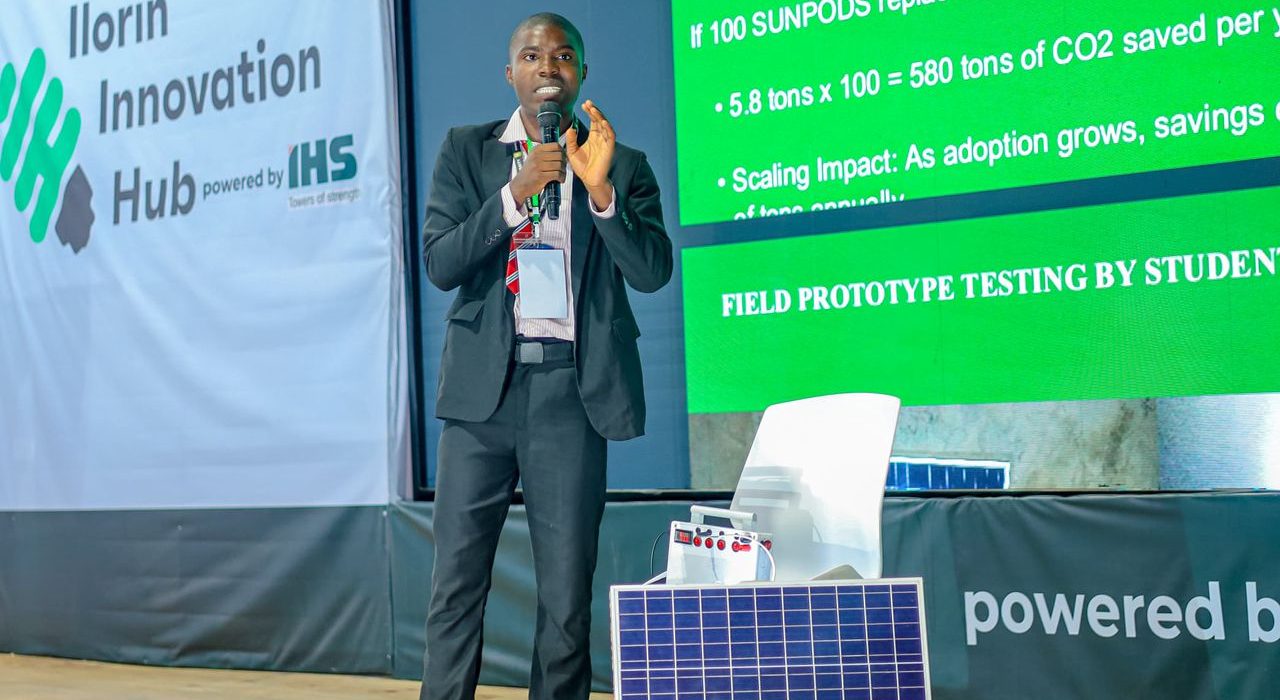
Emmanuel Aanu Ajayi, a 500-level student of Electrical and Computer Engineering at KWASU, Malete, has developed SUNPOD, a solar-powered energy station designed to provide affordable and sustainable electricity for individuals, businesses, and communities across Nigeria.
Ajayi says the inspiration for SUNPOD is personal. “Since I was born in Nigeria, I have never experienced stable 24-hour electricity,” he said. “That constant power challenge affected education, businesses, and overall productivity, and it pushed me to start thinking about solutions from a very young age.”
Although the idea began as a childhood curiosity, it took shape when Ajayi gained technical knowledge through his engineering studies. According to him, admission into KWASU provided the practical exposure needed to finally bring the long-held idea to life.
🔔 OFFICIAL CHANGE OF NAME MADE EASY!
Avoid delays and rejection — let professionals handle your publication quickly and stress-free.
We help you publish your change of name in:
📰 Punch Newspaper
📰 Vanguard Newspaper
📰 Other Top National Newspapers
✨ Why Choose Us?
- ✔️ Quick turnaround (3 days)
- ✔️ Budget-friendly packages
- ✔️ Reliable & trusted service
What SUNPOD is and How It Works
SUNPOD, which stands for a solar power station, works by harvesting energy from sunlight through solar panels, storing it in high-efficiency batteries, and supplying clean electricity for extended use. Unlike petrol or diesel generators, the system operates without fuel, noise, or harmful emissions, making it suitable for both urban and rural environments.
“From the beginning, I knew this was more than an academic project,” Ajayi explained. “As I built prototypes and interacted with people in local communities, I realised SUNPOD could realistically meet the energy needs of businesses and households.”
Nigeria’s heavy dependence on generators, rising fuel costs, and frequent grid failures remain major challenges. Ajayi believes SUNPOD offers a practical alternative. He noted that many businesses spend large portions of their income on fuel and generator maintenance, costs that could be significantly reduced with solar energy.
What sets SUNPOD apart, according to the inventor, is its local design and adaptability. “Most solar power stations in Nigeria are imported and rely on lead-acid batteries with short lifespans,” he said. “SUNPOD is locally designed and manufactured using modern battery technology suited to Nigeria’s environment and economic realities.”

The system is designed to serve a wide range of users, from individuals and small business owners to schools, clinics, and entire communities. Its modular structure allows it to be customised based on specific energy needs.
Affordability was also a major consideration in the design process. Ajayi explained that SUNPOD uses locally sourced materials where possible and is being developed with flexible payment models, including instalment and subscription options, to make clean energy accessible to average Nigerians.
Beyond power supply, the impact of SUNPOD could be far-reaching. Reliable electricity, Ajayi noted, can help businesses operate longer hours, improve productivity, and boost income, while also supporting essential services such as healthcare and education.
Challenges Along the Way
The journey, however, has not been without challenges. Ajayi revealed that skepticism was one of the biggest obstacles he faced. “Many people felt solving Nigeria’s electricity problem was too ambitious,” he said. “But that doubt only pushed me to keep learning and improving the system until it worked.”
Support from KWASU
He also credited KWASU for its role in the development of the project, acknowledging the support of lecturers, technologists, and the university’s Centre for Artificial Intelligence and Machine Learning Systems (CAMS), which provided mentorship and access to resources.
Looking ahead, Ajayi says plans are underway to refine the prototype, expand field testing, and move into commercial production. He is also seeking partnerships with investors, NGOs, government agencies, and renewable energy organisations to scale SUNPOD across different regions.
Future upgrades, he added, will include higher energy capacity, smart energy monitoring, mobile charging ports, and AI-powered energy management systems.
A Message to Young Innovators
For young Nigerians with innovative ideas, Ajayi offered words of encouragement: “Do not give up. Every meaningful innovation starts with doubt. Stay consistent, keep learning, and take small steps every day.”
As Nigeria continues to search for sustainable solutions to its energy crisis, SUNPOD stands as a presentation that innovation can emerge from the classroom and that sometimes, the power to change lives starts with a single idea and a little sunlight.