

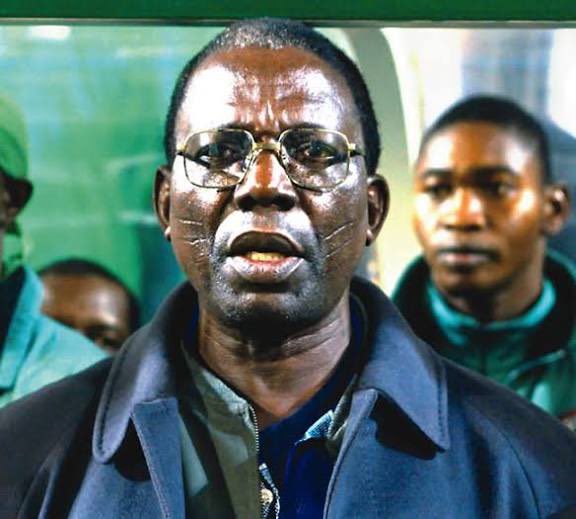
Festus Adegboye Onigbinde, widely known as Adegboye Onigbinde, was a pioneering Nigerian football coach, administrator, and technical expert whose contributions shaped Nigerian and African football for decades.
BREAKING!!!
The family of the former Super Eagles coach, Adeboye Onigbinde has confirmed the passing of the Modakeke High Chief.
Bolade Adesuyi on behalf of the family wrote;
“WITH GREAT GRATITUDE TO GOD FOR A LIFE WELL SPENT.
pic.twitter.com/3bqL1Dw6ds— Adepoju Tobi Samuel 🇳🇬 (@OgaNlaMedia) March 9, 2026
Join The Lagos Voice on WhatsApp
Follow us for the Latest News, Entertainment, Politics, Sports, Youths and Grassroots updates, delivered fast and verified on WhatsApp!
🔗 Join Our ChannelBorn on March 5, 1938, in Modakeke, Osun State, Nigeria, he passed away on March 9, 2026, at the age of 88, just days after celebrating his birthday.
PAY ATTENTION: Follow The Lagos Voice on WhatsApp channel for latest updates
Often hailed as the first indigenous Nigerian coach to lead the Super Eagles to major international tournaments, Onigbinde’s legacy endures as a symbol of local talent and dedication in African football.
Adegboye Onigbinde Early Life and Background
Adegboye Onigbinde was born into the Jagun Omode dynasty in Modakeke. His father was a farmer, and his mother a petty trader involved in various businesses.
Due to his late arrival in the family (referred to as “omo ayo”), he started primary education later than usual, at age 10 in 1948. He later adopted the name “Adegboye,” meaning “a child born to reclaim a chieftaincy title,”
after dropping his baptismal name Festus in 1960 via a newspaper announcement, believing it held no significant meaning.
PAY ATTENTION: Follow The Lagos Voice on WhatsApp channel for latest updates
Onigbinde hailed from a traditional Yoruba background and earned the title of High Chief in Modakeke. His early life instilled resilience and a strong sense of community, qualities that defined his long football career.
Onigbinde’s Coaching Career Highlights
Onigbinde’s coaching journey began in local and state teams before rising to national prominence. He served as head coach of prominent clubs like Shooting Stars FC of Ibadan, where he achieved success and built a reputation as a tactician.
He first took charge of Nigeria’s national team (then known as the Green Eagles) from 1982 to 1984. During this period, he guided the team to the 1984 Africa Cup of Nations final in Côte d’Ivoire, securing a silver medal after a 3-1 loss to Cameroon. This marked one of his early major achievements and helped restore confidence in the national side.
After years of club coaching and administrative roles, Onigbinde returned as Super Eagles head coach in 2002, replacing Shuaibu Amodu following a disappointing Africa Cup of Nations performance.
PAY ATTENTION: Follow The Lagos Voice on WhatsApp channel for latest updates
He led Nigeria to qualify for and participate in the 2002 FIFA World Cup in Japan and South Korea, the first time an indigenous Nigerian coach achieved this milestone.
Though the team exited in the group stage, it was a historic feat that underscored his advocacy for homegrown coaching talent over foreign hires.
Beyond the national team, Onigbinde contributed as a technical instructor for the Confederation of African Football (CAF) and FIFA, mentoring coaches across the continent and promoting technical development in African football.
Onigbinde’s Personal Life
Wife and FamilyOnigbinde was a family man, described in tributes as a devoted father, husband, grandfather, great-grandfather, brother, and friend.
He was married for many years, but his 30-year marriage to his wife Anne (or Abiona in some reports) was dissolved by a customary court in Ibadan in 2017 due to irreconcilable differences, including allegations of wastefulness, troublemaking, and strained family relations.
PAY ATTENTION: Follow The Lagos Voice on WhatsApp channel for latest updates
The dissolution was mutual in effect, as both parties sought separation. He had multiple children from his family life, though specific details about surviving family members remain private.
His family announced his passing in a heartfelt statement, highlighting his roles as a patriarch and community leader.
Onigbinde’s Net Worth
No reliable public estimates exist for Adegboye Onigbinde’s net worth. As a lifelong coach, administrator, and technical instructor rather than a businessman or high-profile celebrity, his wealth was modest compared to modern football figures.
Earnings came from coaching contracts, club roles, and CAF/FIFA instructor positions, but he was not known for significant commercial ventures. His true legacy lies in intangible contributions to Nigerian football rather than financial metrics.
Legacy and Impact
Onigbinde remained active and respected well into his later years, often consulted on football matters and honoured by institutions like the National Institute for Sports.
PAY ATTENTION: Follow The Lagos Voice on WhatsApp channel for latest updates
He advocated strongly for indigenous coaches and home-based talent development. His death in March 2026, at General Hospital in Ile-Ife, Osun State, prompted widespread tributes from Nigeria’s football community.
As the pioneer who took the Super Eagles to the World Cup as a local coach, Onigbinde inspired generations and proved that Nigerian expertise could compete globally.