


By Olanrewaju Lawal, Adebayo Balqees and Emmanuel Omolayo
Every lecture day, Adeoluwa Ifetayo, a 100-level Philosophy student at Obafemi Awolowo University, arrives at the classroom with a familiar concern shared by many students: the challenge of finding a comfortable seat. For him and others, attending lectures has become a routine marked by discomfort, uncertainty, and sometimes quiet frustration.

What should be a basic requirement for learning has become a daily struggle. For many students, attending lectures is no longer solely about note-taking and classroom participation but also about the race to secure a comfortable space in overcrowded lecture theatres.
For Ifetayo, a 300-Level student of Philosophy at OAU, securing a comfortable space is always a struggle.
Last semester, Ifetayo said one of his classes was held in the department’s foyer due to the unavailability of a suitable classroom. The experience, he recalled, was far from conducive.
“It was a struggle on that day as we stood throughout the class. Most of what the lecturer said that day, I can’t say I understood anything at all,” he said. “I was just there, waiting for the class to end. I wasn’t even in the right frame of mind throughout the lecture.”
According to him, the situation is always worse during combined courses, where students from different departments also register.
“It’s worse during combined courses. Coming late to class means you have to stand outside or sit on the edge of the window.”
Speaking about the condition of classrooms, he added that, “Most of the chairs in some of these classrooms are bad, and some of them are poorly ventilated.”
PAY ATTENTION: Follow The Lagos Voice on WhatsApp channel for latest updates
To avoid standing during lectures, most students have to arrive early, long before lectures begin.
“For you to get a seat, you have to come early because if you don’t, you’ll stand throughout the entire class.”
Ifetayo’s experience reflects a broad challenge that many students are facing, a reality that has become increasingly common across Nigerian universities.
More Students, Same Spaces
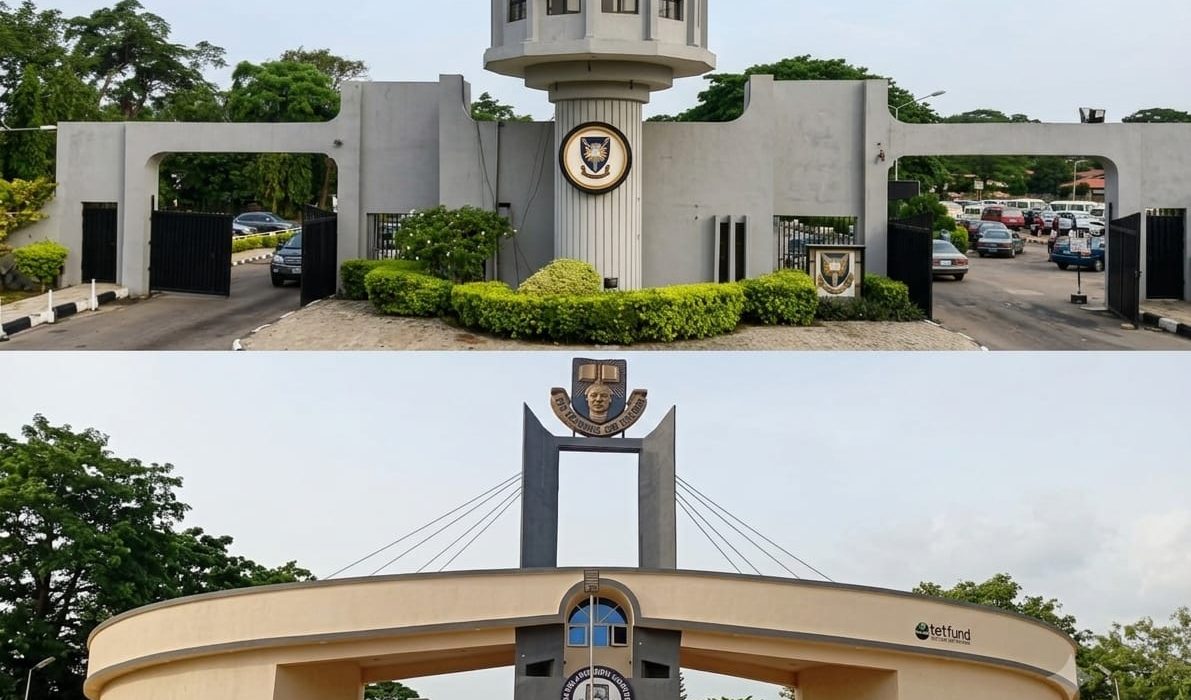
Over the last few years, both Obafemi Awolowo University (OAU) and the University of Ibadan (UI) have witnessed a steady increase in student enrolment as more qualified candidates seek admission into Nigeria’s most sought-after public universities.
While the expansion has created opportunities for thousands of applicants who might otherwise have been denied admission, it has also intensified pressure on existing facilities. Lecture theatres, hostels, transportation systems, and other essential infrastructure now serve far more students than they were originally designed to accommodate.
At OAU, the effects are visible in overcrowded classrooms, difficulties in securing lecture venues, congested halls of residence, and a growing dependence on off-campus accommodation. Students and lecturers alike aired their views on the limited spaces within the university.
Speaking on the rationale behind the increase in admissions, the Dean of the Faculty of Arts, Professor Gbenga Fasiku, argued that universities have a responsibility to accommodate more qualified candidates in the face of growing demand for higher education.
“There are so many prospective students seeking admission, I mean, qualified students,” he said. “I’m not sure we should close our doors to good and competent candidates if they choose our university.”
According to him, despite the establishment of hundreds of federal, state, and private universities across the country, the demand for university education continues to outweigh available spaces.
For Professor Fasiku, increasing admission figures should not automatically be viewed as a threat to educational quality. Rather, he maintained that universities must continue to expand access while simultaneously improving facilities and manpower.
“The university is improving its facilities,” he said. “But I can tell you it’s not likely that you match up facilities with students. It’s not likely these days. Moreover, to support the existing manpower, the university employed more than 741 staff, of which 441 are academic staff.”
He pointed to ongoing efforts by the university to improve infrastructure through the construction of lecture theatres, employment of staff, and partnerships aimed at addressing accommodation challenges.
Nonetheless, he acknowledged that larger student populations inevitably create pressure on classrooms, hostels, and transportation systems.
“There will always be teething problems,” he said. “There are problems that are envisaged when you have an increase in the number of candidates that come to the university.”
To address some of these challenges, he advocated greater reliance on technology through teleconferencing and computer-based examinations, arguing that physical facilities no longer have to bear the full weight of teaching large classes.
He conclusively maintained that institutions, such as the OAU, the University of Ibadan, and the University of Lagos, with a high reputation, should open their doors to admit more qualified candidates rather than denying them access to quality education.
“Universities like UI, UNILAG and Obafemi Awolowo University should brace up to accommodate more students so that we will be able to provide quality education to some of these students when they have access,” he said.
The situation is the same at the University of Ibadan, where, according to the Law Press report published on March 12, 2026, a total of 4,171 students, as disclosed by Deputy Vice-Chancellor (Administration), Professor P. O. Olapegba, speaking on behalf of the Vice-Chancellor, Professor Kayode Adebowale, was admitted without a corresponding improvement in facilities.
Limited Lecture Theatres, Growing Numbers
As student enrolment continues to rise across Nigerian universities, concerns are also growing about whether existing facilities can adequately support the increasing population. As outlined in the National Universities Commission (NUC), universities are mandated to provide sufficient teaching and learning facilities capable of meeting the needs of their students. However, experiences shared by students and lecturers at Obafemi Awolowo University suggest that available infrastructure is struggling to keep pace with the growing demand.
Speaking on this, Dr Ndukaku Okorie, Head of the Department of Philosophy, said the recent admission surge raises questions about the university’s capacity to effectively accommodate the students it admits.
“The recent admission surge really baffles one because there are obviously not enough or adequate facilities corresponding to that,” he said.
According to him, the challenge became more pronounced following the closure of the university’s Amphitheatre, one of the few venues capable of accommodating large classes. With fewer large lecture spaces available, departments have increasingly resorted to alternative venues that were not originally designed for teaching.
“Last semester, we had to use the Sports Complex for PHL 101. Most students struggle throughout the class, let alone grasp what is being taught. Even as a lecturer, I struggle on most occasions, straining my voice just to ensure students hear and understand me.”
The consequences of this pressure, however, extend beyond venue shortages. Lecturers say the realities of overcrowding are beginning to shape how courses are taught, assessed, and experienced by students.
Dr Omobola Olufunto Badejo, a senior lecturer in the Department of Philosophy and coordinator of several general courses, described the situation as evidence of an expanding student population without a corresponding expansion in infrastructure.
“The infrastructure is inadequate and overstretched. There’s no corresponding increase in infrastructure,” she said. “Students and lecturers now struggle more to find lecture rooms, and some classes are cancelled because there is no suitable space available.”
As available lecture spaces become increasingly difficult to secure, many courses have gradually moved online. While this provides a temporary solution to the shortage of physical classrooms, Dr Badejo argued that it introduces a new set of challenges.
“Some courses require magic boards to teach effectively. There is no provision for this in teleconference rooms. Students cannot ask questions until after lectures, and many cannot even afford to stay online for an hour or more.”
She further noted that assessment methods have also changed as a result of the increasing class sizes.
“While it helps to manage the grading of large classes, it reduces testing to recognition, and courses that require construction and critical engagement are not adequately considered.”
Perhaps the clearest illustration of the pressure on lecture facilities, she explained, is PHL 104, a general course with more than 3,000 registered students.
With no lecture theatre capable of accommodating such a number, the course was moved to the university’s Sports Complex.
“We had to move PHL 104 to the Sports Complex because of insufficient classrooms. Initially, there was a large turnout, but due to the unfavourable conditions of the space, attendance dropped significantly, with fewer than 200 students now attending because the venue was not conducive.”
According to her, the situation repeatedly disrupted academic activities. “Many classes had to be cancelled or postponed, and students could not learn effectively under those conditions.”
Beyond concerns about learning outcomes, lecturers also raised questions about safety and welfare in some of the available lecture venues.
Recalling an incident at the ICAN Lecture Theatre, Dr Badejo described conditions she considered unsafe for both students and lecturers.
“There was a day I was teaching there, and it became intensely hot. I had to end the class when I started feeling dizzy,” she recounted. “On that day, a student also passed out in the same venue, and we had to rush her to the clinic. God forbid there is an emergency such as a fire outbreak; the outcome could be disastrous.”
Learning Under Pressure
For many students at Obafemi Awolowo University and the University of Ibadan, attending lectures has become an endurance rather than a pleasure. Overcrowded classrooms, insufficient seating spaces, poor ventilation, and inadequate facilities have continued to characterise students’ experience, which affects the quality of learning in both institutions.
Adeyemo Mujeedat, a Part Two student of philosophy at OAU, described the situation as a daily struggle.
“It is always a struggle,” she simply expressed. Adding further, she said, ” I think the facilities are not enough. Sometimes, many of us will have to stand while others share seats. At most times, these classes are overly congested, and classes are cancelled because of this,” she said.
Echoing similar frustration, Tohir Fatima Hassan, a Part One student of English, said overcrowding has become a defining feature of many lecture theatres.
“The classes are not sufficient. Most of the time, we have to stay in a congested classroom. Sometimes, some people even have to stay outside because of the population,” she said.
Recalling a particular moment, Hassan said that one of their courses was held at the Sports Complex due to the unavailability of lecture rooms.
“There were no desks. We had to write on the floor,” he added.
At the University of Ibadan, students also expressed similar concerns over the condition of lecture facilities, noting that learning experiences often depend on the venue allocated for classes.
Yusuf Adeoti, a 300-level Microbiology student, explained that while some lecture theatres are conducive, others fall short of basic expectations.
“Some lecture theatres are in good condition, with functional furniture and working fans. Others are not. In some places, you walk into a cool, well-lit hall. In others, you sit through a two-hour lecture in a hot, poorly ventilated room,” he said.
Beyond overcrowding, students also speak about unstable electricity supply, describing it as a major challenge affecting learning.
“Fans are a particular point of inconsistency here; some work, some do not. When there is a power outage, it is always a hell in a cell experience for us. A few faculties have solar installations, but they mainly support lighting, not fans. On hot afternoons, we have to endure it all through,” Yusuf added.
For General Studies (GES) courses, where hundreds of students register, the challenge is even more pronounced.
Chukwudi Okafor, a 300-level Political Science student at UI, described the experience as the most difficult situation students have to endure.
“For GES courses, classes are always congested, with intense heat and poorly ventilated classrooms. It’s always difficult to hear what the lecturer is saying, especially when you sit at the back because of the noise. Describing it as worse is not an understatement,” he said.
Rent Hikes, Broken Homes: Inside Students’ Off Campus Struggle
For many students at Obafemi Awolowo University and the University of Ibadan, securing admission is only the first hurdle; finding comfortable accommodation is another challenge altogether.
The limited bed spaces on campus have forced many students to stay in nearby communities within their university environment. What should be an alternative housing option has, unfortunately, become a scheme designed to exploit students financially.
At OAU, a considerable number of students live in private hostels and off-campus apartments due to the shortage of bed space on campus. As a result, students have little bargaining power and, as such, become vulnerable to landlords and agents who take advantage of their desperate need for accommodation.
Osuolale Oluwanifemi, a resident of Fine Touch Hostel in Oduduwa Estate, described housing schemes in Ife as a cycle of exploitation aimed at draining student wallets.
Nifemi explained that she secured her apartment through an agent who collected ₦260,000 from her, only to discover that the actual rent was ₦220,000.
She further stated that the rent was then increased. “The rent later increased to ₦300,000, and now they want to increase it to ₦500,000,” she said.
She added that the latest increase sparked resistance among tenants, many of whom challenged the decision in court over what they regarded as an excessive hike and the management’s failure to provide proper notice.
“Some people sued them and took them to court because the increase was too drastic, and they didn’t give proper notice. The court said the rent should remain at ₦300,000 and that if they want to increase it, they should give proper notice.”
However, despite the court’s ruling, she alleged that the rent is still set at the higher rate, and efforts are underway to sideline existing tenants.
“They’re now trying to chase the old tenants away and bring in new tenants so they can charge the ₦500,000 without any trouble.”
PAY ATTENTION: Follow The Lagos Voice on WhatsApp channel for latest updates
Nifemi also complained that despite the repeated rent increments, basic maintenance of the property has not been improved.
“My roof has been leaking for a while now, and I have called the caretaker on several occasions to report the situation, but they have yet to make any attempt to fix it. They just painted the outside and repaired some doors to make the increase seem justified,” she explained.
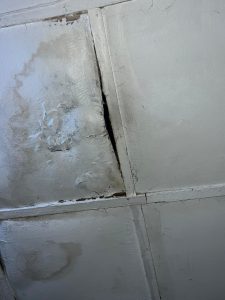
Similarly, Maxima Precious, a Part One Biochemistry student living in Parakin, recounted how she was extorted by an agent and a friend who connived together to collect ₦285,000 from her and later discovered that the actual rent was considerably lower.
“I paid ₦285,000 for the house and later found out that the initial rent was ₦150,000,” she said.
The situation is equally the same at the University of Ibadan, where, despite the frequent rent hikes, the condition of most houses remains relatively poor.
For instance, in Agbowo, one of the popular student communities within the university, accommodation costs increase annually despite little improvement in the housing conditions.
Adediwura, a Part 4 student living on Ogunyase Street, Agbowo, also shared a similar experience that reflects the worsening condition of off-campus housing.
She narrated that in her first year, she paid ₦60,000 as rent alongside a ₦15,000 NEPA bill. By her fourth year, however, the rent had risen sharply to ₦150,000, with utility charges pushing the total to ₦175,000.

According to her, the landlord issued a 48-hour ultimatum for acceptance of the new rate.
“I received a letter giving me 48 hours to respond. If I don’t, they’ll take it that I don’t concur,” she said.
She further noted that despite the repeated increments, there had been no meaningful improvement in the condition of the property.
“In all the increments, the house wasn’t fixed or taken care of,” she added.
Students interviewed expressed that they are always at loggerheads with landlords over the poor condition of their houses, which is often ignored rather than addressed. Many students complain about inadequate water supply, poor facilities, unhygienic environments, and prolonged electricity outages despite paying higher rents annually.
Editor’s Note
This feature report was independently produced and co-written by in-house members of the Union of Campus Journalists, University of Ibadan, and the Association of Campus Journalists, Obafemi Awolowo University. The Lagos Voice is publishing this report as a platform for amplification, with the aim of extending the reach of the perspectives, experiences, and issues highlighted in the story to a wider audience.
The publication of this report aligns with The Lagos Voice’s commitment to supporting youth-led journalism, amplifying campus voices, and promoting impactful storytelling that reflects the realities of young Nigerians.