
By Mercy Olabiyi

For some young Yoruba people, speaking English comes more naturally than speaking their mother tongue. They can follow the latest TikTok trends, sing along to K-pop songs and discuss popular Netflix series, yet struggle to recall a Yoruba proverb or explain the meaning of a traditional expression.
However, It is a change that has not gone unnoticed by parents and cultural advocates, who worry that a generation growing up with global entertainment at its fingertips may be losing touch with parts of its heritage.
In Lagos, Ibadan and other urban centres across southwestern Nigeria, the relationship between young people and Yoruba culture is becoming increasingly complicated. Global pop culture has influenced how many dress, communicate and express themselves, but their experiences suggest that embracing new influences does not always mean abandoning their roots.
PAY ATTENTION: Follow The Lagos Voice on Facebook and WhatsApp channel for latest updates
For Akinleye Aishat, a Tourism Studies student at Osun State University, the change is reflected in the language she uses every day. “Over the years, my use of Yoruba has reduced because of education and technology,” she recalls.
Although she still speaks Yoruba with her family, English dominates many of her interactions at school and online. She also enjoys content on TikTok, Netflix and Instagram, as well as K-pop, which have influenced her interests and self-expression.
“They influence the way I speak, dress and entertain myself, but they do not completely change who I am,” she told this reporter.
However, her connection to Yoruba culture has not remained unaffected. Aishat admits that she is less familiar with some traditional expressions than older members of her family. “I do not know many traditional proverbs as well as my grandparents do,” she says, adding that such expressions are rarely discussed among young people today.
PAY ATTENTION: Follow The Lagos Voice on Facebook and WhatsApp channel for latest updates
Her parents and older relatives still encourage her to speak Yoruba and appreciate her heritage. For Aishat, the answer is not to shut out foreign influences but to find a balance between them and the culture she grew up with. “We can learn from other cultures without abandoning our own heritage,” she says.
The ties between language, culture and identity
Isaac, a Part II English student at Obafemi Awolowo University, approaches the issue from a different perspective. For him, speaking Yoruba is a responsibility that comes with his identity. “I was born in Yorubaland. I’m a Yoruba boy, so as it should be, I speak Yoruba frequently,” he expressed.
Isaac says he spends little time on social media, but he recognises that digital platforms can play a role in preserving indigenous culture. He points to content creator Arojinle as an example of someone using the internet to promote Yoruba culture. “I don’t need to be motivated by any platform to speak and represent Yoruba culture,” he says. “Yoruba is my identity, so I must not neglect it.”
Still, he acknowledges that maintaining every aspect of his cultural identity is not always straightforward. English remains central to many areas of public life, and modern lifestyles can make some traditional practices difficult to sustain. “I can’t speak Yoruba every day because English is the official language of Nigeria,” he explains. “I can’t dress like a Yoruba boy every day, yes, I feel disconnected.”
PAY ATTENTION: Follow The Lagos Voice on Facebook and WhatsApp channel for latest updates
Despite these challenges, Isaac believes young people should remain conscious of their roots even as they embrace changing lifestyles. “Our culture is our identity,” he says. “Though embracing global culture is inevitable, one should not forget his roots.”
Not everyone is losing touch
While Aishat has noticed a decline in her use of Yoruba, Seunfunmi, a graduate, says her experience has been different. Rather than speaking the language less, she says she uses it every day, including with her colleagues at work. “I speak Yoruba every day. I even speak Yoruba with work colleagues, and I mostly use English only during official presentations or when communicating with my students,” she says.
Seunfunmi does not believe that exposure to global media has significantly altered her cultural identity. “I cannot really say they made me less Yoruba in my speech or character. My cultural identity has remained largely the same despite being exposed to global content online,” she explains.
However, speaking Yoruba regularly has not necessarily made her confident in every aspect of the language. She admits that proverbs and reading Yoruba aloud remain challenging.”I have especially felt like an outsider when it comes to speaking Yoruba proverbs or reading Yoruba aloud confidently,” she says.
PAY ATTENTION: Follow The Lagos Voice on Facebook and WhatsApp channel for latest updates
Her parents, she adds, correct her when necessary, particularly when it comes to language and cultural values. Estee is nevertheless concerned about children who are not being taught Yoruba at home. “Many parents are no longer teaching their children the language,” she says.
She remains hopeful that the situation can improve, pointing to Nigerians in the diaspora who are showing renewed interest in reconnecting with their roots.
Her experience is a reminder that young people’s relationship with Yoruba cannot be explained by their consumption of foreign entertainment alone. Family habits, personal choices and opportunities to practise the language also matter.
Parents have a part to play
For Mrs Makinwa, the issue begins at home. She believes parents have considerable influence over the languages their children learn to speak and the cultural practices they become familiar with.
Asked whether global pop culture is affecting how young people speak Yoruba, she explained that parents’ choices play an important role. “It depends on the parents. So, kids speak language, it’s from the parents. So, the parents choose the language they want their children to speak,” she said.
PAY ATTENTION: Follow The Lagos Voice on Facebook and WhatsApp channel for latest updates
Mrs Makinwa believes that parents can encourage their children to learn English without neglecting Yoruba. Drawing from her own experience, she explains that both languages have a place in her home. “My own perspective for allowing my children to speak English as their own language is because of expression and how to relate outside their spheres,” she says.
She adds, “Our common language at home is Yoruba. But we still speak English with them to communicate better.” Her approach reflects the view that indigenous-language preservation and proficiency in English do not have to be competing priorities.
Mrs Makinwa also points to the role schools can play in encouraging children to practise Yoruba, noting that some schools dedicate Fridays to speaking the language. On whether parents are doing enough to preserve Yoruba, she describes the situation as mixed, explaining that much depends on the child’s family, school and environment.
Her experience raises an important question for parents who prioritise English in preparing their children for wider opportunities: can that goal be achieved without allowing an indigenous language to fall into disuse?
Cultural experts warn: ‘We have become consumers of other cultures’
Mr Pelu Awofeso, a cultural expert and multimedia journalist is concerned that many young Nigerians are not speaking Yoruba as frequently as previous generations did. Asked whether young people today speak Yoruba as much as his generation did, he responded firmly: “No, they don’t and I find it very concerning.”
PAY ATTENTION: Follow The Lagos Voice on Facebook and WhatsApp channel for latest updates
Mr Awofeso attributed part of the problem to parents who choose to speak foreign languages to their children at home because they believe English proficiency will give them an advantage in an increasingly competitive world.
He challenged this assumption, arguing that knowledge of one’s heritage remains important in contemporary society. “I cringe every time I see younger folks speak English and can’t say a sentence in Yoruba,” he spoke frankly. He warns that children who grow up unable to speak their indigenous language may eventually regret losing that ability.
For Mr Awofeso, the problem extends beyond the language young people use in everyday conversations. He believes global entertainment and the limited promotion of Nigerian cultural products internationally have contributed to an imbalance in cultural consumption. “These global examples are truly an influence on local languages and culture but that is what we ought to have also done with our own indigenous assets,” he said.
PAY ATTENTION: Follow The Lagos Voice on Facebook and WhatsApp channel for latest updates
He added; “We have simply become consumers of others’ cultures while failing to consciously export ours.” Mr Awofeso points to the popularity of Asian lifestyles among some young people, arguing that international entertainment platforms have helped present foreign cultural practices as attractive and fashionable.
He believes Nigeria needs to make a more deliberate effort to promote its own cultural assets beyond its borders. The concern, however, is not limited to the influence of foreign entertainment. Mr Awofeso identifies several aspects of Yoruba heritage that he believes young people are gradually losing touch with.
“Speaking the language fluently; learning how to greet for various occasions and circumstances; kneeling or prostrating to greet older ones; understanding how to use tone marks on Yoruba words; understanding day, months, numbers in Yoruba; understanding Yoruba spirituality, and praying in Yoruba, among others,” he further remarked.
These examples show that language preservation involves more than teaching children vocabulary. It also requires passing on the customs, social values and knowledge embedded in the language.
PAY ATTENTION: Follow The Lagos Voice on Facebook and WhatsApp channel for latest updates
Taking Yoruba beyond the home: Keeping the language alive in public spaces
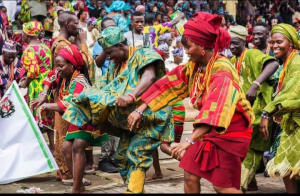
Mr Awofeso believes families, schools and cultural organisations can do more to make Yoruba attractive to younger generations. He recommends encouraging children to speak the language and take pride in doing so. He also suggests rewarding proficiency, creating educational games around Yoruba language and culture, and reviving storytelling in Yoruba.
Such efforts, he believes, could make cultural learning more engaging for children and young people. Digital platforms also present an opportunity. Although young people encounter foreign music, films, fashion and lifestyles online, the same platforms can be used to promote Yoruba stories, humour, music and traditions.
PAY ATTENTION: Follow The Lagos Voice on Facebook and WhatsApp channel for latest updates
Isaac’s example of a creator using the internet to promote Yoruba culture illustrates this possibility. Rather than treating technology solely as a threat, families and cultural organisations could encourage young people to use it to explore their heritage. For Mr Awofeso, the need to preserve Yoruba is closely connected to the need to promote it.
The challenge is to ensure that Yoruba culture is not confined to occasional festivals or conversations about the past but remains part of everyday life.
Between cultural erosion and reinvention
Mr Awofeso believes Nigeria is experiencing both the loss of certain elements of Yoruba identity and a change in how younger generations express that identity. “I think we are experiencing both realities: we are losing certain elements of the Yoruba identity while the youths are re-defining what it means to be Yoruba in this day and age,” he says.
He points to the unconventional spelling of some Yoruba names on social media as an example of how cultural expression is changing. Such changes, he argues, reflect the ways younger people are adapting their identities to contemporary trends.
However, changing cultural expression does not automatically mean that a person has abandoned their heritage. Aishat enjoys global entertainment but remains conscious of the need to preserve Yoruba culture. Isaac sees the language as inseparable from his identity, while Seunfunmi continues to speak Yoruba regularly despite her exposure to international media.
PAY ATTENTION: Follow The Lagos Voice on Facebook and WhatsApp channel for latest updates
Their experiences show that there is no single way young people relate to their culture. Some are struggling to maintain their language skills, others are holding firmly to their roots, and some are navigating both worlds with relative ease.
What unites their experiences is the recognition that cultural identity involves more than a name or place of origin. It also includes the language people speak, the traditions they understand and the knowledge they pass on.
Keeping the language alive
The concerns raised by Mr Awofeso and the experiences shared by the young people interviewed reflect a wider discussion about the future of indigenous languages in Nigeria.
In a report published on October 8, 2026, PUNCH reported that the Association of Gospel African Languages Interpreters had raised concerns about the declining use of Yoruba and other African languages among young people.
The concerns were expressed at the launch of ACT-YOUNG, an indigenous-language discipleship initiative in Abeokuta, Ogun State. Rev. Olu Otunuga, a trustee of the association, said the initiative was developed partly in response to the declining use of indigenous languages. He also expressed concern about parents discouraging their children from speaking their mother tongues.
PAY ATTENTION: Follow The Lagos Voice on Facebook and WhatsApp channel for latest updates
Other speakers at the event stressed that language preservation begins in the home, where children first encounter language, culture and identity. The report adds to the discussion about how indigenous languages can be sustained across generations. However, the experiences gathered for this story suggest that the issue requires more than blaming global entertainment. Parents’ choices, school environments, everyday language habits and the availability of engaging Yoruba-language content all deserve attention.
Young people do not necessarily have to reject K-pop, Netflix or other international influences to remain connected to their heritage. They need opportunities and encouragement to speak Yoruba, understand its expressions and participate in the cultural practices that give the language meaning. As Aishat puts it, “We can learn from other cultures without abandoning our own heritage.”
Isaac offers a similar reminder: “Our culture is our identity.” For a generation growing up in a world without cultural borders, the question is whether it can continue to embrace new influences while keeping its own language alive, not only for itself, but also for the children who will come after it.