


By Aramide Okunboh
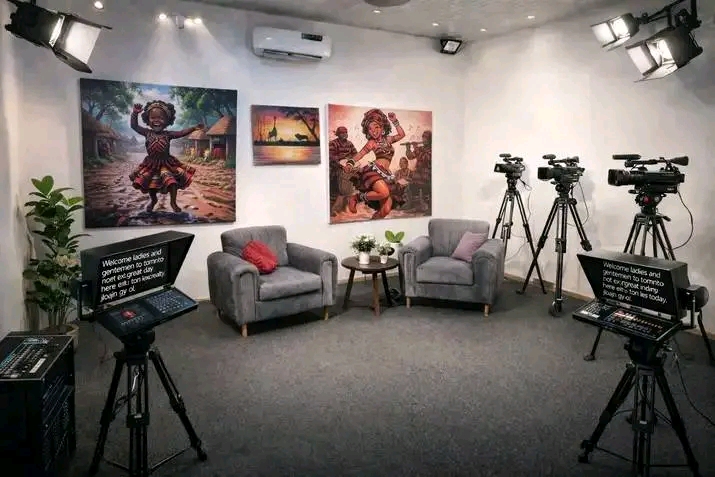
There was a time when celebrity interviews in Nigeria served a clear purpose. They were structured conversations, spaces where artists, actors, media personalities, global impactors and public figures spoke about their work, their journeys, challenges and the ideas shaping their craft.

Oftentimes, interviews offered insight, They revealed personality. They helped audiences understand not just what entertainers did, but who they were becoming and what they passed through to be who they are. Today, that purpose appears to be shifting.
In recent years, celebrity interviews have increasingly become moments of spectacle rather than substance. What trends after an interview is often not the depth of conversation, but a single controversial statement, an awkward exchange, or a headline-friendly soundbite. The focus has quietly moved from deep conversation to virality.
This change is not accidental. The nature of digital media has created an environment where attention is currency, and interviews are now designed, in many cases, to generate that attention as quickly as possible. A calm, reflective conversation may be informative, but it is less likely to trend. A tense moment, a surprising confession, or an emotionally charged response, on the other hand, can dominate timelines within minutes. As a result, interviews are increasingly framed around moments rather than meaning.
Questions are sometimes structured not to explore, but to provoke. Interviewers, aware of the pressures of visibility, may prioritise reactions over reflection. In turn, celebrities approach these spaces with caution, knowing that a single misstep can be amplified far beyond its original context.
The audience, too, has adapted to this shift. Many viewers now consume interviews not in full, but through short clips circulating on social media. These fragments often strip conversations of their general depth, reducing complex discussions to isolated moments. A thirty-minute interview becomes a thirty-second clip and that clip becomes the story.
This fragmentation has consequences. It shapes how entertainers are perceived, often unfairly. A carefully articulated point can be overshadowed by a single out-of-context quote. A thoughtful conversation can be remembered only for its most dramatic moment. In this environment, credibility becomes fragile, constantly competing with the demand for virality. Yet, it would be inaccurate to suggest that substance has disappeared entirely.
There are still interviews that prioritise depth, spaces where entertainers speak openly about their craft, their challenges, and the realities of navigating the industry. These conversations may not always dominate trends, but they contribute to a more meaningful understanding of Nigerian entertainment.
The challenge is that they exist within a system that rewards visibility above all else. For interviewers, this raises an important question: what is the role of the platform? Is it to inform, to entertain, or to provoke? Ideally, it should be a balance of all three. But in practice, the balance is increasingly difficult to maintain.
For entertainers, the stakes are equally high. Every interview is now a calculated risk. Say too little, and it may be dismissed as uninteresting. Say too much, and it may be taken out of context. The pressure to remain relevant while protecting one’s image has made even the most routine conversations feel strategic.
This evolving dynamic reflects a broader shift in the entertainment industry. Visibility is no longer just a by-product of success, it is a requirement for it. Interviews, once primarily tools for storytelling, are now also tools for maintaining relevance. And in that process, the line between authenticity and performance can become blurred.
Still, there is room for recalibration. Audiences can choose to engage with full conversations rather than fragments. Platforms can invest in formats that prioritise depth alongside engagement. And interviewers can continue to ask questions that go beyond the surface, even within a fast-paced media environment.
Because at its best, an interview is more than a viral moment. It is a record of thought, a reflection of personality, and a bridge between entertainers and the audiences who follow them.
In today’s Nigerian entertainment space, the conversation is not just about what celebrities say. It is about what we choose to hear and what we choose to amplify.



Samwissy
April 20, 2026So true!