


By Joan Olatunde

A walk through the gates of Obafemi Awolowo University (OAU), the University of Ibadan (UI), and the University of Ilorin (UNILORIN) reveals a reality that textbooks rarely teach.
🚀 Don't Miss Out!
Latest jobs • Scholarships • Grants • Internships • Career tips
(Naija + worldwide) — delivered daily on our WhatsApp Channel.
Beyond the intense lecture schedules and the regular stress of campus life, a quiet financial war is being fought in student hostels and campus markets every day. Inflation has moved from being a headline on the news to a heavy weight sitting inside the pots, wallets, and minds of undergraduates across Southwestern Nigeria.
For many, the university experience has shifted from a pure pursuit of grades to a difficult balancing act between staying fed and staying in school.
The financial pressure highlights a strange paradox where the numbers on paper keep growing, but their actual purchasing power keeps shrinking. When many final-year students first gained admission, a modest allowance was enough to see them through the month, leaving enough room to build up a small savings account.
🔔 OFFICIAL CHANGE OF NAME MADE EASY!
Avoid delays and rejection — let professionals handle your publication quickly and stress-free.
We help you publish your change of name in:
📰 Punch Newspaper
📰 Vanguard Newspaper
📰 Other Top National Newspapers
✨ Why Choose Us?
- ✔️ Quick turnaround (3 days)
- ✔️ Budget-friendly packages
- ✔️ Reliable & trusted service
Today, that reality is entirely gone. Moyinoluwa, a final-year English student at OAU, recalls when a monthly allowance of ₦15,000 to ₦20,000 was fully sufficient. Today, even though her allowance has increased to ₦35,000 or ₦40,000, the money barely lasts a single week. Keeping a backup fund has become an impossible luxury for her, leaving her constantly worried because she cannot easily call home for more funds once the money runs out.
A similar trend plays out at the University of Ibadan, where Aanulouwapo, a 300-level Communication and Language Arts student, has seen her monthly allowance jump from ₦60,000 all the way to ₦140,000. Yet, even with this seemingly large figure, food and data costs swallow it up so rapidly that budgeting remains a tightrope walk, even though she does not have to pay her own rent.
For others, the issue is unpredictability rather than the amount. Inioluwa, a 200-level law student at UI, started with a steady ₦30,000 monthly allowance, but it has now increased but fluctuates wildly between ₦40,000, ₦45,000, and at times ₦35,000 depending on the situation at home.
With no fixed scale, planning ahead is nearly impossible. This instability is felt even more sharply at UNILORIN by Oludayo Oluwasemilore, a 200-level Agriculture student who barely gets regular allowances from home, receiving money only once in a while, meaning every single naira must be calculated with extreme precision.
As prices climb, traditional student survival meals are being heavily modified, and the financial squeeze is forcing undergraduates to choose between their stomachs and their academic success.
In OAU, Moyinoluwa tracks the sharp rise in basic ingredients, noting that ₦1,000 worth of pepper which used to last a whole week now barely lasts two to three days. Cooking gas has climbed significantly too, rendering her ultimate survival meal, instant noodles, too expensive to rely on.
This recently forced her to make a heartbreaking academic choice between paying ₦3,600 for a required textbook or buying food to survive. She chose her stomach, explaining that she would rather skip classes and wait until the month ends to pay for the reading material.
A similar dilemma plays out at UI, where Ogundeyi Grace Oluwatosin, a 300-level law student, recalls when her weekly budget was just ₦6,000 because she gets food items from home, therefore she uses the cash to buy two liters of kerosene a week at ₦1,400 per liter, and spending the rest on pure water.
Today, her weekly budget has shot up to ₦10,000, driven heavily by kerosene spiking to ₦2,300 per liter. Her former survival meal of noodles and eggs is now a luxury. More importantly, Grace highlights a modern academic strain: internet data. For her, data is the most critical academic requirement, forcing her to choose internet access over food just to complete assignments, causing severe distraction and worry during lectures.
Where food is still manageable, the options have grown thin across the board. Aanulouwapo relies heavily on garri because it remains the most genuinely affordable option on campus. Inioluwa frequents the campus cafeteria for bread and beans, choosing it strictly because it offers the best quantity and quality to keep her full.
Down at Unilorin, Oludayo turns to simple “concoction rice” as his steady, affordable baseline. Meanwhile, Ayomide, a second-year Medical Rehabilitation student at OAU, has had to cut out meat entirely, sticking to “hot pepper” and only buying fish on rare occasions.
PAY ATTENTION: Follow The Lagos Voice on WhatsApp channel for latest updates
While feeding is a universal burden, other heavy expenses depend entirely on where a student lives and how their campus is structured. For Oludayo at Unilorin, off-campus rent is a massive upfront shock, but when breaking day-to-day costs down, internet data actually outpaces his food bill. Because data consumes such a massive portion of his funds, he frequently has to save money by trekking to school from his off-campus apartment due to high transport costs.
Transportation has similarly broken student budgets at OAU. Ayomide points out that the entire campus transport system changed, forcing students to spend double on fares. Worse, the queues at the shuttle parks are so long that even after paying double, students face missing crucial practical classes. To adapt, Ayomide frequently abandons the lines entirely and treks long distances to her venues on foot.
Beyond the physical hunger and exhaustion, there is a deep psychological weight. Many students experience intense emotional guilt when picking up the phone to ask for money. Moyinoluwa hates asking her mother, knowing her brother who sends the allowance is already stretched thin.
Ayomide and Inioluwa both describe carrying a heavy sense of guilt, with Inioluwa handling this by bypassing her parents entirely and asking older relatives or siblings for assistance instead. Even when students try to push through, the mental fatigue takes a toll. Inioluwa recalls an incident where being completely out of cash and unable to buy her usual snacks left her so anxious and distracted that she had to step out of her lecture room entirely.
Oludayo offers a slightly different perspective, viewing the support as a parental responsibility, yet he openly prays that things improve for parents so they can comfortably support their children, noting that a lack of money causes an imbalance in the mind during crucial exam periods.
This sharp drop in student purchasing power has created a brutal environment for the student entrepreneurs and campus vendors trying to serve them. Marvelous, an OAU student vendor who sells jeans and peanuts on campus, feels the heat from both sides. She travels down to Lagos to buy her stock, but recently, even basic supplies like eggs and oil have become far more expensive in Ife than they are in Lagos markets.
Despite her rising costs, she faces a brick wall when it comes to her pricing because she caters to a student market. She puts a lot of careful thought into making things as affordable as possible, and has even expanded her reach by promoting her business on TikTok to get orders from other schools just to keep things afloat.
The economic tension is felt across every single transaction. Marvelous recalls a frustrating interaction with a student customer who wanted to buy a pair of jeans. To help out, Marvelous assured her that since they both stayed in Ife, there would be no extra delivery fee. But when the time came to pay, the student backed out, claiming she found another vendor with a physical boutique who sold the exact same jeans for cheaper.
The student questioned why an independent campus seller would charge more than an established shop. Though the interaction was frustrating, Marvelous refused to drop her price because she knew her own wholesale costs.
Despite the daily friction, Marvelous does not think campus businesses will shut down completely. She notes that people will continue to buy things, wear clothes, and feed, but believes the golden rule for surviving the current climate is empathy and being considerate with pricing because it is a student environment.
But the inflation shock hits even harder for those who produce food directly for the student community. Another OAU student vendor, Racheal, who has been running a campus small chops business for two years, describes the current situation as a massive shock.
For her, the unstable market creates a brutal dilemma: if she updates her price list to match what she spends on ingredients, she risks losing the interest of cash-strapped student customers entirely.
To stay in business, she had to resort to cutting back on portion sizes. The adjustments have led to some painful conversations, such as having to explain to regular clients that constant price fluctuations made it impossible to maintain a steady weekly routine.
PAY ATTENTION: Follow The Lagos Voice on WhatsApp channel for latest updates
A similar battle is being fought at UNILORIN by Aderigbe Julius, a campus vendor who sells provisions, snacks, and handles printing as a side hustle. Having been in business for four years, Julius describes the skyrocketing prices as deeply frustrating.
Because of the inflation and the exorbitant transportation costs required to bring wholesale goods down to Ilorin, he has had to cut back his own profit margins significantly just because students simply cannot afford standard rates.
He frequently finds himself in long conversations with regular student clients, explaining that the high prices are a reflection of the harsh market reality, rather than an attempt to exploit them. Across all campuses, vendors agree that shutting down completely is simply not an option.
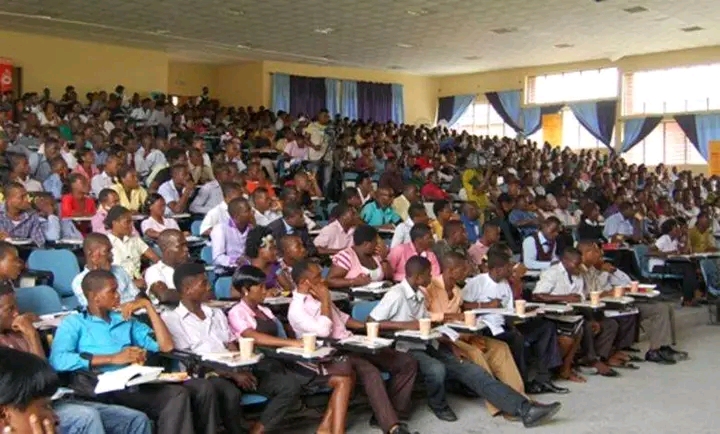
As the academic calendar rolls on, the lecture halls of OAU, UI, and Unilorin remain packed. But behind the rush for early morning seats and late-night library sessions, the defining lesson of this school year is survival. Students and vendors alike are learning to stretch every single naira, proving that earning a degree in modern Nigeria requires a masterclass in economic endurance long before graduation day.