

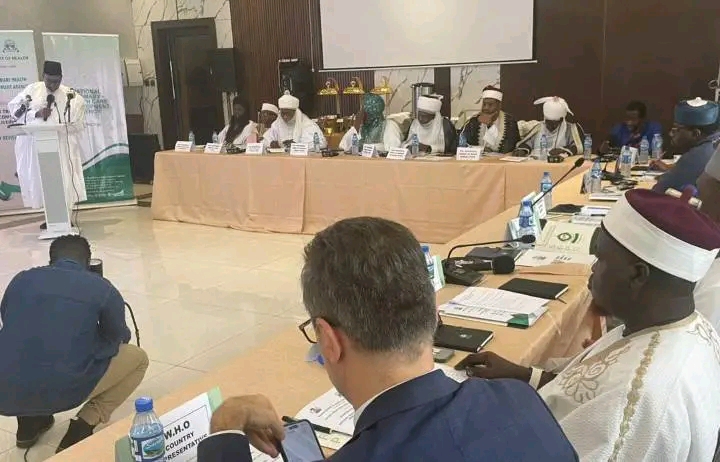
The Nigerian government’s efforts to eliminate circulating polio variants have gained renewed focus as the Northern Leaders Committee convened its inaugural quarterly meeting for 2026.
This gathering brought together government officials, health professionals, traditional leaders, and development partners to enhance the delivery of Primary Health Care (PHC) and sustain national health achievements.

Organized by the Federal Ministry of Health and Social Welfare in collaboration with the National Primary Health Care Development Agency (NPHCDA), the high-level meeting assessed the progress made in implementing PHC strategies and identified essential actions to improve healthcare services and reinforce routine immunization in vulnerable Northern communities.
Professor Muhammad Ali Pate, the Coordinating Minister of Health and Social Welfare, underscored the necessity of ongoing commitment, enhanced coordination, and active community involvement to solidify the successes of immunization programs and the fight against polio.
PAY ATTENTION: Follow The Lagos Voice on WhatsApp channel for latest updates
The discussions concentrated on improving healthcare delivery at the grassroots level, increasing routine immunization coverage, and tackling the operational hurdles that restrict vaccine access in underserved regions.
Development partners and stakeholders recognized Nigeria’s considerable strides in combating polio but warned that the ongoing transmission of variant poliovirus highlights the need for continued interventions, robust disease surveillance, and greater community ownership of health initiatives.
Participants also pointed out the necessity of prioritizing tangible solutions to current healthcare difficulties by enhancing accountability, strengthening healthcare infrastructure, and fostering closer collaboration among government entities, traditional leaders, and development partners.
The meeting affirmed commitments to elevating Primary Health Care services and endorsing community-driven healthcare systems that promote proactive health-seeking behaviors in citizens.
Stakeholders emphasized that empowering communities to take charge of government health efforts is vital for achieving Nigeria’s broader health security objectives and ensuring the long-term viability of healthcare programs.
As Nigeria progresses towards a polio-free future, participants stressed that ongoing political will, strategic partnerships, and grassroots involvement will be crucial in safeguarding children and enhancing the nation’s public health framework.