


By Joan Olatunde
For decades, the standard blueprint for success for an average Nigerian graduate was clear-cut; secure a University degree, complete the mandatory National Youth Service Corps (NYSC) year, and find a spot within a corporate office.

Today, that blueprint is undergoing a radical shift. Facing a tough economic environment, low entry-level salaries, and high costs of commuting, young Nigerians are quietly turning away from traditional white-collar constraints. Instead, they are transforming bedrooms, hostel rooms, and digital platforms like TikTok, Instagram, LinkedIn, and WhatsApp into highly functional, self-made workspaces. For many young graduates, the decision to skip the traditional corporate track is driven by simple math.
Ajayi Temitope, an Agriculture graduate, found himself at this exact crossroads after his NYSC service year. Eager to work, he applied for several traditional roles in Lagos, only to be met with salary offers that could barely sustain a basic lifestyle. “Living in Lagos is expensive, and when I calculated the cost of transportation alone, I realized that most of the salary would go into commuting,” Temitope told The Lagos Voice.
He narrated; “There would be little or nothing left for feeding, bills, or other personal expenses.” Instead of waiting endlessly for a high-paying corporate miracle, Temitope turned to digital entrepreneurship, finding a reliable supplier to sell household items.
“I don’t offer a digital service; rather, I run an online business where I sell home appliances such as kettles, fans, blenders, and other household items,” he explained.
PAY ATTENTION: Follow The Lagos Voice on WhatsApp channel for latest updates
Operating out of a two-bedroom apartment, Temitope dedicated an entire room strictly to his business operations, dividing it into a storage area and a content creation zone equipped with specialized lighting and clean backdrops to film his products.
“Having a neat content space is very important because customers buy what they see online. Good visuals help build trust and attract more buyers,” He noted.
A similar path was taken by Olaoye Busola, a History and International Studies graduate from Federal University Oye Ekiti who runs an online fashion and wig brand. For Olaoye Busola, the digital space was an immediate answer to systemic economic limitations.
“In a country like Nigeria that basically has nothing to offer youth, you have to be street smart,” Olaoye Busola told The Lagos Voice. She added; “You have to look forward to what can feed you, which includes one stepping out of their comfort zone for survival.”
By leveraging WhatsApp, TikTok, and Instagram, Olaoye Busola built a highly visible brand without the overhead costs of a physical storefront. The flexibility allowed her to maintain financial independence, reducing the need to constantly ask for money from home. “A 9-to-5 waits till the end of the month for a pay, unlike a digital vendor,” she said.
The digital career wave extends far beyond selling physical products; a growing sector of young Nigerians is successfully monetizing specialized skills and creative talents directly through social media.
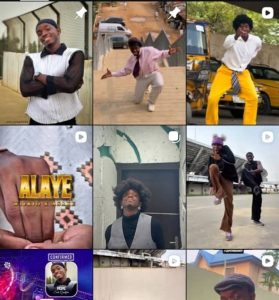
Akpan Miracle has turned his passion for dance into a full-time career entirely online.
Operating with a modest follower count but consistently high video views, Miracle uses platforms like Instagram and TikTok as a dynamic live portfolio. This digital visibility routinely lands him paid roles in music videos, event shows, and independent entertainment gigs.
“I have low social media followers but the views are good, and I get paid to dance in music videos, shows and other big/small gigs,” Miracle shared. He added; “I get discovered online, referred to sometimes, most of the referrals come from people I know and I don’t know, so yes it pays the bills.”

For Miracle, working out of a personal space offers the freedom to network and connect globally at his own pace. However, he maintains a grounded perspective on the concept of digital freedom. “Well the freedom is only to an extent, you don’t get directed by a boss at work but sometimes you still have to work with the demands of clients or contract agreed on,” he told The Lagos Voice.
To protect his passion from turning into an overwhelming chore, Miracle employs a unique mental strategy, stating, “I always make sure I treat it as a hubby paying me not a job, it’s better that way to manage the pressure.”
While some youth dive entirely into the digital ecosystem, others are using social media to construct a financial safety net, balancing demanding corporate roles alongside active online freelance careers. Stella Elizabeth holds a bachelor’s degree in Agricultural Economics and works full-time in IT Support.
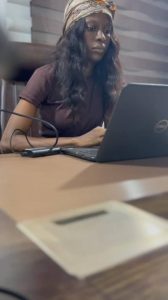
Yet, the realities of the current Nigerian economy led her to launch her own fashion brand, Olatunde Luxe, alongside offering freelance digital marketing services. “My first love for fashion and secondly the cost of everything in Nigeria and Bills,” Elizabeth told The Lagos Voice when reflecting on her motivations.

“Thirdly, the salary is barely enough to cover expenses so it’s important to have a side hustle.” Managing three roles simultaneously requires immense discipline and precise time management. Elizabeth dedicates her weekends entirely to her fashion brand, while her remote digital marketing freelance work begins immediately after her IT job ends at 5:00 PM.

“Most of the time I work on my way back home because of traffic issues in Lagos and time is money,” she said. “So I navigate my way by working on my way home and after getting home before going to bed.”
PAY ATTENTION: Follow The Lagos Voice on WhatsApp channel for latest updates
Abiola Susan, a History and International Studies graduate, similarly balances her role as a corporate Human Resources Executive with an active career in content creation, social media management, and digital marketing. Susan relies heavily on digital organization tools to maintain her dual lifestyle.
“I do a very flexible online job, likewise the online space is very easy,” Susan explained. “You can plan ahead, schedule posts, have a working calendar and during my free time at the office desk I attend my online job.”
Susan also utilizes her hybrid remote days to balance family responsibilities and shoot content material. When structural challenges like erratic power supply threaten her deadlines, she adapts easily. “Nigeria NEPA can be unreliable so since I don’t have a generator, I charge ahead sometimes and having a power bank helps,” she noted.
Invisible burden of the digital hustle
Despite the flexibility and financial potential, the lifestyle of an online professional carries substantial hidden costs and distinct physical pressures. Non-stop screen time and high data consumption are mandatory operational expenses.
Elizabeth reveals that her remote digital marketing tasks and frequent virtual meetings require a massive financial commitment to internet providers. “Data subscription is a whole lot, I spend up to 40k on data every month and that’s because of my remote digital services work,” she shared. “We have meetings at least thrice in a week and it spans for about 4 hours, and after meetings, a great amount of data is needed to carry out my tasks.”
The constant exposure to digital screens has also altered her physical habits. “For the screen time, it’s a lot, I’ve even started using protective glasses that block the light coming directly from my laptop into affecting my eyes, but everything is so we can survive,” she added.
For Olaoye Busola, maintaining brand visibility requires sacrificing sleep to match online algorithms, admitted; “Most times for my content, I wake up in the night and post because I need to keep up and be consistent.”
Miracle, who factors a strict monthly budget around an unlimited data plan to upload heavy video files, views the constant influx of digital notifications as a necessary trade-off. “From the pressure of non-stop screen time and constant notifications, that’s what pays the bills,” Miracle noted. “It’s either that or constant mail and commands from a 9-5 boss.”
Digital careers meeting changing consumer habits
This explosion of youth-led digital careers is fully supported by a parallel shift in how Nigerian consumers choose to spend their money. Anjolaoluwa, a Human Resources professional, approaches the digital market from a customer’s perspective.
For Anjolaoluwa, patronizing independent online youth vendors is often a highly economical choice that bypasses corporate inflation. When it comes to companies, they factor in the cost of setting up a physical store, the cost of keeping the store open, light bills, rents into the product,” Anjolaoluwa told The Lagos Voice.
She added; “But unlike online stores, they only put in the cost of data and even this online store sees data subscription as a norm, a daily requirement.” Shopping via social media also serves as an unexpected tool for personal budget control, helping her avoid the impulse buying common in traditional markets.
“If I have to walk into a store blindly or walk into a marketplace, there’s this choice syndrome that happens in a marketplace where you have the intention of getting one thing but end up getting more because there are other pretty things in the market,” Anjolaoluwa observed.
Furthermore, Anjolaoluwa believes consumers mostly spend beyond budget, while patronizing the physical markets. “But when it comes to online spending for getting things online, you find your vendor, pick only the things you desire to get and pay for it and it gets sent to you, and this reduces my spending habit,” she echoed.
However, Anjolaoluwa points out that buying online requires a high level of discernment regarding trust and quality. “Vendors I trust on social media are people I have studied over time and I’ve seen their consistency in posting and they seem reliable,” she told The Lagos Voice.
Also, she cautions stating; “I would still choose a traditional business over buying from an online vendor depending on how easy it is for her to get the product in the market, because I love to see my products before purchasing to avoid what I ordered versus what I got.”
The rise of these digital pathways has fundamentally altered how the younger generation views corporate loyalty and traditional employment status in Nigeria. While corporate offices provide valuable foundational training, they are no longer viewed as the sole endpoint for a successful career.
PAY ATTENTION: Follow The Lagos Voice on WhatsApp channel for latest updates
Elizabeth reflects that the traditional job is good because it prepares you for professional spaces, but the pay structure remains flawed. “The pay isn’t encouraging because it’s more demanding than that of a remote, it’s required that you’re always available, always present and all but yet all efforts put into it doesn’t show in one’s monthly earnings,” she stated.
Elizabeth added; “Unlike taking up a remote job where your physical presence isn’t needed and you can take as many remote jobs as you like as long as you deliver. And the beautiful thing is you can get these jobs online, through the social media spaces, all you need to do is research from your comfort zone.”
Abiola Susan views digital entrepreneurship and freelancing not just as an alternative career, but as an essential economic shield. “The truth is no 9-5 is secure, you have to always create a back up plan to fall to if things go the other way. Consistency and quality puts you in financial security through social media.”