


By Matthew Ogunwale

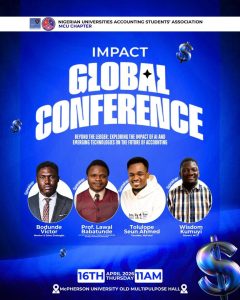
The future of accounting in an era increasingly shaped by artificial intelligence took centre stage on Thursday as the Nigerian Universities Accounting Students Association (NUASA), McPherson University Chapter, hosted its Accounting and Finance Impact Global Conference.
🚀 Don't Miss Out!
Latest jobs • Scholarships • Grants • Internships • Career tips
(Naija + worldwide) — delivered daily on our WhatsApp Channel.
Held at McPherson University, Old Multipurpose Hall, the conference, themed ‘Beyond the Ledger: Exploring the Impact of AI and Emerging Technologies on the Future of Accounting,’ brought together students, academics, and industry professionals.
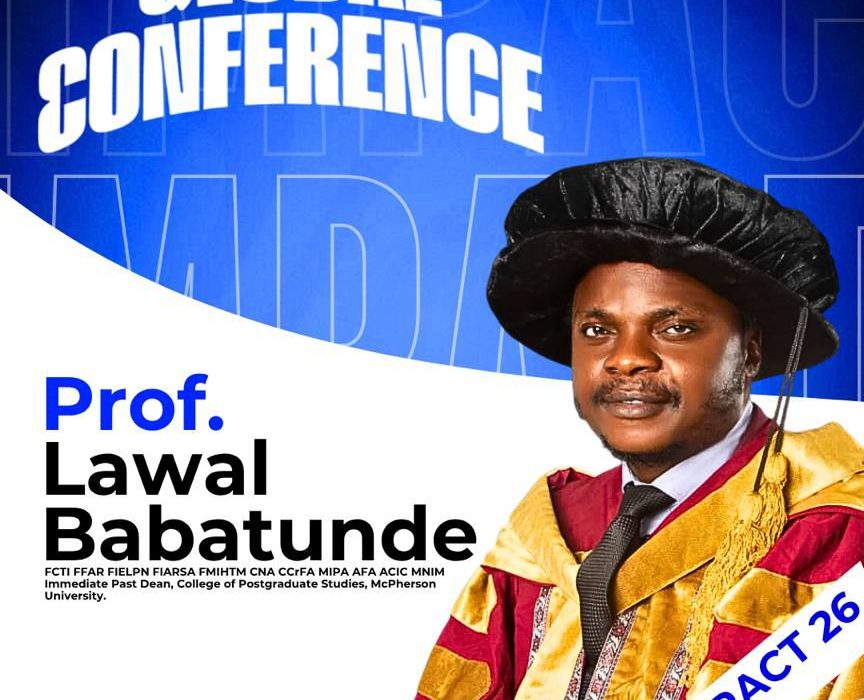
However, it was the keynote presentation by Immediate Past Dean of the College of Postgraduate Studies, Professor Babatunde Lawal, that defined the intellectual tone of the event.
In his presentation titled ‘Emerging Technologies, Risk and Governance in Digital Accounting,’ Professor Lawal offered a sweeping analysis of how the profession is being transformed by rapid technological innovation.
🔔 OFFICIAL CHANGE OF NAME MADE EASY!
Avoid delays and rejection — let professionals handle your publication quickly and stress-free.
We help you publish your change of name in:
📰 Punch Newspaper
📰 Vanguard Newspaper
📰 Other Top National Newspapers
✨ Why Choose Us?
- ✔️ Quick turnaround (3 days)
- ✔️ Budget-friendly packages
- ✔️ Reliable & trusted service
PAY ATTENTION: Follow The Lagos Voice on WhatsApp channel for latest updates
Tracing the evolution of accounting from ancient record-keeping systems to modern enterprise platforms, Lawal described the current shift as ‘unprecedented in both scope and velocity,’ stressing that it represents not just a change in tools but a complete redefinition of how financial information is generated and governed.
He explained that digital accounting now goes beyond basic digitisation, incorporating advanced systems capable of delivering real-time insights, predictive analytics, and continuous auditing.
According to him, this transformation operates across key dimensions including data analytics, blockchain verification systems, and enhanced governance structures.
AI, Blockchain, and the New Accounting Reality
A major highlight of his presentation was the growing role of artificial intelligence and machine learning in automating routine accounting processes. Lawal noted that these technologies are enabling faster, more accurate financial analysis while freeing professionals to focus on strategic decision-making.
He also pointed to blockchain technology as a disruptive force in auditing and financial reporting. With its capacity for immutable, real-time transaction records, blockchain could fundamentally change the traditional audit model, shifting it from periodic reviews to continuous verification.
However, Lawal cautioned that these innovations come with complex challenges. He raised concerns about governance structures within blockchain systems, regulatory uncertainties, and the implications for financial accuracy and accountability.
Risk, Governance, and Ethical Imperatives
Beyond technological opportunities, Lawal emphasised the evolving risk landscape in digital accounting. He highlighted cybersecurity threats, data privacy concerns, and the need for robust internal controls as critical issues that professionals must address.
He called for stronger regulatory frameworks to guide the adoption of emerging technologies, echoing similar concerns raised in broader industry discussions.
Importantly, he underscored the ethical responsibilities of accountants in a digital environment, warning that technological competence must be matched with integrity and professional judgment.
Workforce Transformation and the Future
Lawal further noted that the accounting profession is undergoing a significant workforce transformation. As automation takes over repetitive tasks, future accountants must develop hybrid competencies that combine technical expertise with analytical and strategic thinking.
‘The accountant of the future is not just a record-keeper but a data-driven advisor,’ he implied, urging students and professionals to embrace continuous learning.
Institutional Support and Industry Engagement
Also, the Vice-Chancellor, Prof. Francis Igbsan, represented by Professor Olubunmi Ajibade reaffirmed the university’s commitment to maintaining accounting and finance as a flagship programme. He highlighted the institution’s track record of producing graduates who obtain professional certifications before graduation.
Ajibade also acknowledged the growing influence of artificial intelligence across sectors and urged stakeholders to proactively adapt to ongoing technological changes.
Broader Conversations and Engagement
The conference featured other notable speakers, including Bodunde Victor, Tolulope Seun Ahmed, and Wisdom Kumuyi, who shared perspectives on innovation and digital transformation in finance.
An interactive panel session allowed participants to engage directly with experts, raising questions on the future of the profession and gaining deeper insights into emerging trends.