


By AbdulHakeem Salami

Public pressure was one of the key factors that led to the release of the schoolchildren and teachers abducted from a school in Oriire, Oyo State, security journalist Bankole Abe said.
🚀 Don't Miss Out!
Latest jobs • Scholarships • Grants • Internships • Career tips
(Naija + worldwide) — delivered daily on our WhatsApp Channel.
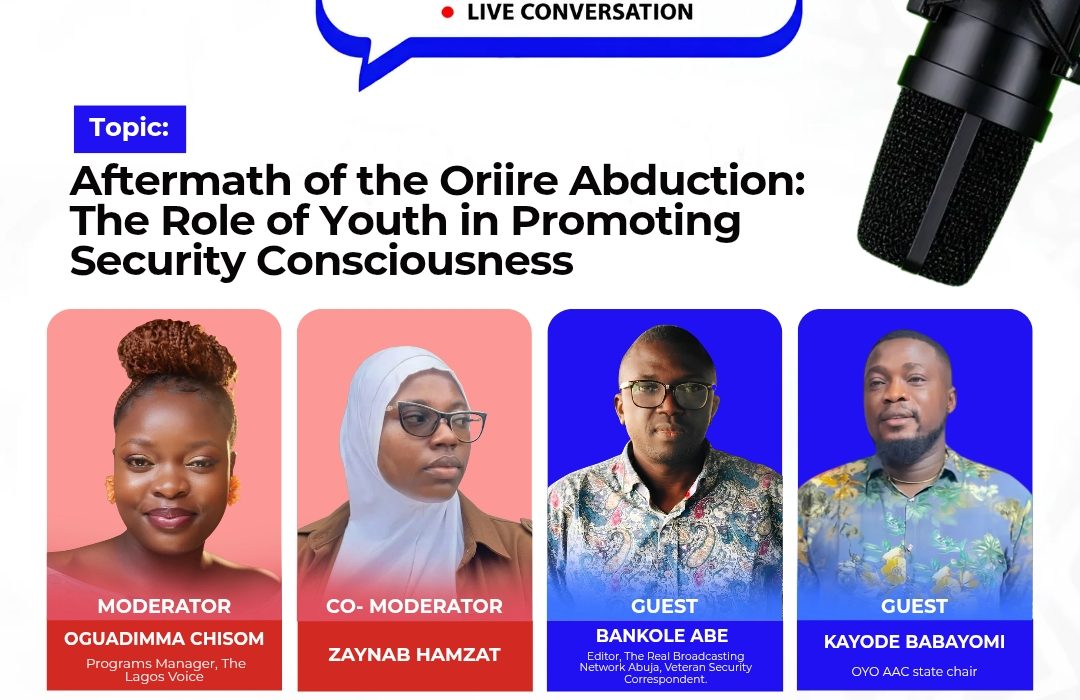
Bankole, editor at the Real Broadcasting Network (RBN) Abuja and a security and anti-corruption correspondent with the International Centre for Investigative Reporting (ICIR), spoke during an X Space hosted by The Lagos Voice titled “Aftermath of the Oriire Abduction: The Role of Youth in Promoting Security Consciousness.”
He said the widespread outcry on social media, alongside protests and radio and television coverage, mounted pressure on government and security agencies that ultimately led to the pupils’ release.
He compared the case to a similar abduction of about 40 schoolchildren in Borno State around the same period, which he said received far less public attention and a slower government response.
🔔 OFFICIAL CHANGE OF NAME MADE EASY!
Avoid delays and rejection — let professionals handle your publication quickly and stress-free.
We help you publish your change of name in:
📰 Punch Newspaper
📰 Vanguard Newspaper
📰 Other Top National Newspapers
✨ Why Choose Us?
- ✔️ Quick turnaround (3 days)
- ✔️ Budget-friendly packages
- ✔️ Reliable & trusted service
Bankole said he did not blame youth in the North for the quieter reaction to the Borno case, explaining that repeated exposure to such attacks in the region has made communities there traumatized and less reactive, while the Oriire incident was unusual for the South-West and therefore drew more attention.
He also said tension between the Oyo State government and the federal government, with the state publicly criticizing the level of federal cooperation and the blame shifting, added to the pressure that kept the case in public focus.
Turning to the aftermath, Bankole said little has changed at the scene of the attack. He said the road leading to the school remains as it was at the time of the abduction, and that apart from The Lagos Voice, no other media organization has continued to hold discussions to keep the government accountable.
He linked this to what he described as a wider pattern in Nigeria, where public outrage over an incident fades quickly once the news cycle moves on, without lasting action to prevent similar attacks.
PAY ATTENTION: Follow The Lagos Voice on WhatsApp channel for latest updates
Bankole said an ongoing investigation into schools in the Federal Capital Territory has shown that some are in worse security condition than the Oriire school, despite funding under the government’s Safe School Initiative.
He cited broken fences, a lack of adequate security personnel, and proximity to forests and isolated areas as common risk factors, along with security agencies stationed far from such schools.
He traced the spread of insecurity into the South-West to a wider pattern of banditry moving from the North-East, through the North-West, into the North-Central states of Kwara and Kogi, before reaching Oyo State.
He said the South-West’s concentration of major media houses in Lagos and Ibadan helped the Oriire case receive more national attention than similar incidents elsewhere.
PAY ATTENTION: Follow The Lagos Voice on WhatsApp channel for latest updates
On how citizens can report suspicious activity safely, Abe advised reaching out directly to Divisional Police Officers and building community vigilante or executive committees, noting that fear of infiltrated security agencies discourages many people from speaking up. He also urged the public to verify information through established media fact-checking sources rather than spreading unconfirmed threats.
Citing the #EndSARS and #EndBadGovernance protests, Abe said sustained youth-led pressure has previously produced results and urged young people to apply the same energy to other governance issues, not insecurity alone.
He called for security awareness to be introduced as a subject in schools from the primary level, alongside continued sensitization by media houses, religious organizations, and community groups to reach populations without access to social media.