


By David Olatunji
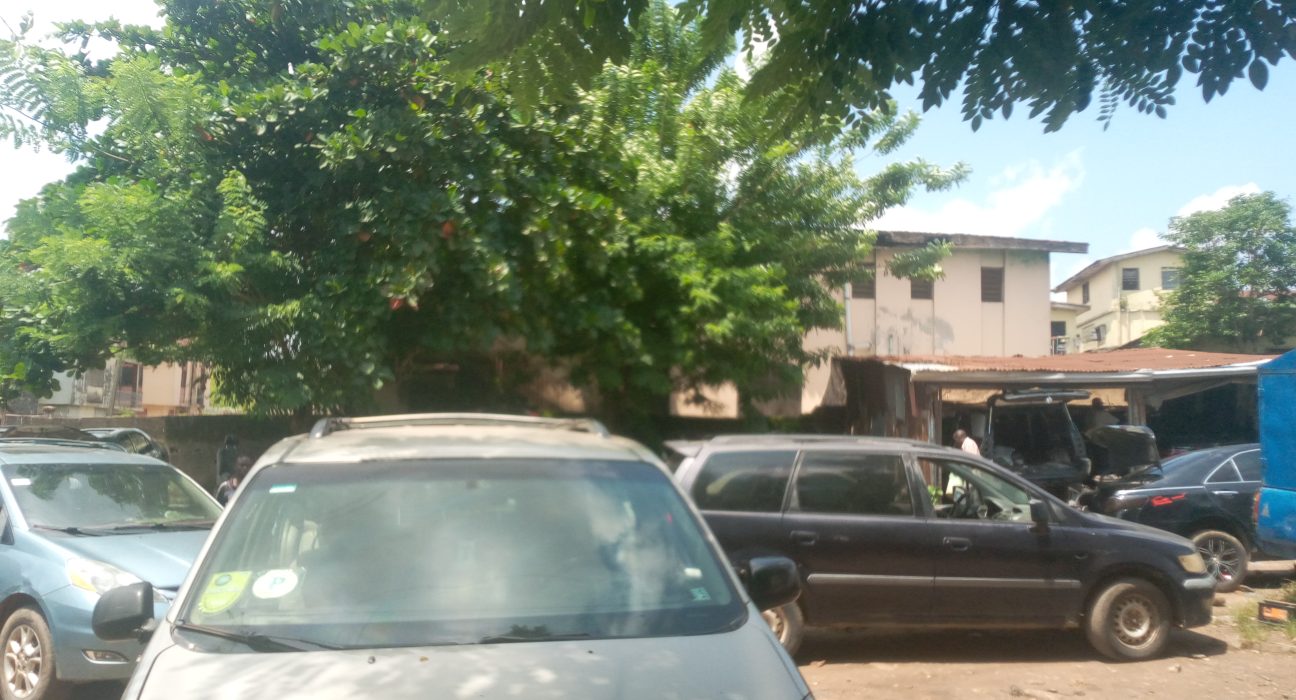
In the dusty heat of a mechanic workshop in Ibadan, Olajide Komolafe wipes sweat from his brow as he peers into the engine bay of a battered Toyota Camry.

“Five years ago, this brake pad alone cost ₦15,000 total,” he says, gesturing to a set of pads. “Today? The pads alone can go for ₦50,000 or more. Customers price-shop like it’s a luxury. Some leave the car here for weeks.”
Around him, engines hum and hammers clang, sounds of an industry refusing to stall. “I have been working as a Mechanic for the past 8 years now,” He told The Lagos Voice.

Olajide, while speaking about the recent development affecting his mechanic work, attributed it to the rise in motor spare part prices, since the emergence of President Bola Tinubu in 2023.
“We now get some of these motor spare parts with the prices rising up drastically. It’s getting more difficult for us, because when we get these things in the Market, after 3 days, we would learn that the price has skyrocketed again, in multiple folds,” He lamented.
Olajide said cars often get delayed in his workshop, for as long as two months, due to the rising costs in spare parts. “When we give customers the bills and expenses of spare parts to get, they often disagree with us, but upon explanation, some reason with the plight. And to others who don’t understand, we often tell them to go to the market themselves.”
Narrating customers’ economical decisions to avoid spending much on the vehicle maintenance, Olajide Komolafe said some customers can get fake motor spare parts, and the impact often affects mechanics’ technical expertise. “Maybe, after two weeks, they will eventually come to us, lamenting. But, we will always give car owners the freewill of making choices as far as the spare part items are concerned,” He told The Lagos Voice.
Furthermore, Olajide highlighted that the patronage in his workshop has dropped massively, spanning two years ago. “If it was before, almost every hour, we are working on one car or the other. The economic hardship has affected many vehicle owners to mostly put it on the road, most especially the cost of fuel.”
Also, Olajide Komolafe added that he prioritizes customers getting the original motor spare parts to bring effect to his work as a mechanic.
“The only thing that keeps vehicles longer on the road is the spare parts quality. We are not the one producing spare parts, but good motor spare parts mostly determine how effective a car will stay longer on the road. Everything about the vehicle goes down to maintenance,” He said.
Similarly, Olaniyan Mukaila, an Ibadan-based Mechanic who has been into the profession for almost 30 years echoed the same sentiment about rise in motor spare parts and the impact on mechanic’s patronage.
Speaking to The Lagos Voice, Olaniyan said the prices of parts have risen drastically. “Before, we did use ₦7000 to fix an engine, but you can’t even use ₦20, 000 to fix it presently. It has increased over 200%. Right now, to get an engine oil alone, you would spend over ₦30, 000 and that’s even the cheapest one.”
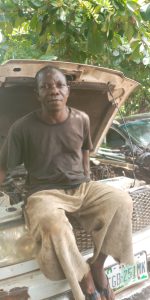
Olaniyan Mukaila stated that some customers tend to improvise following the high cost of spare parts, but indicate that mechanics prioritize using the original spare parts to promote expertise. He added; “In most cases, our customers do lament and it’s really affecting the patronage in this workshop. In fact, they often go to the market to get the spare part themselves and we do accept it.”
PAY ATTENTION: Follow The Lagos Voice on WhatsApp channel for latest updates
Narrating further to The Lagos Voice, Mukaila said due to the high cost of spare parts, jobs get delayed for months in the workshop, except the customer is buoyant enough to finance the repair. “Customers often dump their cars in this workshop if they can’t meet our repair demands.”
However, Olaniyan Mukaila explained to The Lagos Voice about hacks of vehicle sustainability on Nigerian roads, citing car maintenance including servicing weekly, and purchasing the right spare part.
Also, he lamented on the impact of exchange rate fluctuation on Nigerian mechanics. “It is affecting our daily operation and even our profit margin. It has happened to me countless times that I told customers the price of a particular spare part, and when I got to the market, it increased.”
“If you go to the spare part market, the price you would purchase is not the same price you will get in the evening, and it’s affecting us. With this, some customers do think we are exploiting them,” He told The Lagos Voice.
Mukaila claimed the Nigerian government needs to intervene in the Motor spare part importation sector as 99% of these spare parts are fake.
Frustrated car owners speaks
A car owner and Uber driver, Adedayo Adelaja said the situation has affected his daily income and expenses. “It seriously affects. Sometimes you may have a budget of 10,000, 20,000 Naira to fix your car, but it can cost like 50,000 or 70,000 Naira. And we are still going to pay for workmanship,” He told The Lagos Voice.
Adelaja cited that many Nigerians have neglected their car for daily usage due to daily maintenance and have opted for public transportation, recently.

As an Uber driver, Adelaja expressed his dissatisfaction with his daily ordeal, alongside his car maintenance. “The customers nowadays are not even paying. They are paying the same old price. While coming to this mechanic workshop today, I budgeted like 17,000 Naira. At the end of the day, I ended up spending 35,000 Naira.”
Furthermore, Adedayo Adelaja attested to opting for cheaper and less standardized motor spare parts and accessories, just to keep his car on the road. “This is Nigeria. We know how to adapt to any situation that comes to us. Before, I was using Toyota engine oil. Now, I can’t afford to buy a Toyota again. I’m buying another company’s product which is less expensive.”
He added; “Some of the parts we buy from Tokunbo. Unlike before, we do buy a brand new one. But now, we go for the Tokumbo, or used one. It’s still okay. That’s why we’re passionate.”
PAY ATTENTION: Follow The Lagos Voice on WhatsApp channel for latest updates
Oyetayo Felix, another car owner who spoke to The Lagos Voice said car maintenance has really taken a toll on him, due the high cost he does spend at the mechanic workshop.
Recounting his last experience at the mechanic workshop, Felix said he needed to repair the shock absorber in his car, but ended up spending a higher amount. “Before, I did get it for ₦15, 000 at the market but the last time I got it, I paid ₦25, 000.”
Furthermore, Felix told The Lagos Voice of his dislike in using cheaper spare parts for his car, due to the results after repair. “If I don’t have the money at that time, I won’t take my car to the mechanic workshop.”
Additionally, Oyetayo Felix lamented on the current situation of Nigerian roads, attributing why most Nigerian cars do develop faults from time to time. “In Nigeria today, a newly brought Tokunbo can’t spend months plying Nigerians roads without developing faults,” Felix said.
Motor spare parts dealer speaks about price inflation, mechanic negotiations
Uche Chukwu, a motor spare parts dealer in Ibadan, Oyo State, speaking to The Lagos Voice said current prices depend on what the mechanic demands for, but indicated that the prices of goods are now costly.

“Before, Korea tech motor batteries were about #50,000 to #55,000. But now, the batteries cost about #90,000, you can see the difference. And brake pads, we have some #5,000, we have some #15,000 depending on the quality. So the prices vary depending on the quality,” He explained.
Furthermore, Uche narrated that dollar rise affected the rise price of motor spare parts, as they are imported goods. “We import most of them, almost all of them. Some from China. In fact, I can say 90% of the goods are from China. The amount you change dollars will determine the price of goods. It’s very on the high side now.”
Explaining the challenges attached to fake or substandard spare parts in the market, the dealer said importers contributed immensely to it. “I can say that 90% of the goods all over the world are from China. Our importers normally go to China and ask the people to reduce the quantity or the quality of the spare parts. They normally bring substandard material to us. And our SON Nigeria is not helping matters.”
He added; “So many things they are bringing here, the quality is very low. Sometimes when we buy, we deal with the final consumer. We suffer a lot from the hands of these people.”
Additionally, Uche Chukwu lamented on how the economic hardship affected his business volume as a motor spare parts dealer. “Almost everybody is struggling to survive now. Our shop is unlike before. Everywhere is almost empty, People are even struggling to survive. Some that are using cars have sold their cars.”
Uche stated that the sales of the market have really dropped drastically, believing in God that this will get better. He also implores the government to balance the exchange rate.
Automobile Expert Speaks
Moshood Eniola Daniel, a Mechanical Engineer and Automobile expert who spoke to The Lagos Voice said Nigeria is largely dependent on import motor spare parts due to few or no manufacturing industry capable of producing quality spare parts with accuracy at large quantities and also increase of foreign cars used in Nigeria.

Moshood said; “Most acclaimed Nigerian produced cars are just assembled in Nigeria; most parts are brought in. Foreign brands didn’t release licenses for their parts to be locally produced. There’s also restrictions of license for locally produced parts.”
Speaking further, Moshood said Nigerian importation rate is around 85%. He described the bottlenecks slowing local production in Nigeria to revolve around high import of foreign used cars which will lead to high importation of foreign parts, lack of finance for existing local manufacturers of parts, high preference of foreign parts to local made parts.
Moshood added that policies or duties on foreign motor parts will only increase the prices, but it will not reduce reliance on it. “To reduce the reliance on foreign parts, Nigeria must have its own local car manufacturing companies like the days when Peugeot were manufactured in Nigeria 100% through that parts can be replicated and circulated.”
Moshood Eniola believes the Nigerian ministry, Nigeria Automotive Design & Development Council (NADDC) should be waging war against fake motor parts production. “They will be in charge of regulating and licensing local manufacturers of spare parts.”
While explaining the modality of the Automobile engineering profession and support for Mechanic training to The Lagos Voice, Moshood Eniola stated that Mechanics with no formal education fall under Artisan which are the least of the cadre.
PAY ATTENTION: Follow The Lagos Voice on WhatsApp channel for latest updates
He added; “Craftsmanship is the one that brings to life the design of each part of a car. Technician and Technologist works do coupling and assists in methodology while Engineers are the brain behind the design and methodology. But, they are needed more to be trained to produce quality spare parts.”
Additionally, to reduce importation for motor spare parts, Moshood admonishes the Nigerian government, corporate firms and individuals to invest in our technology. “Most of these foreign companies have Nigerians contributing immensely to the growth of their firm,” he told The Lagos Voice.
Moshood added; “We will reduce the dependence and will beat most foreign competitors out of the market because our vehicles will be designed with our thoughts in mind. It will carry our culture, and can withstand our atmosphere condition, roads. It will carry our dignity, reduce cost and elevate our market cost.
He concluded; “We need investment in technology (Automotive firm), resurrecting the dead manufacturing plants, reduction in numbers of imported vehicles.”