


By Esther Olatimehin

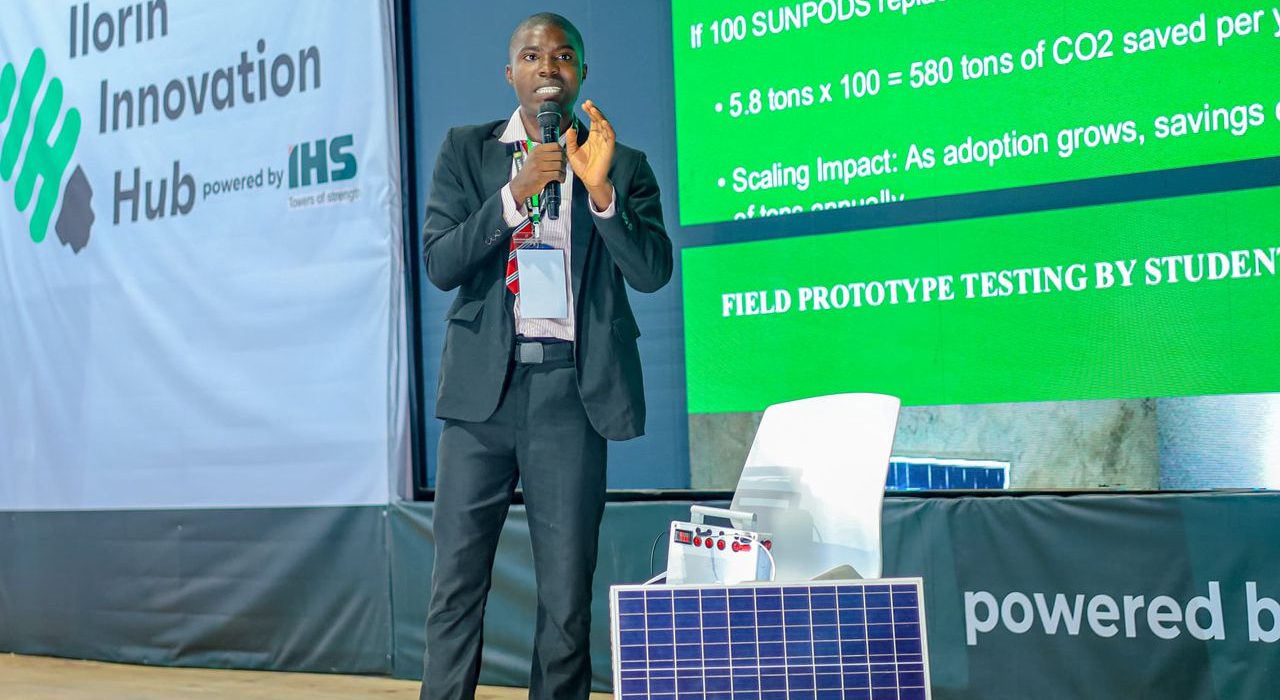
In a bid to transform student entrepreneurs into startup founders, the federal government took a significant step in 2026 through the Student Venture Capital Grant (S-VCG). The initiative provided ₦50 million each to selected young innovators, including Emmanuel Aanu Ajayi, a final-year Electrical and Computer Engineering student at Kwara State University and founder of SUNPOD, an energy startup that converts electronic waste into components for solar power systems.
🚀 Don't Miss Out!
Latest jobs • Scholarships • Grants • Internships • Career tips
(Naija + worldwide) — delivered daily on our WhatsApp Channel.
The S-VCG, which was first launched in December 2025 in partnership with the Bank of Industry, is a flagship initiative by President Bola Ahmed Tinubu to help student inventors become business owners. According to the event overview by the Ministry of Education, this grant shows the great potential of Nigerian students to create solutions for the country.

The programme had over 30,600 applicants from 404 schools, and only a few were chosen for the final stage. Emmanuel had to go through many interviews, training sessions, and presentations before a panel of experts.
🔔 OFFICIAL CHANGE OF NAME MADE EASY!
Avoid delays and rejection — let professionals handle your publication quickly and stress-free.
We help you publish your change of name in:
📰 Punch Newspaper
📰 Vanguard Newspaper
📰 Other Top National Newspapers
✨ Why Choose Us?
- ✔️ Quick turnaround (3 days)
- ✔️ Budget-friendly packages
- ✔️ Reliable & trusted service
As first reported by The Lagos Voice during SUNPOD’s early development, the innovation began as a response to Nigeria’s heavy reliance on costly, polluting generators and lack of electricity. However, the project has since evolved into a dual-threat solution for both energy poverty and environmental waste.
While working as a Research Assistant at the Centre for Artificial Intelligence and Machine Learning Systems (CAMS), Emmanuel Aanu Ajayi began to observe another evolving challenge of the steady rise of electronic waste like discarded devices, broken components, and unused electronics, which were increasingly visible alongside electricity shortages.
For him, the overlap between both issues became difficult to ignore. “What helped us stand out was that we already had a working prototype and real users,” he says. With this recognition, it marks a turning point for a project that began long before the structured support or funding came to view.
“It made me realise that energy access is a major challenge that needs a solution,” he told The Lagos Voice.
“SUNPOD builds solar energy systems using upcycled electronic waste materials to provide affordable and sustainable electricity. The model combines repurposed electronic components with solar technology and elements of artificial intelligence to reduce costs and improve system efficiency, particularly for users in underserved communities,” Emmanuel explained.
PAY ATTENTION: Follow The Lagos Voice on WhatsApp channel for latest updates
However, Emmanuel noted that the application process demands a good startup idea, clarity, structure, and evidence that the solution could scale. “What stood out was the clarity of the problem, the sustainability angle, and real-world application,” he said.
He believes SUNPOD’s strength lies in its dual focus of addressing both energy poverty and electronic waste within a single solution. Winning the grant has now shifted the project from experimentation to structured expansion. “The funding will be used for scaling production, improving manufacturing tools, expanding deployment, and increasing access to more users,” Emmanuel said.
What began as a student-led experiment is now developing into a startup with a growing team and precise operational direction. Still, according to Emmanuel, the journey has not been without difficulties. His early attempts to convince others of the idea were met with skepticism. “One major setback was rejection and doubt in the early stages, especially when trying to convince people that SUNPOD could actually work,” he said.
As the venture grows, challenges around scaling production and building trust in solutions built from recycled materials remain substantial. Now in his final year, Emmanuel is balancing academic demands with the responsibilities of running a startup. “I’ve learned time management. I balance both by being disciplined and focused,” he said.
For Emmanuel, the grant represents both financial support, and a launch point. “I see SUNPOD scaling across Nigeria and possibly other African countries,” he expressed.
His long-term goal is to build a full energy technology company focused on affordable and sustainable power solutions across the continent. Emmanuel’s message to other students with great ideas but limited resources is “Start with what you have. Don’t wait for funding before building,” he said. “Funding follows impact, not just ideas.”