


By Mercy Olabiyi

It is 7:35 in the morning at Obafemi Awolowo University, and Deborah is already calculating. She has ₦2,000 left until her next allowance arrives. Breakfast will be bread and butter. Lunch will be garri. Dinner will almost certainly be noodles. ‘It is not what I want. It is what I can afford,’ she says.
Across Nigeria, millions of young people are making the same quiet calculations every day.
🚀 Don't Miss Out!
Latest jobs • Scholarships • Grants • Internships • Career tips
(Naija + worldwide) — delivered daily on our WhatsApp Channel.
For young Nigerians, food is no longer just about filling up. It is about survival, saving money, maintaining appearances, and sometimes, it is about landing the right shot. Walk across a campus or down a city street, and you will see it: every meal choice young people make is tied to money worries and what is trending globally.
Nigeria is currently facing one of its worst food and cost-of-living pressures in decades. Rising inflation, poverty, and unemployment have reshaped not only what young people eat but also what they can afford to eat.
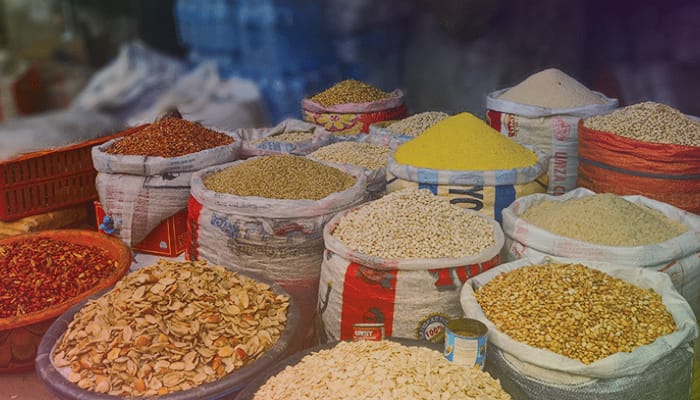
For students, the situation is particularly acute. A meal of rice and stew that cost roughly ₦500 in 2022 now sells for between ₦1,500 and ₦2,500 at most campus canteens.
🔔 OFFICIAL CHANGE OF NAME MADE EASY!
Avoid delays and rejection — let professionals handle your publication quickly and stress-free.
We help you publish your change of name in:
📰 Punch Newspaper
📰 Vanguard Newspaper
📰 Other Top National Newspapers
✨ Why Choose Us?
- ✔️ Quick turnaround (3 days)
- ✔️ Budget-friendly packages
- ✔️ Reliable & trusted service
What Data says
According to data released by the National Bureau of Statistics, Nigeria’s headline inflation rate rose to 15.38 per cent year-on-year in March 2026, up from 15.06 per cent in February.
The Consumer price index climbed to 135.4, a 5.4- point increase from the preceding month’s reading of 130.0. On a month-on-month basis, headline inflation stood at 4.18 per cent in March, more than double the 2.01 per cent recorded in February, indicating that prices are accelerating rapidly in the short term even as the annual figure remains significantly lower than the 27.35 per cent recorded in March 2025.
Food prices remain at the heart of this pressure. The National Bureau of Statistics put the food inflation rate at 14.31 per cent year-on-year in March 2026, with month-on-month food prices rising by 4.17 per cent. The NBS had previously attributed rising food costs to higher average prices of beans, carrots, okazi leaf, cassava tuber, crayfish, millet flour, yam flour, snails, dried ogbono, and cowpeas staples that form the backbone of everyday Nigerian meals.
The National Bureau of Statistics data also shows that the burden is not shared equally across the country. Urban inflation stood at 14.64 per cent year-on-year in March 2026, while rural inflation ran higher at 17.22 per cent.
More strikingly, rural prices surged by 6.73 per cent within the single month of March alone, up from just 0.71 per cent in February; a spike that points to severe, sudden price shocks in communities with the least capacity to absorb them.
Core inflation which strips out volatile farm produce and energy to reveal broader price trends, stood at 16.21 per cent year-on-year in March 2026, but rose sharply every month to 4.03 per cent, compared to just 0.89 per cent in February, suggesting that inflationary pressure is spreading beyond food into the wider cost of living.
But beyond the numbers, the reality is felt in smaller, daily decisions. The rising cost of fuel continues to affect both transportation and food prices. Moving goods from farms to markets has become more expensive, and those costs are passed down to consumers. For students, this means paying more for meals that are often smaller in quantity.
Energy costs have added another layer of pressure. With irregular electricity supply and increasing tariffs, many students spend extra money charging devices or rely on alternatives that stretch their already limited budgets. For food vendors, higher energy costs also mean higher food prices.
Nigerians students speaks
Beyond the statistics, interviews with young Nigerians reveal how these rising costs are reshaping everyday food choices.
Gladys, a student of Obafemi Awolowo University who sells groundnuts to support herself, says her food choices have never been driven by trends. ‘It depends on what I have and what I can afford,’ she told The Lagos Voice.
Unlike many of her peers who receive a fixed monthly allowance, Gladys has no set amount coming in. Money is simply sent to her as the need arises, leaving her financial footing uncertain from one week to the next.
Yet even within that uncertainty, she is clear-eyed about how the broader economy shapes what ends up on her plate. ‘The economy really influences what I choose to take in. When times are harder, I naturally hold back and focus on necessities. But when things are better, I feel more comfortable treating myself or investing in new things,’ she says.
It is a sentiment that captures something larger than one student’s experience. For young Nigerians like Gladys, food choices are not made in a vacuum. They are made in direct response to economic conditions, tightening when the pressure mounts, loosening only when there is room to breathe.
Also, Precious Adepoju, a student of the Department of English at Obafemi Awolowo University, shared with The Lagos Voice on how the economy shapes her food choices. For her, it’s mostly about survival, not trends. ‘My food choices are based on what I have in my kitchen and what my pocket says. I don’t follow trends,’ she says. She admits that social media sometimes influences her. She once tried learning how to make a smoky party Jollof.
For Precious, the bigger issue is the economy. ‘The current state of the economy has affected many aspects of my daily life, especially the quality of what I consume,’ she explains. Even buying something as simple as a drink now requires caution. ‘I now have to be extra careful when buying soft drinks because counterfeit products are becoming increasingly common.’
Precious’ diet has also changed because of rising costs. “I genuinely enjoy eating fruits and vegetables, but there are times I have to cut back when I cannot afford them,” she says.
She added; “Protein, too, has become harder to maintain. ‘I also prefer having enough protein in my meals, but lately, I find myself consuming more carbohydrates instead, which has led to unwanted weight gain.”
PAY ATTENTION: Follow The Lagos Voice on WhatsApp channel for latest updates
At the end of the day, Precious is just trying to manage by adjusting her choices based on what she can afford, not necessarily what she wants.
Bright, a final-year student of English and Literary Studies at Osun State University, says his diet is strictly practical. ‘My choice of food isn’t based on what’s in vogue,’ he told The Lagos voice.
He added; ‘I have a lot of common foods I’ve never tasted, and I’m not even planning to do so.’ He also admits he does not follow social media food trends or attempt viral recipes. ‘Not at all,’ he said when asked if she has ever cooked what he sees online.
But beneath that simplicity lies a deeper economic reality. ‘Shortage of funds has heavily influenced the way I eat,’ he added. ‘As a student, I always have to think twice so as not to make a financial mistake.’
Another student, Victoria, a student of Osun State University, food decisions are shaped by both unstable income and necessity. She does not receive a fixed allowance. “I can’t say I receive an allowance monthly or weekly. Money is just sent to me sometimes, maybe twice a week,” she said. To sustain herself, she also sells raw food as an additional source of income.

Her eating pattern is flexible, sometimes minimal. ‘I’m not the type that eats a lot. I can eat once a day, and I can cook anything based on my mood,’ she explains. Social media food trends rarely influence her kitchen. When she does an experiment, it is usually simple dishes like ‘choco bumbum’ or boiled and fried eggs.
However, she is clear about the economic pressure surrounding everyday life. She said when asked if the economy has influenced her food choices. “The price of pepper now is nothing to write home about. ₦500 pepper is not enough for two days. Three balls of pepper for ₦200. There’s no light, we charge power banks at ₦400 almost every two days. Transportation is crazy because of fuel prices.”
At the Federal University of Oye Ekiti, Juwon Bruce, a student and baker, also reflects a different but equally telling reality. With baking as a source of income, his earnings depend on demand.
“Monthly? Roughly ₦100,000; if orders are really coming in,” she told The Lagos Voice.
PAY ATTENTION: Follow The Lagos Voice on WhatsApp channel for latest updates
Unlike many students who struggle with strict budgets, Juwon describes a more relaxed approach to food. “I eat whatever I see,’ she says with a laugh.”
She added; “I don’t really fancy trending stuff, and I don’t have any cravings, so I go for what is on ground.” She also admitted to experimenting occasionally with social media recipes, including milky doughnuts.
Efforts by the Nigerian Government
Recently, policy directions by the Federal Ministry of Agriculture and Food Security highlight the importance of market-driven agricultural systems in transforming Nigeria’s food landscape.
According to a release by the Federal Ministry of Agriculture and Food Security, the Minister of Agriculture, Abubakar Kyari, stated that strategic market systems are designed to connect smallholder farmers to higher-value markets, improve productivity, and enhance income generation.
These interventions aim to strengthen agricultural value chains through digital platforms, private sector investment, and improved access to market information. However, in the short term, economic constraints still limit many young people to low-cost and convenient food.
Expert says affordability now matter than proper nutrition
A Nutrition Officer, Oladeji Olanike, who spoke with The Lagos Voice said what many young Nigerians are eating today is driven more by affordability than proper nutrition.

She expressed; “Most cheap meals are heavy in carbohydrates but low in important nutrients like protein, iron, calcium, healthy fats, and vitamins. When students constantly survive on meals like noodles without eggs or garri without balanced nutrients, it affects not just their physical health, but also concentration, energy levels, and academic performance.”
“Many students are simply trying to survive on limited budgets. Healthy eating has become expensive and inconvenient for a lot of young people. If these eating patterns continue into adulthood, they may increase the risk of diabetes, hypertension, obesity, and other long-term health conditions,” she added.
Furthermore, Oladeji advised that although eating healthy on a student budget can be difficult, it is still possible with practical and affordable food choices. According to her, students should focus on simple meals that provide nourishment without excessive cost.
“Beans remain one of the most affordable sources of protein. A pot of beans can be cooked once and eaten over two or three meals. Students can combine it with garri, yam, or plantain to create filling and balanced meals,” she explained.
Oladeji Olanike also recommended reducing dependence on expensive white rice by combining smaller portions of rice with beans or opting for alternatives such as swallow and okra soup, which she described as both cheaper and more filling.
“Eggs are still one of the cheapest complete proteins available. Simple meals like egg sauce with boiled yam or bread and egg can provide better nutrition without costing too much,” she added.
Oladeji further encouraged students to include more vegetables in their meals, noting that vegetables such as ugu and shoko can make meals more nutritious and satisfying at relatively low costs. “The goal is not perfection. It is about making smarter food choices within the reality of what students can afford.”
Where Affordability Wins
In today’s Nigeria, what young people eat says a lot about what they’re going through. It’s not just about preference anymore; it is about managing, adjusting, and getting by. Social media is filled with trending meals and aesthetic food content, but for many students, those things feel far from their reality.
What really matters is what they can afford at that moment. Meals are stretched, portions are smaller, and choices are limited. Sometimes, it’s not even about eating well; it’s just about eating something.
Still, young people are finding ways to cope. They adjust, they substitute, they make things work however they can. What ends up on their plate might look simple, but it reflects the constant decisions they have to make every day.
Research on students indicates that poor eating habits, often adopted during times of financial strain and high inflation, contribute to long-term health risks including depression and anxiety. Ultimately, while globalisation continues to shape tastes and preferences, Nigeria’s economic realities remain the decisive factor in what young people eat.