

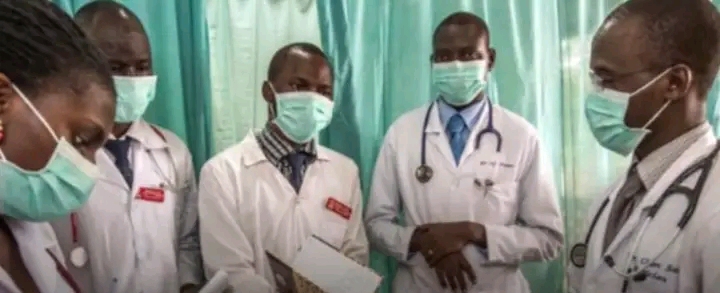
Health experts have attributed the increase in new Human Immunodeficiency Virus (HIV) infections in Nigeria to diminishing donor funding, escalating poverty, and fewer awareness initiatives.

They caution that these developments threaten to undo years of progress in managing the disease.
🚀 Don't Miss Out!
Latest jobs • Scholarships • Grants • Internships • Career tips
(Naija + worldwide) — delivered daily on our WhatsApp Channel.
The Federal Ministry of Health and Social Welfare’s State of the Health of the Nation Report 2025 indicates that Nigeria recorded 102,025 new HIV infections across its 36 states and the Federal Capital Territory in 2025.
According to physicians, funding reductions have compromised HIV prevention programs, testing services, counseling, education, and community support, while escalating economic difficulties have heightened the risk of HIV transmission.
PAY ATTENTION: Follow The Lagos Voice on WhatsApp channel for latest updates
🔔 OFFICIAL CHANGE OF NAME MADE EASY!
Avoid delays and rejection — let professionals handle your publication quickly and stress-free.
We help you publish your change of name in:
📰 Punch Newspaper
📰 Vanguard Newspaper
📰 Other Top National Newspapers
✨ Why Choose Us?
- ✔️ Quick turnaround (3 days)
- ✔️ Budget-friendly packages
- ✔️ Reliable & trusted service
Dr. Dan Onwujekwe, a specialist in tuberculosis and HIV, explained that worsening poverty has led many Nigerians to seek care at unregistered health facilities where unsafe practices, like reusing syringes and needles, elevate the risk of HIV and other infections.
He also highlighted that sharing sharp tools in barber shops, salons, and beauty parlors poses additional dangers.
Discussing the consequences of donor funding cutbacks, he noted, “When funding decreases, preventive healthcare services are generally the first to be impacted. The 102,025 reported HIV cases may just be the tip of the iceberg. Nigeria is a vast country, and this number likely represents only a small portion of the actual burden. However, that’s the official statistic currently available.”
HIV researcher Dr. Sule Abdullahi echoed these sentiments, stating that reduced donor support and diminished public awareness campaigns have negatively influenced HIV testing and treatment.
He remarked, “If supplies are disrupted, some patients may not consistently receive their medications. When people stop taking their medications, their viral load increases, raising the chances of transmission.”
He also pointed out that HIV prevention campaigns have significantly decreased. Abdullahi urged the government to enhance domestic funding to fill the void left by foreign donors and encouraged Nigerians to engage in safer sexual practices and avoid high-risk behaviors.