


By Joan Olatunde

The afternoon sun is usually brutal on the concrete pathways of Obafemi Awolowo University (OAU), especially when you are walking past the Motion Ground. For every undergraduate here, the academic load at “Great Ife” is already a lot to handle.
🚀 Don't Miss Out!
Latest jobs • Scholarships • Grants • Internships • Career tips
(Naija + worldwide) — delivered daily on our WhatsApp Channel.
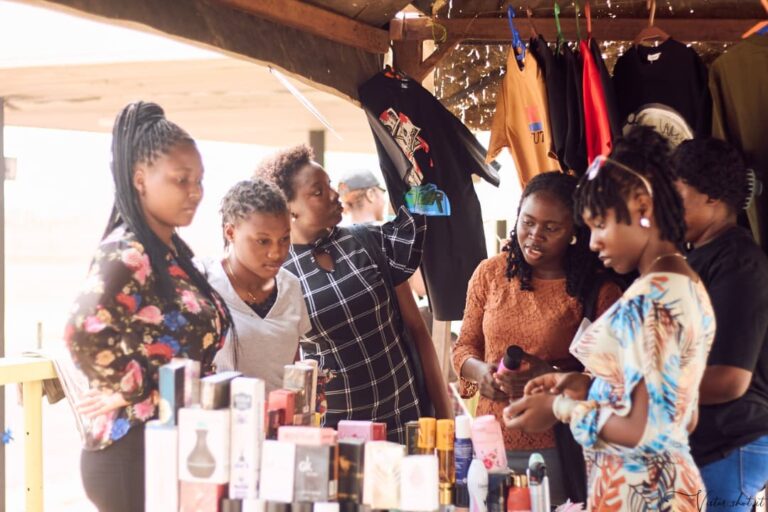
But lately, things have changed. If you walk through the corridors of Awolowo or Mozambique halls and other halls of residence on campus, you will notice that almost every student is selling something or rendering a service. Running a side hustle is no longer just for making extra pocket money to flex on weekends. With the way things are in the country right now, it has become a survival strategy for students who want to stay afloat without stressing their parents.
Similoluwa, a final-year History student at OAU, is one of those juggling these two worlds every single day. She runs a business called “Northern Treats,” where she sells snacks like Kilishi, Dambunama, Kulkuli, and Taji Pepper, while also working as a campus hairstylist.
“What inspired me to go into this business was basically survival,” Similoluwa told The Lagos Voice.
🔔 OFFICIAL CHANGE OF NAME MADE EASY!
Avoid delays and rejection — let professionals handle your publication quickly and stress-free.
We help you publish your change of name in:
📰 Punch Newspaper
📰 Vanguard Newspaper
📰 Other Top National Newspapers
✨ Why Choose Us?
- ✔️ Quick turnaround (3 days)
- ✔️ Budget-friendly packages
- ✔️ Reliable & trusted service
“And from there, I also found fulfillment in making people look good and satisfying my customers.” But keeping the business alive while studying has been a messy process.
By the time she got into her third year, her schedule started falling apart. Her hairdressing appointments constantly clashed with an unpredictable lecture timetable.
She would book a client for a specific time, only for a lecturer to suddenly fix an impromptu test or demand compulsory attendance for a morning class. “There were times I had to miss classes, and in other cases, I had to skip the appointments,” she explained.
Once she had already collected a client’s money, she felt a deep sense of responsibility to deliver, even if it meant missing a lecture. All that stress took a heavy toll, and her Cumulative Grade Point Average (CGPA) dropped during that session.
OAU’s recent transport issues and campus delivery rules, like riders not being allowed inside the campus gates, only made things harder and more expensive. Still, by carefully choosing what matters most, she managed to fix her grades and keep going because the work genuinely makes her happy.
A few faculties away, Abiola Susan Oluwatosin, a Part 4 International Relations student, has faced an even tougher journey. She runs a wig-making business which she actually started before she even gained admission into OAU.
Back then, it was just a passion project born after secondary school because learning a skill was the normal thing to do, and she loved fixing old, worn-out wigs. But everything changed during her fourth year when she lost her father. Suddenly, the business was no longer just a hobby.
As the second child of the family, the financial weight shifted heavily onto her shoulders. She realized she could not just sit back and look; she had to restart the business immediately to support herself and help take care of her siblings. Running a wig business under that kind of pressure comes with massive structural headaches on campus, especially with electricity.
PAY ATTENTION: Follow The Lagos Voice on WhatsApp channel for latest updates
Because all her styling tools are electrical, OAU’s power outages stop her from working completely. “When there is a blackout, you cannot work,” Abiola told The Lagos Voice.
While it is possible to heat tools manually using gas or coal, she is not ready to spend her tiny profit on extra gas. Since her customers are mostly fellow students, she cannot raise her prices to cover those extra costs without losing them entirely.
This push toward self-reliance stretches far beyond the walls of OAU, finding an identical echo at the University of Ilorin (UNILORIN). Lord Felix, a 200-level student from the Department of Food and Bio-process Engineering, stepped into the entrepreneurial ring last semester by launching his own Kilishi business.
He started the business because he wanted to have something active to avoid stressing his parents by asking for money every time. Unlike others pushed by sudden emergencies, Felix wasn’t under intense financial pressure before starting, and he always firmly places his education above his business and every other thing.
“That’s my primary assignment in school,” he explains, noting that after education, business follows, but the two have never negatively affected each other.
Because of the specific nature of his trade, power outages have never affected him. “The time I spend on my business weekly doesn’t affect me because I know how to balance well,” Felix affirmed.
His venture operates strictly as an online business, allowing him to make sales “anytime, anywhere, and when he’s also available,” provided he is not sitting in a class. Even though managing the Kilishi trade is stressful, it has never harmed his CGPA. He recalls his biggest milestone so far as the day a single customer ordered “Kilishi worth ₦20,000.”
For Felix, a side hustle is an absolute necessity for students at Unilorin because they rarely get handouts, and a massive amount of money is constantly needed to handle transportation and other essential expenses.
At the University of Ibadan (UI), the hustle culture takes on a more creative, craft-focused direction. Ayeni Jesutofunmi, a 400-level student in the Department of Educational Management, runs a business making hair bonnets and hair accessories.
She launched her brand between late 2024 and early 2025, inspired deeply by her native passion for sewing, which she decided to monetize to see what she could achieve with her skills. To an extent, a growing sense of financial pressure pushed her into the market because she felt she was not a kid anymore and needed to fend for herself in some ways without calling her parents all the time.
On top of that, seeing that some of her own classmates were already running successful businesses motivated her to step up. Jesutofunmi faces unique logistical hurdles at UI; when she needs specific tailoring materials, she often discovers they do not sell those at the University of Ibadan campus environment.
This forces her to go outside the campus gates to hunt for different colors and materials that perfectly match what her customers want. “The time I spend on my business depends on how demanding the customers want the products,” she shares, but thankfully, the business has never affected her CGPA.
Her biggest milestone happened last year when her business suddenly started booming; people began engaging with her brand and actively referring new clients to her.
Despite all the setbacks, these student entrepreneurs have built a strong sense of independence and deep wisdom about the realities of the modern economy. For Similoluwa, her proudest achievement is proving that books and business can coexist if you focus. Her golden rule for any OAU student wanting to start a business is to “choose what you believe is your priority, what suits you, and what makes you happy.”
She also notes that many students who stay away from business are usually afraid of failing, or they just have comfortable financial backing from wealthy parents.
Felix shares a similar sentiment regarding student hesitation, believing that many do not go into business because of a “fear of failure,” while others simply feel they are “not capable enough to start businesses”. He notes that “if he had a guaranteed safety net,” he would love to venture into the fashion world to sell clothes and other similar fashion items.
Jesutofunmi firmly believes that whether a student is naturally business-oriented or not, a side hustle is necessary. “She feels everyone should do what works for them,” she reflects, but most importantly she says, “it’s important for everyone to get a side hustle that would bring money to their table.”
PAY ATTENTION: Follow The Lagos Voice on WhatsApp channel for latest updates
She acknowledges that the fear of a business collapsing, folding up, or the ‘inability to pick up from where they started’ holds many back. She admits that if she had a guaranteed safety net, she would comfortably explore a land of business she does with her hands and has a deep passion for.
Her golden rule for anyone looking to start a business today is ‘not to look at the challenges attached to businesses, but keep up with it, and most importantly, know your target audience.’
For Abiola, finally relaunching her wig business and using the money to settle her own bills feels like a major victory. Her advice to her peers is ‘Be relentless, find a balance, and not put all their eggs into one basket’, especially since parental allowances are rarely enough to cover the daily costs of being a student today.
In the end, the realities of campus life do not pause for business owners, and customers do not care about exam timetables. But for student entrepreneurs like Similoluwa, Abiola, Felix, and Jesutofunmi, waiting for a perfect time is no longer an option. They are proving that staying afloat on campus takes more than just sitting in a lecture hall, it takes grit, adaptation, and the courage to build something out of nothing.