

By David Olatunji

Nigeria’s young population is coming of age in an era of profound information disorder. Economic pressure, weak public services and eroding trust in institutions already shape daily life for millions. Now a relentless stream of false and misleading content, circulating on WhatsApp, TikTok, X and other platforms, is deepening confusion about everything from government budgets and public projects to health claims and political intentions.
🚀 Don't Miss Out!
Latest jobs • Scholarships • Grants • Internships • Career tips
(Naija + worldwide) — delivered daily on our WhatsApp Channel.
As the 2027 general elections draw closer, the volume and sophistication of disinformation are rising. Coordinated falsehoods, recycled images, AI-generated content and rumour networks threaten to further undermine already fragile confidence in democratic processes. Traditional media and official channels often struggle to keep pace.
In response, a growing number of young Nigerians are refusing to remain passive consumers of information. Through community fact-checking networks, media literacy training and practical civic tools, they are learning to verify claims, track public spending and demand better governance. What begins in workshops is increasingly spilling into campuses, markets and neighbourhood conversations, quietly building a more informed and assertive citizenry.
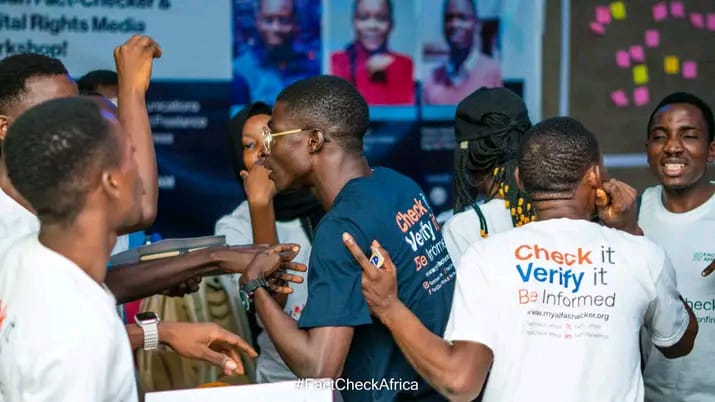
In February 2024, Imam Taofeeq Ahmad, a student residing in Kwara state was selected to participate in a Fact checking workshop in Ibadan, Oyo State organized by Factcheck Africa.
🔔 OFFICIAL CHANGE OF NAME MADE EASY!
Avoid delays and rejection — let professionals handle your publication quickly and stress-free.
We help you publish your change of name in:
📰 Punch Newspaper
📰 Vanguard Newspaper
📰 Other Top National Newspapers
✨ Why Choose Us?
- ✔️ Quick turnaround (3 days)
- ✔️ Budget-friendly packages
- ✔️ Reliable & trusted service
Before the training, Taofeeq sees media literacy as the ability to verify and debunk misleading information. However, as a student journalist, he hasn’t undergone any intensive training that could enhance his skills and knowledge.
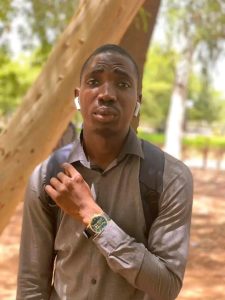
Speaking to this Reporter, Taofeeq Ahmad shared the impact of the Factchecking workshop on his career as a student journalist. He said; “The facilitators taught us the process of verifying information using AI tools such as Dubawa ChaBox, My AIfactchecker, Google Reverse. And also the process of writing a fact check report.”
He added; “Following that training, I started producing fact-checking reports for my campus media outlet in UDUS. That enabled me to be selected to participate at Dubawa Week for truth, through which I sensitized secondary school students in my communities at Sokoto state, and I taught them how to use Dubawa AI chat box, to verify information.”
Taofeeq also revealed that the Factchecking workshop facilitated his ability to track government budgets and projects through the use of Tracka, an app meant for tracking government disbursement into respective local governments in Nigeria.
Similarly, Matthew Ogunwale, a recent graduate of Obafemi Awolowo University, said his media literacy and civic accountability journey started from campus through training from developmental organizations like Wole Soyinka Centre for Investigative Journalism (WSCIJ), Centre for Journalism Innovation and Development (CJID), FactCheckAfrica, and Roundcheck.
Matthew claimed these training helped him to be able to expose claims, breaking news, and information circulating among OAU students and Nigerian youths at large, while asserting a motivation.“That curiosity led me to develop my verification skills through journalism training and fact-checking opportunities.”
Through these accountability training, Matthew Ogunwale revealed that he has been able to utilize it, while practicing campus journalism in OAU, stating; “When I approach a budget-tracking or accountability story on campus, I start by identifying the specific public-interest question I want to answer due to what I have learnt.”
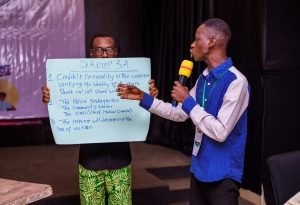
Additionally, Matthew said the training process has taught him that accountability journalism is not about trying to expose people but how to follow the evidence and asking legitimate public-interest questions.
Another young Nigerian, Iretomiwa Balogun who has applied her media literacy skills into civil power also revealed her days of little beginning. The young factchecker who majorly focuses on gender-related misinformation said she ventured into fact-checking during her SIWES program at Media Career Development Network, specifically during a media literacy training with Round Check, a digital based Factchecking network in Nigeria.
Expressing her motivation to develop a niche on factchecking, Iretomiwa attributed it to her interest in gender reporting. She said; “Although I wasn’t interested at first, upon the inauguration of the gender misinformation desk at Roundcheck, I became very much interested as a gender researcher.”
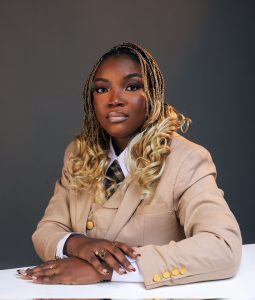
A few years after her interest in countering gender claims and producing gender-related stories, Iretomiwa has been able to show how verified stories can save Nigeria ‘s civil space. Recent investigation from Iretomiwa Balogun about Pregnancy-test investigation, which eventually earned her continental recognition at the African Fact-Checking Awards, demonstrated the practical power of the training many young Nigerians are now receiving.
Another young Nigerian, Peace Oladipo, an investigative journalist, has also been utilizing her digital skills and professional knowledge to focus on public accountability, the environment, climate impacts, and the stories of women and rural communities.
Peace Oladipo’s documented budget and project-tracking work became visible around 2023. A key early example is the October 2023 Premium Times investigation into an abandoned road project linking farming communities in Ekiti State (Itapa/Ijelu/Omu). The story showed how the incomplete road drove up transport costs and contributed to food insecurity for farmers.
Speaking with this Reporter, Peace reveals how she is able to track government budgets beyond the written numbers. “For my investigations and tracking of budgets funding and implementation, I go to the budgets office where we do see data available. But most of the time, due to the absence of transparency by the Nigerian government, I make use of tools that have been developed by CSOs, to get my facts and figures like Govspend, Advokacy, UDEME, Tracka, Budgit.”
In 2023, Peace Oladipo was opportuned to be selected for UDEME, a social-accountability initiative of the Centre for Journalism Innovation and Development (CJID) that trains student and early-career journalists as “U-Monitors” to track capital and constituency projects, analyse budgets, conduct fieldwork and produce investigative stories.
Citing the impact of the training on her career path, Peace said the training has sparked her view on how to see projects done by government officials as not a favor but rather their responsibilities.
She added; “It has sharpened my knowledge and professional development to be able to ask questions, hold offices and government agencies accountable. Also, the training has taught me to realize that these government officials(politicians) might not be at fault, but from the civil servants in some of these ministries.”
Reflecting on the impact of employing her civil tools to hold power accountable, Peace Oladipo acknowledged that she has used budget tracking to push for better service delivery, better healthcare service across the nation, communication service, transportation services.
What data and statistics says
According to The Peace Research Institute Oslo (PRIO), Nigeria’s median age is about 18.1 years; roughly 70% of the population is under 30 and nearly one-quarter are aged 10–19, as per 2025 estimation.
Also, A 2025 Zikoko citizen report survey of young Nigerians (18–35) found that 62% said misinformation had kept them away from political participation. 92.5% spent over three hours daily on social media; 84.2% relied on it for news more than they did five years earlier.
Media literacy trainer speaks
Mustapha Lawal, a factchecker and program researcher with FactCheckAfrica, who is also the focal person for the digital democracy lab for the project implementation across the Southwest region of Nigeria with support from Nigeria Youth Future Funds (NYFF).
Reflecting on his journey, Mustapha admitted that he got into factchecking and media literacy work out of curiosity in 2020. In 2021, Mustapha Lawal found the perfect opportunity to deepen his interest in combating misinformation after a week-long training on fact-checking organized by Brain Builders Youth Development Initiative.
“This experience opened new doors, including a chance to join the factcheckElections team as Nigeria prepared for the 2023 general elections”, He said.
Following the transition of the FactCheckElections team to FactCheckAfrica, Mustapha Lawal has embraced his role as a fact-checker, separating truth from fiction and promoting media literacy, from debunking hundreds of claims to leading media literacy training sessions.
Speaking about the digital democracy Lab workshop that took place across the capital cities of south west states (Abeokuta, Ibadan, Akure, Osogbo, Ado-Ekiti and Lagos), Mustapha Lawal said the workshop involves 3 sessions that delves into practical and interactive activities that covers the adoption of Ai in Factchecking and information integrity, AI in public accountability and AI for social goods.
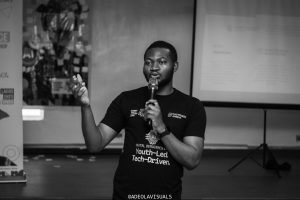
Exploring the activities during the workshops, Mustapha acknowledges that the training starts with problems young people and civic actors already encounter, rather than starting with the technology itself. He said; “Instead of explaining how an AI fact-checking tool works technically, we might take a viral claim circulating on WhatsApp or social media and ask: ‘How would you know if this is true?’ That naturally introduces them to tools like MyAIFactChecker as something that can help them investigate a claim, not as technology they need to master.”
Echoing the same sentiment, Mustapha revealed a similar approach with budget analysis with the participants of a digital democracy lab workshop across the capital cities of south west states.
He narrated; “Public budgets can sound intimidating when presented as spreadsheets and technical documents, so we translate them into questions people can relate to: How much was allocated to health in my community? What was promised? What was actually spent? Who benefits? Participants then work with real budget information and connect the numbers to issues they care about.”
Mustapha Lawal added that the goal is to make AI and budget analysis feel like civic tools in a toolkit, just as useful for asking questions, checking evidence and holding institutions accountable as a phone or search engine is for finding information. “They can then turn those findings into a short public-interest story, social media post, advocacy question or request for clarification”, He said.
Measuring the impact of the fundamentals workshops under the digital democracy lab on Nigerian youths, Mustapha Lawal cited the growth of Joseph Adeboye, one of the participants. Mustapha said before that training, Joseph had limited practical experience with civic accountability mechanisms such as the freedom of information act or with using digital tools to engage public institutions.
He added; “Following the training, Joseph has subsequently put that learning into practice. Inspired by the sessions on AI-assisted civic engagement, fact-checking and accountability tools, he drafted and submitted a formal Freedom of Information request seeking clarification and access to information relating to a public issue affecting his community. He went a step further by initiating a public petition calling for an institutional response and greater accountability.”
Advocating for more engagement on media literacy, Mustapha Lawal said university students often engage more deeply with the research, analytical and policy dimensions. He said; “They are also often able to connect these skills to journalism, research, advocacy or their future professional work. They can take a public claim or budget document and investigate it more systematically looking at sources, comparing evidence, examining government allocations and asking whether spending commitments match what is happening on the ground.”
Noting the effectiveness of grassroots mobilization, calling for other developmental organizations in equipping youths across local communities, Musatapha said out-of-school and community youth tend to respond most strongly when the training is connected directly to issues they experience in their communities.
PAY ATTENTION: Follow The Lagos Voice on WhatsApp channel for latest updates
Media literacy organization founder speaks
Caleb Ijioma, the Executive Director of Round Check, a youth-focused fact checking organization that is involved in media literacy and encourages practice of fact checking among young people said the birth of the organization arose from realizing that young people form a large population in Nigeria, and also internet users.
While speaking to this Reporter, Caleb revealed how his media literacy organization helps young Nigerians, stating; “We thought of addressing them in giving necessary information and knowledge in navigating social media, and verifying information.”
Caleb Ijioma also commented on how Nigerian youths are having disinterest in reading, but are relying on AI for answers. He further stressed that AI lies, and sometimes can be a tool of misinformation.
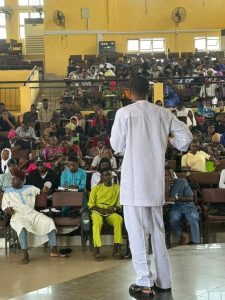
Furthermore, Caleb emphasized on a disinformation problem that’s facing Nigerian youths during elections in Nigeria and how his organization is curbing it, stating; “We still have people who find it very difficult to identify AI generated disinformation during elections, and that’s why we want to center around young people. Misinformation is really on the surge across the country.”
PAY ATTENTION: Follow The Lagos Voice on WhatsApp channel for latest updates
Also, Caleb Ijioma spoke about a section of his organization, Roundcheck’s Volunteer Network, that’s dedicated to training young people, campus students on media literacy holistically. He said; “We conduct training for them and it runs for 3 months per cohort, and the training is based on fact-checking tools, information disorder, basic verification steps. We train young Nigerians to know about Factcheck, and how to write a fact-checking report.”
The Executive Director recalled that several young Nigerians have passed through the scheme, Roundcheck volunteer network and have transitioned to other organizations, becoming fact-checkers, citing Ademola Praise who now works with AfricaCheck, and Zaynab Adewale who is currently working with Premium Times.
Caleb Ijioma attributed the program scheme as an impactful scheme that’s helping young Nigerians to understand Fact checking. He further revealed that Round Check will be conducting a community outreach soon, where over 1000 young Nigerians will be trained on media literacy.
________________
David Olatunji is a Journalism for Liberty Fellow at the Liberalist Centre.