

By Esther Olatimehin
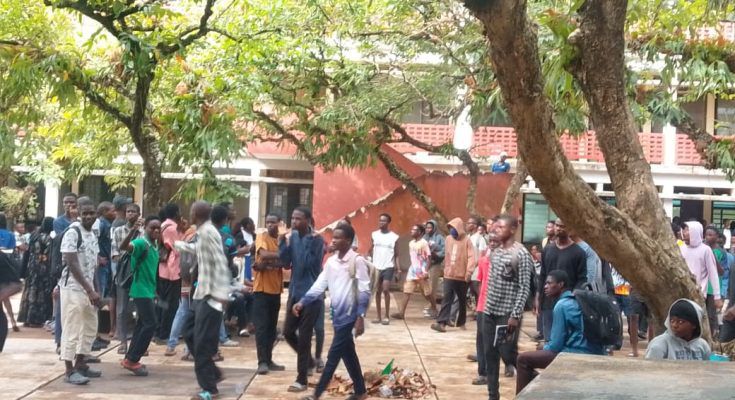
On Wednesday, May 6, 2026, students at the University of Ibadan began a peaceful protest due to power and water outages on campus, which continue to disrupt their daily activities.

The protest which began early in the morning was led by students from Independence and Nnamdi Azikiwe halls of residence. They moved through lecture venues to mobilise others, and by about 9:00 a.m., the number of protesters had grown, forcing lectures to stop in several faculties, including Science, Computing, Social Sciences, and Arts.
The demonstration spread across different parts of the campus, with students chanting “No water, no class” and “No light, no class” as they moved.
The action followed ongoing challenges linked to the strike by the Non-Academic Staff Union of Educational and Associated Institutions and the Senior Staff Association of Nigerian Universities, which has disrupted basic services such as electricity and water supply within the school.
During the protest, students gathered in large numbers and blocked access to some lecture venues, bringing academic activities to a halt.
After the protest, the Students’ Union held a congress to discuss the situation. Union President, Temidayo Adeboye, said the resolutions reached would be presented to the university management. He added that there would be no further classes until a solution is reached.
As of the time of filing this report, the university management had not responded.
Reasons for SSANU and NASU Strike
The Senior Staff Association of Nigerian Universities (SSANU) and the Non-Academic Staff Union of Educational and Associated Institutions (NASU) embarked on an indefinite nationwide strike on May 1, 2026, which disrupted operations across public universities in Nigeria.
The industrial action, which has resulted in a near-total shutdown of administrative and non-teaching services in several institutions, is a result of unions’ longstanding grievances against the Federal Government of Nigeria over the full implementation of the 2009 agreement.
Central to the dispute were demands for improved welfare conditions, payment of withheld salaries, and the completion of stalled renegotiations on allowances and remuneration.
PAY ATTENTION: Follow The Lagos Voice on WhatsApp channel for latest updates
The unions also insisted on a 45 per cent salary increase for their members, arguing that current compensation levels do not reflect economic realities and remuneration within the university system. They further rejected a reported 30 per cent salary adjustment proposal, describing it as inadequate and inconsistent.
These repeated delays in implementing agreed provisions have deepened frustration among non-teaching staff, who maintain that their roles remain critical to the effective functioning of universities but have not received attention in recent salary reviews granted to academic staff.
The strike action has affected administrative processes, laboratory operations, and general institutional services nationwide, adding pressure to already strained academic calendars of some universities.
However, there are indications that the industrial action may be cut short. Reports suggest that both unions are considering suspending the strike on May 11, 2026, following renewed negotiations and an understanding reached with government representatives.
Details of the proposed agreement have not been fully disclosed, but discussions are believed to be focused on phased implementation of outstanding demands.