

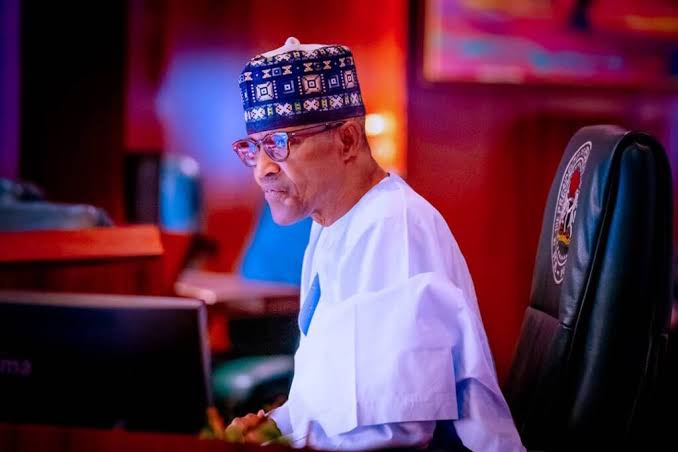
The death of Nigeria’s former President, Muhammadu Buhari, at the age of 82 in a London clinic on Sunday has prompted nationwide reflection. Buhari served as both military Head of State (1983–1985) and civilian President (2015–2023), becoming one of the most prominent figures in Nigeria’s modern history.
While he was praised for his austere lifestyle and anti-corruption stance, Buhari’s presidency also left Nigerians grappling with several unforgettable national events. Here are five key moments from his administration that Nigerians will always remember.

The EndSARS Protests and the Lekki Toll Gate Tragedy
In October 2020, Nigerian youths took to the streets to demand the disbandment of the Special Anti-Robbery Squad (SARS), a unit of the police force long accused of brutality, torture, and extortion. What started as a peaceful protest across cities soon escalated into one of the most traumatic chapters in Nigeria’s democratic history.
On the night of October 20, 2020, military forces opened fire on unarmed protesters at the Lekki Toll Gate in Lagos. Witnesses, videos, and human rights organisations like Amnesty International reported multiple fatalities, yet the Buhari administration dismissed the incident as false.
Despite a panel of inquiry holding the military responsible for the deaths, the government maintained its denial. This incident not only exposed deep mistrust in institutions but also revealed the extent to which peaceful protests could be met with lethal force under Buhari’s watch.
Twitter Ban and the Suppression of Digital Expression
Following the EndSARS protests, social media became a rallying point for civic discourse, criticism, and youth mobilisation. However, in June 2021, the Nigerian government banned Twitter after the platform removed a tweet by Buhari that was deemed to violate its policies.
The ban, which lasted seven months, severely impacted businesses, journalism, activism, and Nigeria’s international reputation as Africa’s digital hub. Many interpreted this as Buhari reverting to his military-era instincts, curbing dissent and punishing criticism.
The crackdown on digital expression served as a warning for future administrations about the need to balance governance with constitutional freedoms in a digitally connected world.
Naira Redesign and the Currency Chaos of 2023
One of the most controversial economic decisions of Buhari’s tenure was the Central Bank of Nigeria’s announcement of a currency redesign in late 2022. The redesigned N200, N500, and N1,000 notes were launched, and citizens were given a limited window to swap old notes.
However, the transition turned into a national nightmare. There were not enough new notes to meet demand, and a cashless policy further restricted access to money. Millions of Nigerians found themselves stranded without cash for transport, food, and daily necessities. Long queues at ATMs and bank branches became commonplace, leading to protests across the country. Some banks were torched, and lives were lost due to frustration and the lack of access to essentials.
While Buhari claimed the policy would curb corruption and money laundering, many believed it only plunged the country into greater hardship in his final months in office.
A Struggling Economy and Soaring Inflation
Under Buhari, Nigeria experienced two economic recessions, first in 2016 and again in 2020. His administration’s economic decisions, such as the border closure in 2019 and the artificial pegging of the naira, had far-reaching consequences.
The 2019 border closure, intended to boost local agricultural production, backfired, fuelling food inflation, disrupting supply chains, and hurting small businesses. Meanwhile, the Central Bank’s dual exchange rate system led to a widening gap between official and black market rates, putting further pressure on the naira.
Buhari also presided over a significant rise in public debt, leaving future administrations with a heavy repayment burden. For ordinary Nigerians, his years in office were marked by high unemployment, declining purchasing power, and persistent economic uncertainty.
Unrelenting Insecurity Despite Tough Talk
One of Buhari’s primary campaign promises in 2015 was to end Boko Haram and restore security. His military background gave many hope that he would succeed where others had failed.
However, under his leadership, insecurity not only persisted but also diversified. New threats emerged, including banditry in the Northwest, mass kidnappings of schoolchildren, farmer-herder clashes in the Middle Belt, and secessionist movements in the Southeast. Between 2015 and 2023, over 63,000 people lost their lives in violence-related incidents, according to data from the Nigeria Security Tracker.
Journalists and civil society actors faced increasing threats; press freedom suffered major setbacks, with reports of harassment, detentions, and even killings of media practitioners. As Nigeria’s civic space grew tighter, many began to question the promises of change that brought Buhari to power.