


By Matthew Ogunwale
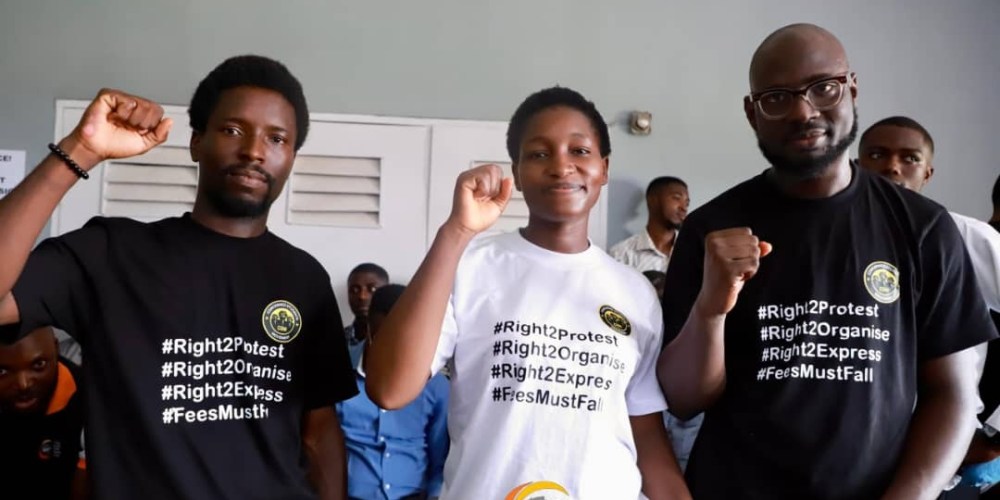
There is a landmark judgement that has reignited conversations around student rights and activism in Nigeria, the Federal High Court sitting in Ibadan has ordered the immediate reinstatement of three students of the University of Ibadan.

The ruling, delivered on April 15, 2026, affirmed that the students’ suspension violated their constitutional rights, particularly their freedom of association as guaranteed under the 1999 Constitution (as amended).
The court declared that the applicants ‘are reinstated with immediate effect as it relates to the subject matter of this suit, having established their right to freedom of association.’
Background: Fee Hike Protest And Suspension
The crisis began when the University of Ibadan management approved a controversial increase in tuition and related charges, triggering widespread discontent among students.
Many described the joke as excessive and exclusionary, arguing that it would make education inaccessible to students from low-income backgrounds.
In response, students organised protests across campus, demanding a reversal of the policy and more inclusive dialogue with the university authorities.
The demonstrations, though largely peaceful, were met with disciplinary action. The University suspended several students identified as organisers or prominent participants in the protest.
The institution justified its actions on grounds of maintaining order and enforcing campus regulations, but critics argued that the move was aimed at silencing dissent and discouraging collective action.
Among those affected were Mide Gbadegesin, Nice Linus, and Aduwo Ayodele, three outspoken student activists whose suspension would later become the subject of a legal challenge.
Legal Battle And Court Victory
Challenging their suspension, the affected students approached the Federal High Court, arguing that their fundamental human rights had been violated. Their legal team cited breaches of rights including dignity, expression, and association.
In its ruling, the court sided with the students, reinforcing the principle that participation in peaceful protest and collective action remains a protected democratic right.
Students Speak: The Lagos Voice Interviews
In exclusive interviews conducted by The Lagos Voice, the reinstated students reflected on their ordeal, the court victory, and the future of student activism in Nigeria.
Mide Gbadegesin said he has no regrets. For Gbadegesin, the court’s decision represents both a personal and collective triumph. “It is both a personal victory and a collective struggle. With the form of victimisation we have endured, it is a personal victory and also a broader win for student activism in Nigeria.”
Despite the consequences, Gbadegesin remains resolute; “We were not naive. We understood the consequences of our actions. There is no regret, and there will be no regret to do it over and over again.”
He also accused the University of attempting to suppress opposing voices saying; ‘Yes, I do believe the university deliberately tried to silence dissent through disciplinary action.’
On the broader system, his experience has deepened skepticism: ‘I have always maintained a level of skepticism about the system, and this has further heightened my distrust, The judiciary, however, has been helpful in reducing injustice.’
He ended with a message to students: ‘Change doesn’t come from being passive. Your silence affirms your suffering. We must persist in speaking out.’
Also, Nice Linus said the struggle is bigger than them. Nice Linus framed the victory as one that transcends individuals: ‘This is definitely not a personal issue, the struggle is bigger than us. The ideas we represent, accessible education and freedom of dissent, won in court.’
She emphasised that activism is essential to democracy: ‘There can be no democracy without freedom of expression. Democracy cannot thrive when people cannot correct wrongs.’
Reflecting on the university’s disciplinary system, she was critical: ‘The disciplinary committee is not ready to hear any view. It becomes a tool to instill fear and make examples of students.’
PAY ATTENTION: Follow The Lagos Voice on WhatsApp channel for latest updates
However, the experience has left her with mixed feelings: ‘It makes me skeptical about justice in a flawed university system, but also gives hope that the common man is not totally helpless.’ Her message to other students was one of resilience: ‘Victimisation might seem to break you, but truth does not stay crushed forever.’
Aduwo Ayodele said it is a win for all students. He described the judgment as a collective victory: ‘It is a win for the entire student body. The issue that led to our suspension was a general one;it concerns all students.’
He reaffirmed his commitment to activism: ‘Protest is my right. Between my suspension and today, I never stopped speaking against abnormalities within and outside the university.’
Encouraging other students, he said: ‘There is nothing to fear. Those we are afraid of are often more afraid of us. Students must remain organised and fearless.’
Wider Implications
The ruling is widely seen as a significant precedent for student rights in Nigeria, particularly in an era where tensions between university administrations and student activists continue to rise.
Analysts argue that the judgment reinforces the judiciary’s role as the “last hope of the common man,” while also sending a clear message to educational institutions about the limits of disciplinary authority.
As the reinstated students return to campus, their case is likely to remain a reference point in discussions about governance, rights, and activism in Nigerian universities.
Beyond the courtroom victory, their message is clear: student voices, even when challenged, remain a powerful force in shaping institutional and societal change.