


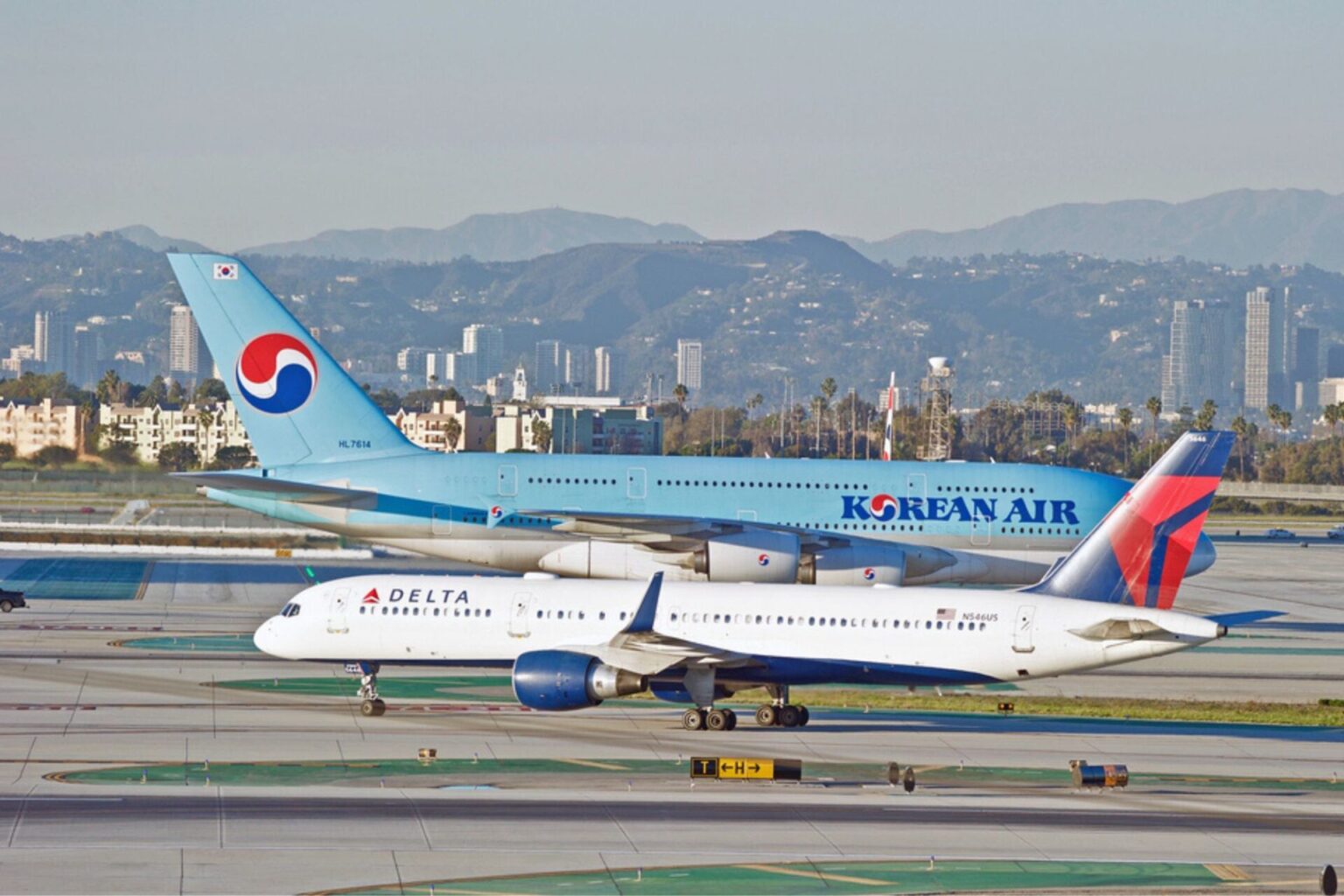
Korean Air and Delta AirLines have unveiled a groundbreaking transpacific joint venture aimed at making international travel smoother for passengers flying between South Korea and the United States.

The initiative, called the International Remote Baggage Screening (IRBS), allows X-ray scans of checked baggage from Seoul’s Incheon International Airport (ICN) to be transmitted directly to US Customs and Border Protection (CBP) for inspection, before the aircraft even lands in the US.
🚀 Don't Miss Out!
Latest jobs • Scholarships • Grants • Internships • Career tips
(Naija + worldwide) — delivered daily on our WhatsApp Channel.
READ MORE: 10 affordable ‘Health Insurance’ options Lagosians can rely on
By clearing bags remotely, passengers arriving in the US no longer need to collect and recheck their luggage at their first point of entry.
Instead, their bags are automatically transferred to their final destination.
🔔 OFFICIAL CHANGE OF NAME MADE EASY!
Avoid delays and rejection — let professionals handle your publication quickly and stress-free.
We help you publish your change of name in:
📰 Punch Newspaper
📰 Vanguard Newspaper
📰 Other Top National Newspapers
✨ Why Choose Us?
- ✔️ Quick turnaround (3 days)
- ✔️ Budget-friendly packages
- ✔️ Reliable & trusted service
ATTENTION: Follow The Lagos Voice on Whatsapp Channel for latest updates
According to Korean Air, this innovation will cut average connection times by around 20 minutes and eliminate one of the most stressful parts of international travel.
“This will allow our customers to enjoy smoother connections, especially through Atlanta, the world’s busiest airport,” said Kwangho Ko, Senior Vice President at Korean Air.
He added, “Together with Delta, we will continue to introduce services that maximize convenience and comfort for our customers.”
READ MORE: Top 10 richest ‘Local Governments’ in Lagos
The IRBS applies not only to nonstop Incheon-Atlanta passengers but also to those connecting through Incheon from other cities.
Nearly 300,000 passengers fly the route annually, with over half connecting to onward flights via Atlanta.
What this could mean for Ibom Air Passengers
While the IRBS project is currently exclusive to the US–Korea corridor, the concept offers a glimpse into how Nigerian carriers like Ibom Air could enhance passenger experience on long-haul routes in the future.
Ibom Air, known for its punctuality and growing domestic footprint, has hinted at ambitions to expand internationally in the coming years.
Adopting similar baggage-handling innovations in partnership with global carriers could make connections for Nigerian travellers, especially those flying to North America or Europe, far more efficient.
As global aviation continues to evolve, the Korean Air–Delta model shows that strategic partnerships and technology-driven processes can significantly cut travel stress.
If Ibom Air follows a similar path when entering the intercontinental market, Nigerian passengers could soon enjoy the same seamless experience currently being rolled out between Seoul and Atlanta.