


By Samuel Faseyitan and Abdulrasheed Olokoto

When Ms Njoku Oluoma, a medical student at Kingsley Ozumba Mbadiwe University, received a letter of withdrawal from medical school, the news came with more than just academic disappointment. It came with shame, fear, and the crushing thought of how to face her family, especially her father, who had invested heavily in her education.
🚀 Don't Miss Out!
Latest jobs • Scholarships • Grants • Internships • Career tips
(Naija + worldwide) — delivered daily on our WhatsApp Channel.
She cries and distances herself from food, as she battles suicidal ideation as a way to escape from it all. ‘At those moments, these thoughts fuel my thought that maybe if I end it, I will find a way not to go through the shame.’
Her experience reflects the silent struggle of many withdrawn medical students in Nigerian universities, where academic failure cuts short long-held dreams and places students under intense emotional pressure.
Withdrawn medical students and suicidal ideation
🔔 OFFICIAL CHANGE OF NAME MADE EASY!
Avoid delays and rejection — let professionals handle your publication quickly and stress-free.
We help you publish your change of name in:
📰 Punch Newspaper
📰 Vanguard Newspaper
📰 Other Top National Newspapers
✨ Why Choose Us?
- ✔️ Quick turnaround (3 days)
- ✔️ Budget-friendly packages
- ✔️ Reliable & trusted service
A 2026 systematic review and meta-analysis on suicidal behaviour in Nigeria found that 12.4 per cent of 121 medical students studied reported suicidal ideation, which translates to roughly one in every eight medical students.
Suicidal ideation occurs among students across different courses of study; however, multiple research studies and recent cases have suggested the burden is severe among medical students, whose training is shaped by intense academic demands, long hours, and constant performance pressure.
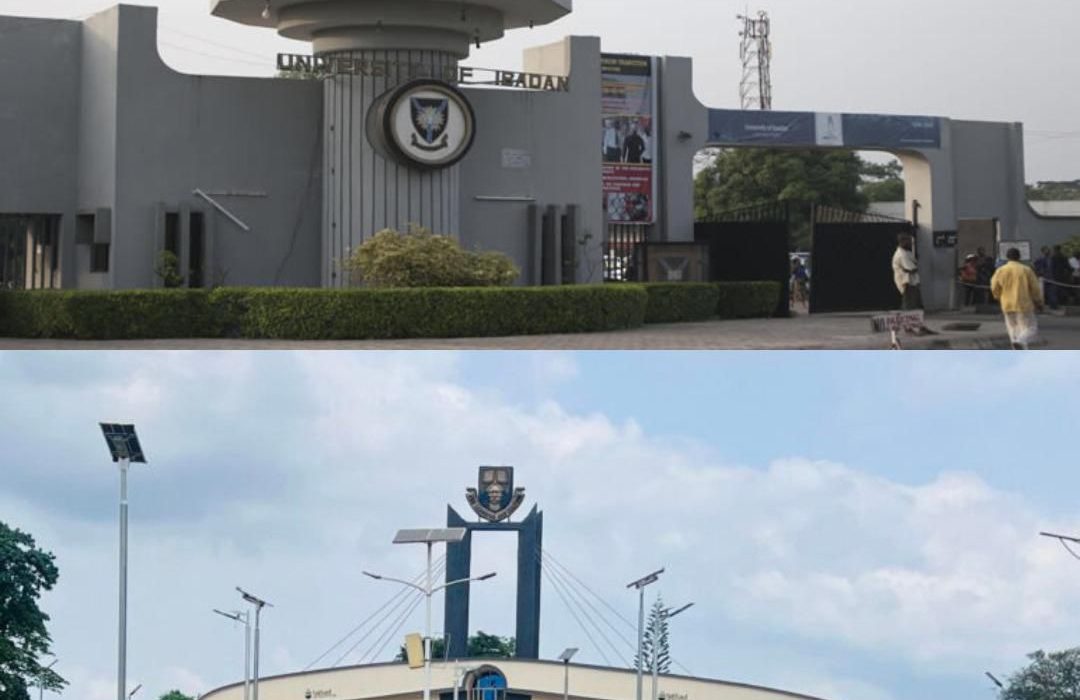
Within 7 months, both the University of Ibadan (U.I.) and Obafemi Awolowo University (O.A.U.)have reported at least one suicide of a medical student linked to academic pressure, particularly withdrawals from medical schools.
Every failed trial carries a red warning sign, deepening academic pressure and private struggles that many people rarely see or understand in medical students.
Against this backdrop, a fellow campus journalist at UI was reached out to for the examination of the experiences of medical students, exploring the culture of extreme academic rigour, the weight of expectations students endure, and the possibilities of hope beyond despair at both OAU and UI, two of Nigeria’s most respected medical schools.
How the medical system works in UI and OAU
The system used for medical students is similar at both U.I. and O.A.U. The life inside the college is shaped by a progressive culture, where students are expected to move forward in sequence, clear each level before advancing, and survive within a system that leaves little room for academic recovery.
Unlike other courses, where academic failure is rewriting a course multiple times, carrying outstanding courses into extra years, or being withdrawn for falling below a 1.0 CGPA.
In medical courses, academic failure is harsher; a first failure may lead to a resit, another failure leads to repeating the year, but repeated failure ends in withdrawal from the program itself, standing between a student and the end of a long-held dream of being a health practitioner.
This system was said to be put in place as knowledge from courses builds on each other and to ensure that only qualified students are allowed to graduate and deal with human life in the health sector, so the strictness in this rigid system can be likened to a high cost these students have volunteered to give to society at the detriment of their own mental health.
Weight of Expectations: Students express their views
Medical students from the University of Ibadan and Obafemi Awolowo University recorded their views about the colleges.
College demands which lead to academic pressure
Olawale Deborah, a 200-level Medical Student at Obafemi Awolowo University, while commenting on what creates pressure on her, mostly as a medical student, mentioned classes.
‘For me, it is the classes, 9-5 almost every day. Mind you, students still have to read and rest. This hinders many people from partaking in extracurricular activities. That’s not even the most annoying part; they teach us so many things in a short period of time, and they expect us to read every slide they drop alongside textbooks,’ she said.
To Toluwalopemi Ososanya, Biomedical Laboratory Science, 500-level, what pressures him most is balancing academics with livelihood. ‘Work or life balance is always tricky to manage. The stress of having to keep up with schoolwork while dealing with mundane problems like feeding.’ However, for John Patrick, a 300-level dentistry student, what creates pressure for him is the academic workload. He said, ‘Workload drives students in the college of medicine to overwork beyond normal.’
According to Ojo Precious, a 300-level medical and surgery student in UI, academic pressure comes at a period where students will be expected to attend ward rounds from Monday to Friday until late in the night and still have to prepare for an end-of-posting test that holds after each posting.
PAY ATTENTION: Follow The Lagos Voice on WhatsApp channel for latest updates
Ali Moyosoreoluwa, a 300-level nursing student in O.A.U stated that the aspect of the training that creates the most pressure for her was the clinical postings. ‘There are times we have to go for postings with classes, and it is really a lot to put together, coupled with exams; however, it in a way shapes the lives of students in mastering time management and the ability to think fast and work efficiently under pressure because we’ve been exposed to it over time,’ she explained.
Societal expectations vs. Student pressure
On whether societal expectations, such as being addressed as ‘Doctor’ or ‘Nurse’ even before graduation, add extra pressure on medical students, Deborah maintained, ‘For me, it does not add any pressure. I just find it weird, especially now that I’m in part 2; I just wanted to pass my anatomy.’
‘Mostly, it is just playful banter. But sometimes it does place a certain level of expectation that students will struggle to reach, even at the detriment to their own health and safety,’ Tolu said.
However, Ayomide observed that any student who makes it into medical school is obviously an intelligent individual, and he will want to keep up with the societal expectation that medical students have a very sound mind and, hence, read as though their life depends on it.
Withdrawal system in the colleges
Speaking on the withdrawal system in the College, Toluwalopemi believes that students ought to be given more chances to prove themselves and remain in their respective departments rather than being withdrawn.
‘The fear it gives to medical students is unexplainable, especially to those who are finding it difficult to navigate the college adequately. Even those who are academically buoyant still ensure that they are cautious, smart, and consistent with their schoolwork and requirements because the college is not respectful of whoever is caught inadequate or gives a chance to mediocrity,’ Ojo Ayomide said.
‘Students should be placed on more friendly terms,’ Patrick said, arguing that the system needs review.
Moyosoreoluwa contended that the fear of withdrawal keeps students on their toes. ‘I do not view it as a bad thing to be honest, because for someone to be withdrawn from college, then the person must have reached some certain criteria that is irredeemable. The fear of being withdrawn will keep pushing students to be better and be focused on what they came to do because we are dealing with human lives. Well, at some point, there might be breakdowns, but trust me, with the right support, you will be fine,’ she argued.
Balancing and coping mechanisms
When Deborah is faced with academic difficulties, she takes some rest and speaks to relatives for consolation. ‘I sleep, I talk to my best friend, roommates, and family(most of them have experienced it, so they know how to console me), then I try not to overthink it. I try to understand the few things I can read instead of opening all the slides and not remembering anything. When it becomes worse, I just watch videos on YouTube. I do this when I’m unable to read,’ she said.
I ensure that I read as early as possible and meet requirements like the 75% attendance and filling of necessary report booklets. I also solve past questions when the exam is fast approaching and brainstorm with some of my guys, then pray as well as hand over all to God,’ Ojo Ayomide claimed.
‘When the workload becomes overwhelming for me, I just log off for like 3 days without doing anything relating to academics to cool my mind and refresh so I can think properly about what to do and plan effectively. Sometimes, I talk to my friends about it and pray to God for clarity and direction,’ Moyosoreoluwa said.
For Patrick, students, especially those in Medical colleges, need mentors and friends to speak out to, to help them out whenever they are faced with academic issues.
Suicide link to academic pressure: Need for alternatives
‘As much as the school wants to be strict about its principles, it is also necessary that they be considerate in aspects like setting questions not entirely of class context or out of the treated syllabus,’ he said. ‘Lecturers can help reduce the workload by leaving out irrelevant subject matters from the syllabus to compress the syllabus to a consumable quantity by the students,’ Ojo Ayomide observed.
‘There should be more emphasis put on student mental health as well as physical health. A mandatory check-in with a licensed psychiatrist a few times a session, maybe. Just to let students know, there is always an avenue to express their feelings in non-harmful ways,’ Toluwalopemi suggested.
‘I feel there should be mental health seminars held in college now and then, and like a guidance counselor specific to college students, so the person can be their go-to person whenever they are feeling challenged. Also, once they see the results and they know people that failed, their results should not be pasted, and also they should have a one-on-one talk with the students before telling them their results,’ Moyosoreoluwa added.
Negative marking
‘Medical school on its own is a whole lot of stress, and the stress can place a lot of mental strain on people. When you now add the fact of negative marking and public release of results, it becomes worse. Unlike other departments in school, the medical school course load is huge, and worse still, we have to learn everything in a short time frame,’ Ogunlana Klistivivi, a part 6 medical student, claimed.
According to him, it is unfortunate that students are subjected to negative marking after all their preparations. He stated, ‘The reality is that you cannot finish everything. When you are not able to read everything, you enter the exam hall not knowing everything. And when you pick the wrong answer, your score suffers for it.’
PAY ATTENTION: Follow The Lagos Voice on WhatsApp channel for latest updates
‘For the majority, imagine you slaving yourself out to read and yet coming up with very low scores because of negative marking. That sure can be enough reason for mental distress, and for some people without enough emotional or psychological buffer, suicidal ideation,’ he added.
The same thing goes for the public release of results. He claimed that, ‘In the majority of cases, it is the accompanying embarrassment or shame that comes with seeing you have a very low score, and everyone getting to know so. Klistivivi added, ‘The reality is that for the majority of students entering medical school, they were the best of the best in their previous lives. But medical school shatters that bubble.’
A scenario of someone getting 90s in secondary school, only to get a 40 in his first medical school exam, and worse still, the 40 is now pasted in full glare for everyone to see, can make such a person slide into depression and suicidal ideation. However, negative marking and the public release of results are not isolated primary drivers of suicidal ideation. The majority of students eventually learn to cope and wade through them to eventually grow resilience. However, in people who are probably predisposed to mental illness, in people with low self-esteem, poor family support, drug use, lack of good friends and support systems, financial struggles, poor results from negative thinking, and its public display can be an additional risk factor that can make them easily slide down to having suicidal thoughts.
Hope beyond despair
‘I will take another course the school gave me, and after my 400-level, I may end up doing a direct entry into medicine,’ Ms Njoku said.
Ms Njoku has been able to find herself in the stage of hope beyond despair, as she is resigning herself to fate as she accepts the transfer options to other courses that her university has provided her, while still holding on to the dream of becoming a doctor.
While the medical system can be rigid and overwhelming, it still recognises the human cost of that pressure by providing an exit program to support students who can no longer continue, whether because of poor academic performance or loss of interest.
There is a process outlined in medical schools by which struggling students can be reviewed, guided, and redirected rather than simply abandoned. It also allows students advised to withdraw to transfer to another department within the university if they meet the admission requirements; these alternative routes are created to soften the blow of losing the original dream.
Failure is a phrase in the journey that shouldn’t define the destination. Students who are withdrawn and wish not to take the alternative courses given by their schools can also seek alternatives in chasing their dream of becoming a medical practitioner and can reapply to the same course by rewriting JAMB to start all over, or through JUPEB to resume as a 200-level student, or can also consider changing institutions or environments.
This special report was jointly produced by the Association of Campus Journalists, OAU (ACJOAU), and the Union of Campus Journalists, UI (UCJUI). It was co-authored by in-house correspondents of the aforementioned campus journalism outlets. This project is published under the banner, THE INSIDER.