


By Esther Olatimehin
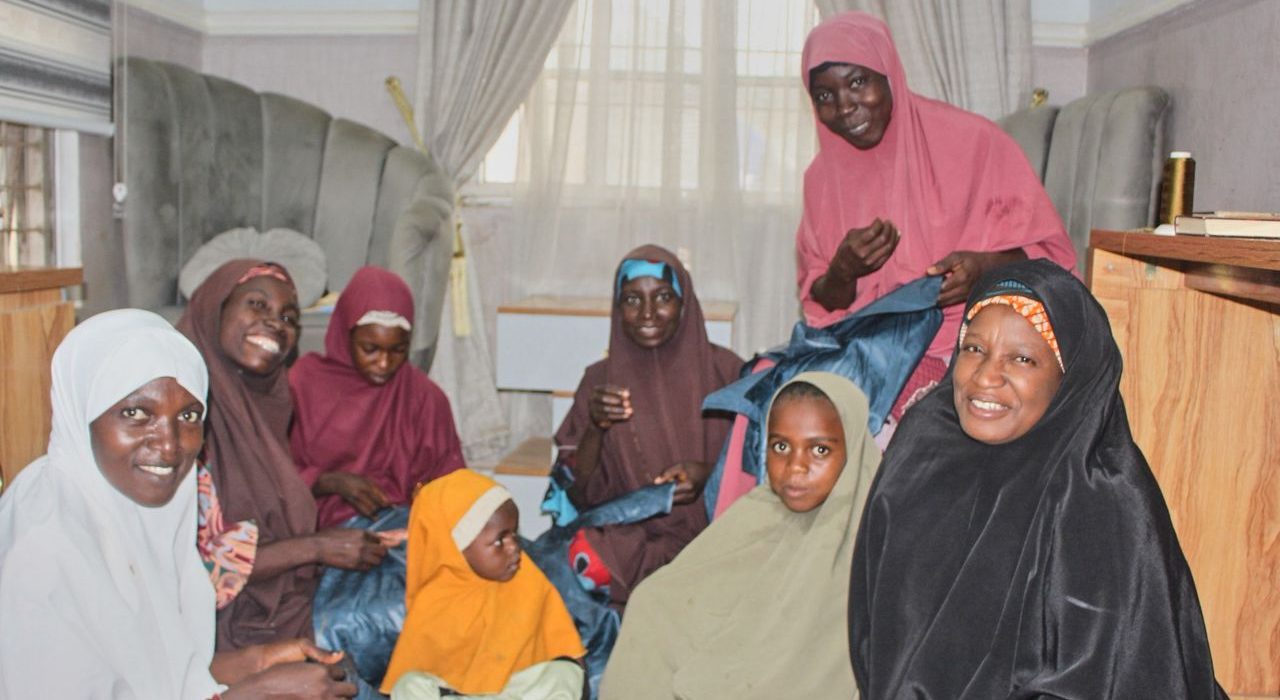
For decades, many women skilled in traditional Hausa embroidery worked behind the scenes while men controlled access to customers, payments, and market opportunities. Today, a Kaduna-based enterprise, Queen Amina Embroidery, is challenging that reality by placing women artisans at the center of the creative economy.

Founded in 1994 by Hassana Yusuf, the Managing Director of Queen Amina Embroidery, the organisation emerged from a need to address the economic marginalisation of women embroiderers in Zaria, Kaduna State.
In an interview with The Lagos Voice, Hassana explained that the idea for the business came after she discovered that although many women possessed exceptional embroidery skills, they remained financially dependent because men acted as intermediaries between artisans and customers.
“I realised the women had the skill, but they were struggling financially. The men got the work, brought it to them, collected the payment, and gave the women only a small portion,” she said.
In her determination to change the situation, Hassana encouraged the women to form a collective through which they could receive orders and payments directly. The initiative began with a small group of about ten women producing embroidered items such as wall hangings, purses, pillows, and traditional accessories.

However, the journey was far from easy, and according to Hassana, the group operated without a formal structure, workspace, customers, or an established market. Despite these limitations, they remained committed to preserving the traditional Hausa embroidery while creating economic opportunities for women.
Beyond generating income, Queen Amina has become a platform for female empowerment. Hassana noted that many women who participate in the enterprise have been able to improve their family welfare, invest in their children’s education, and gain greater financial independence.
She cited the example of one artisan who used proceeds from her embroidery work to sponsor her daughter’s education up to the National Certificate in Education (NCE) level, and now the daughter works as a primary school teacher.
“The impact goes beyond income,” Hassana explained. “Women can support their families, improve their health, and provide better opportunities for their children.”
The organisation’s work is particularly significant in a sector historically dominated by men. While embroidery skills were often associated with women, access to business opportunities and financial rewards largely remained under male control.
Hassana said women-led artisan enterprises continue to face systemic barriers, including limited access to financing, infrastructure, mentorship, and international market opportunities.
“Women artisans need visibility, equitable partnerships, and access to larger platforms. When these opportunities are available, the impact extends beyond individual businesses to entire communities,” She told The Lagos Voice.
Despite these challenges, Queen Amina has expanded beyond Nigeria’s borders. International recognition began to grow after a visiting lecturer at Ahmadu Bello University, Professor Alicia René, became interested in the group’s work and helped introduce their products to international audiences.
The breakthrough eventually led to participation in international fashion events, including engagements in Santa Fe, United States, where collaborations with international partners increased the visibility of the artisans’ work.
Today, the organisation collaborates with international design programs to integrate traditional Hausa embroidery into contemporary fashion collections, demonstrating that cultural heritage and modern innovation can coexist.
Honouring Hausa heritage through the new capsule collection
That commitment to preserving cultural heritage while embracing contemporary design is also reflected in Queen Amina Embroidery’s latest capsule collection developed in collaboration with IBU Atelier.

According to Hassana, the collection draws inspiration from the lived experiences of Hausa people throughout history. She explained that the creative process was as a result of the desire to showcase how culture is defined by history, environment, and everyday life rather than existing as an abstract concept.
“The motifs used in Hausa embroidery are not random,” she said. “They are drawn from stories and lived realities. We intentionally selected meaningful motifs that reflect cultural memory while presenting them in a contemporary way.”
She described the collection as an effort to honour Hausa heritage while making it accessible and relevant to modern audiences. The concept was further refined through Queen Amina Embroidery’s participation in IBU Atelier’s design cohort, which provided guidance on translating cultural knowledge into a structured design and production process.
PAY ATTENTION: Follow The Lagos Voice on WhatsApp channel for latest updates
Hassana noted that IBU Atelier’s influence extended beyond design aesthetics. Through the programme, the team gained a deeper understanding of the complexities involved in balancing traditional craftsmanship with contemporary fashion while managing production at scale.
One of the most significant lessons, she said when asked how the vision of Ibu Atelier influenced the design direction or execution of this capsule, was recognising that many artisan enterprises face the challenges relating to structure, consistency, and production systems.
“Rather than seeing challenges as setbacks, we have learned to embrace them as part of a shared journey of refinement, learning, and growth,” she said.
At the centre of the collection is Queen Amina Embroidery’s enduring commitment to cultural identity. Yusuf emphasised that Hausa embroidery is more than a decorative technique; it is a living cultural language that embodies stories of craftsmanship, symbolism, discipline, and history.
“Through Queen Amina Embroidery, we are not simply creating garments or decorative works,” she said. “We are preserving a living cultural language expressed through thread, technique, and artistry.”
She added that the collection reflects pride in heritage while demonstrating that African craftsmanship can confidently participate in global conversations on contemporary luxury, fashion, and design.
For Hassana, the ultimate goal is for people who encounter the collection to look beyond the aesthetics and appreciate the history, culture, and human experiences embedded within each piece.
“This is not just about design,” she said. “It is about culture, history, and the lived experiences of the people behind the work. Each piece carries meaning drawn from Hausa heritage, and we want people to recognise the value of that tradition and the importance of preserving and supporting it in a modern context.”
From local impact to global visibility
Hassana, however, believes women artisans have not yet received adequate recognition on the global stage.
“Not yet,” she said when asked whether women artisans are properly recognised internationally. “Men still dominate many aspects of the business. We continue to work consistently so the world can hear our voices and allow women to participate equally.”
The entrepreneur also expressed concern over the growing threat posed by machine-produced embroidery, which she said could undermine traditional handcraft skills if deliberate preservation efforts are not made.
For Hassana, preserving traditional embroidery is not only about sustaining a business but also about protecting cultural identity and ensuring future generations remain connected to their heritage.
Looking ahead, Hassana envisions Queen Amina becoming part of a thriving creative economy where artisan businesses have access to financing, technology, global distribution networks, and long-term support while maintaining their cultural authenticity.
The brand named after the legendary Queen Amina of Zazzau, who pose as a symbol of power, authority, and dignity, the enterprise continues to embody its founder’s mission of creating opportunities for women while preserving one of Northern Nigeria’s most treasured artistic traditions.


