


By Fatimah Idera

A woman’s voice pierced through the humid chaos of the overcrowded public bus as it moved out of Ikorodu towards Ketu, a popular route in the densely populated Lagos.
🚀 Don't Miss Out!
Latest jobs • Scholarships • Grants • Internships • Career tips
(Naija + worldwide) — delivered daily on our WhatsApp Channel.
“₦1,500 only! Pharmacies sell it for ₦2,500! Buy before you get down,” she beamed, waving strips of blood tonic and painkillers from a crumpled nylon bag.
It was a hot and sunny Wednesday afternoon. Sweat dripped down passengers’ faces, the air thick with body odour, but the discomfort didn’t deter the drug vendor.
Standing confidently in the cramped aisle of the bus, looking like she had been hit many times before, she chanted, “₦1,500 only! Pharmacies sell it for ₦2,500! Buy before you get down.”
🔔 OFFICIAL CHANGE OF NAME MADE EASY!
Avoid delays and rejection — let professionals handle your publication quickly and stress-free.
We help you publish your change of name in:
📰 Punch Newspaper
📰 Vanguard Newspaper
📰 Other Top National Newspapers
✨ Why Choose Us?
- ✔️ Quick turnaround (3 days)
- ✔️ Budget-friendly packages
- ✔️ Reliable & trusted service
“Don’t waste money at the chemist. It’s the same drug here, and it’s cheaper,” said the woman, who looked to be in her 40s as she brought out Ferolab blood tonic, Diclofenac, and other drugs from her nylon bag.
The Lagos Voice observed that within minutes, this hawker had transformed the stuffy, overcrowded bus into a mobile pharmacy. Strips of painkillers and blood tonics passed from her hands to eager passengers, with no questions about licences, no glances at expiry dates, and no checks for National Agency for Food and Drug Administration and Control (NAFDAC) numbers. All that mattered was the promise of cheap relief.
By the time the bus rattled into Ketu, her bag was nearly empty. She beamed with satisfaction, calling it a “bonanza” for those who had bought in bulk.
What does the law say?
According to Article 59 of the Pharmaceutical Council of Nigeria (PCN) Act, 2022, “(1) Ethical drugs shall not be stored, supplied, sold, offered to be sold or dispensed by any person unless under the direct supervision of a licensed pharmacist.
“(2) A person shall not store, supply, sell, or dispense dangerous drugs unless (a) he is a licensed pharmacist; (b) the drug is in a container of the prescribed description; and (c) the container bears a label indicating the prescribed particulars of its contents.”
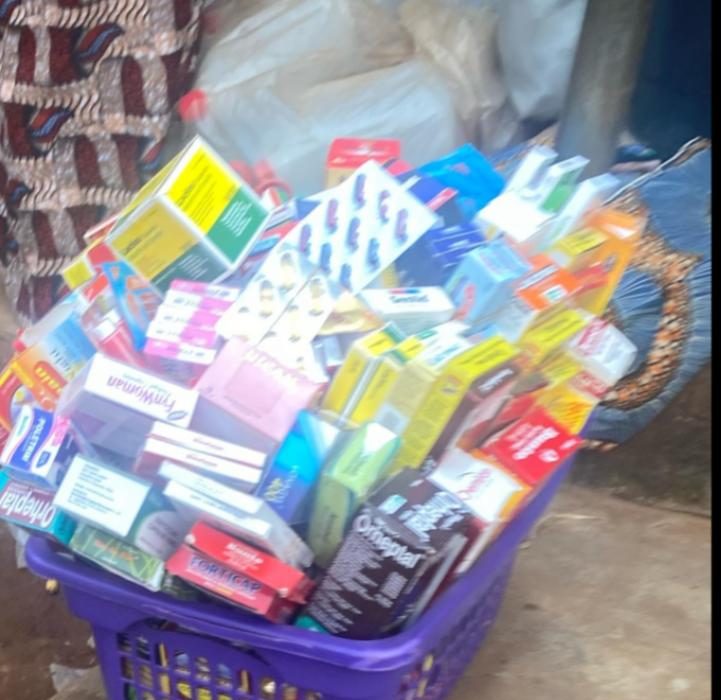
Despite Nigeria’s pharmaceutical laws prohibiting unlicensed drug sales, illegal vendors peddle medicines on the streets and inside public buses across Lagos.
The Director General of NAFDAC, Mojisola Adeyeye, a professor, had described hawkers of drugs in Nigeria as merchants of death.
Also, data from the United Nations Office on Drugs and Crime (UNODC) shows that nearly 500,000 people are estimated to be killed annually by counterfeit medicines in sub-Saharan Africa.
About 267,000 of these deaths are believed to be linked to falsified or substandard antimalarial medicines, while 169,271 are linked to falsified or substandard antibiotics for severe pneumonia in children. Experts have noted that even when fake/expired drugs don’t kill people, they can cause serious harm.
Data from the National Bureau of Statistics (NBS) revealed that over 133 million Nigerians live in multidimensional poverty, lacking access not just to income, but also to basic education, healthcare, and essential services. In Lagos, a city where private hospital consultations can cost between ₦5,000 and ₦15,000, many residents turn to cheaper and informal.
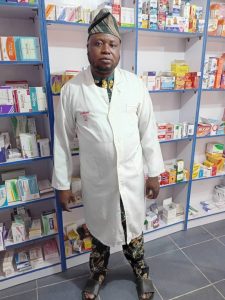
A. pharmacist and lecturer at the Moshood Abiola Polytechnic (MAPOLY), Lawal Semiu, warns that the widespread presence of unlicensed drug sellers poses a significant threat to public safety.
“These medicines are often expired, improperly stored, or outright fake, and people are unknowingly putting their lives at risk.”
Narrating a scenario he observed at Ogun, Mr Semiu said, “I was sitting quietly in a bus when a woman, visibly tired, approached a drug vendor in the same bus I was in and asked for pain relief medicine. “The vendor handed her four different pills, the same drugs, and slightly different shapes. I watched as the woman swallowed them right away. No questions asked. I knew instantly that they were all diclofenac, just that they are different brands, but they are the same drug.”
“She just took 200mg at a time when she was supposed to use 50 mg four times or for two days, and this is an overdose for someone who may not have eaten or who might have underlying health issues. This keeps happening daily”, Mr Semiu added.
Pursuit of survival
When The Lagos Voice approached Mary Adigun, one of those who patronised the drug vendor in the Tata bus, she said that hospital or pharmacy drugs are too expensive for her to afford.
“I patronised this drug vendor because I believe she sold the same drugs at a lower price. Moreover, she is more accessible than a pharmacist,” she said.
However, Mr Semiu had explained that there are more reasons why buyers patronise bus drug vendors than pharmacies. He said, “The hawkers on the road and some passengers don’t care if they can get medicine anywhere as long as it is cheap. Meanwhile, their drugs are cheaper because they sell expired drugs, most of which are cut and sold in sachets to buyers who won’t have access to the expiration date.
PAY ATTENTION: Follow The Lagos Voice on WhatsApp channel for latest updates
“Also, many buy akanpo drugs, that is, a combination of many analgesics and other drugs, because they know that their buyers won’t buy in packs. So, they sell expired drugs to them by cutting them. There are cases where they even scratch away the expiry dates on the drugs just to sell to unsuspecting customers.”
Kafilat Shittu, a single mother of two who is a resident of Osun state, said every evening she sits at the junction to sell her medicine to people who are coming back from work.
On some days, if there are no sales, she reveals that she hawks from market to market, balancing her basket filled with packets of tablets and small bottles of syrup.
When her husband died, Kafilat started the business to feed her children.
When asked the calibre of people who patronise her, she explained that “A woman with fever buys malaria tablets from me, a mechanic with a bad cough takes cough syrup from me, and a truck pusher with a headache purchases paracetamol”, adding that he charges far less compared to pharmacies.
“They come to me because I am closer, cheaper, and I give them relief,” she explains.
Although street hawking of medicines, without a license or pharmacy registration, is illegal, Kafilat insists that poverty has pushed her into it. “I am not proud of what I am doing, but poverty does not give me any choice.”
Easy access makes it boom
Akere Abdul Rasheed, a resident of Oyo State, explained that the selling and hawking of medicine is common in his village, Orire local government of Oyo State, where people use bikes to hawk medicines from towns like Ogbomosho to different local communities.
Also, “Diclofenac is one of the common drugs being sold and paracetamol, while these people are making huge money, this is risky, but many can’t afford the full dose, so they succumb to half a sachet and carton, and this might contribute to antimicrobial resistance.”
Buyers have easy access to them as they come to their doorstep, and that gives need to patronise them while few pharmacy available are not well stocked, so the hospitals are very far away, and chemist are also far to some people in the rural areas, so that gives them an edge to sell than chemists.
These actions are necessary to be controlled by the government and the marketers should be well identified and be controlled with ID cards and they should be monitored.
Speaking to The Lagos Voice, Boluwatife Adedokun, a resident of Osun State, revealed that she had come across them in the market when she and her mum visited to buy stuff. “I have come across them very well, and people buy from them, and even my mum, and nothing happens. For my dad’s village, hawkers always bring medicine, and nothing has happened,” she narrates.
Basically, people can get drugs easily from hawkers because they won’t want to patronise the pharmacy, despite not knowing the implications or being ignorant of them. “They put it in bags too to sell in villages, remote areas and locations where there are no pharmacies,” she said
Meanwhile, it works just like the one in the pharmacy, too. “Have seen it several times as my mummy does buy it and she uses it, and nothing happens to her.”
She further encouraged the government to regulate it, but not to stop them, because they help remote areas or markets.
Hamid Fatimah, who is also a recent graduate and longtime resident of Ibadan, claims that medicine selling is rampant in the OjaObaa market.
“I feel people patronise them because their products are cheap, and since the sellers are desperate to sell, I don’t know anyone who has used it, so I can’t speak on the side effects confidently”
She further implored the government to label and control the act, as well as create awareness on letting the buyers know how it can destroy the health they feel they are treating, which, on the other hand, might be deteriorating.
Experts speak
A pharmacist from Yelwata in Bauchi State, Abubakar Ibrahim, said, “Based on the standard of the World Health Organisation (WHO) and the Ministry of Health, it is harmful to sell drugs without being licensed.
“Most of the people who sell these medicines are not educated; they are just looking for money to survive. So, all they do is lie to people and give them fake or expired drugs and change their locations often, so as not to be apprehended.” Mr Ibrahim said.
Buttressing his point, Mr Semiu, on the other hand, said some buyers, despite knowing the content, still go for medicines sold in the bus. “When it comes to drugs, not every patient knows the drug component, except some learned people, and those only know a little about the drugs they are taking, while the majority do not know.”
Mr Semiu revealed that apart from giving people an overdose and giving drugs that are not trusted, the production is not clear, as there are a lot of illegal companies producing tablets and content, up to the level of syrup.
“As a researcher, I conducted a test sometime ago with pharmacy drugs and drugs sold in traffic or inside the bus. We put them inside the sun for seven days and subjected them to the quality control test, as we saw that some drugs had lost potency due to the effect of the sun.
“Recently, I came across a report that NAFDAC claimed it will stop the registration and licensing of combination drugs like Diclofenac paracetamol and ibuprofen paracetamol, as all those two-in-one drugs they claim to stop it due to high rate of liver toxicity and damage.
He maintained that these drugs can pose therapeutic failure as the person using them may claim that they are not working. “Also, one of the factors that affect stability of drugs is temperature, and this drug has been exposed to severe sunlight from the bus vendor.
Ordinarily, some drugs should be kept cold and in the fridge, as it is even written on every drug’s carton that temperature requirements are specified, but if drugs are not kept cool, they tend to lose their stability.”
Mr Abubakar added that storage and sunlight can affect the efficiency and affinity of drugs. “People don’t know that storage conditions affect medicine. A painkiller left in the sun too long may not just lose potency, it may become toxic,” he said.
In an interview with a pharmacist, Ikutemi AbdulJelil, a resident of Kaduna, said this menace had contributed to health, as this had led to several untimely deaths due to negligence in what people take in.
People majorly enjoy buying cheaper things, and in the end, might end up buying more. For example, someone who buys a drug for 500 instead of 1000 will end up spending more than 1500 when the consequences arise, so it is better to buy quality drugs than to risk one’s health.
Speaking on the medicine been cheaper at their side he said it a layman understanding, everyone tends to go for cheaper goods and he explained that many are merchant of drugs who even get them from good source as they tend to have money in bulk unlike a pharmacist who pay rent for shop, pay for electricity and other stuffs for the running of his business but this people dont pay any money so in calculations both goods prices can’t be the same, it has to vary.
Obviously, many can be expired drugs as buyers don’t even have access to the medicine carton to check, many just buy in sachets and use them.
Way Forward
On the possible way forward, Mr Abubakar advised that people should ignore any vendor advertising drugs on the road, in the bus or any place that is not associated with the pharmacist or other health facilities.
Speaking on solutions, Mr Semiu advised that all stakeholders should work together and come out with implementable rules and guidelines against the act in order to curb it.
“People should focus on getting drugs that are registered by NAFDAC, as it is essential to get drugs from a registered supplier or distributor and that can guarantee the quality of the drugs,” he said while he implored manufacturers to keep in constant control and ensure that good manufacturing practices (GMP) are strictly adhered to.
However, post-marketing surveillance should be put in place and well monitored,” he said. He called for the creation of Pharmacovigilance units in all federal and state-owned hospitals, where adverse effects of most of the drugs can be monitored and reported to the general public.
Abduljelil maintained that the solution should be curbed by encouraging everyone, especially workers, to invest in the healthcare system through insurance policies and schemes; this way, people will have access to healthcare and good medical facilities. Also, people’s well-being and health should be prioritised by the government.
However, we are experiencing this due to the loss of manpower in our healthcare centers which contributed to more pressure being put on the general hospitals as people now get delayed before being treated.




OMOBELLO DRUG MART
March 31, 2026This is indeed a job well done from the pharmacist team.