


By Aliyu Adam

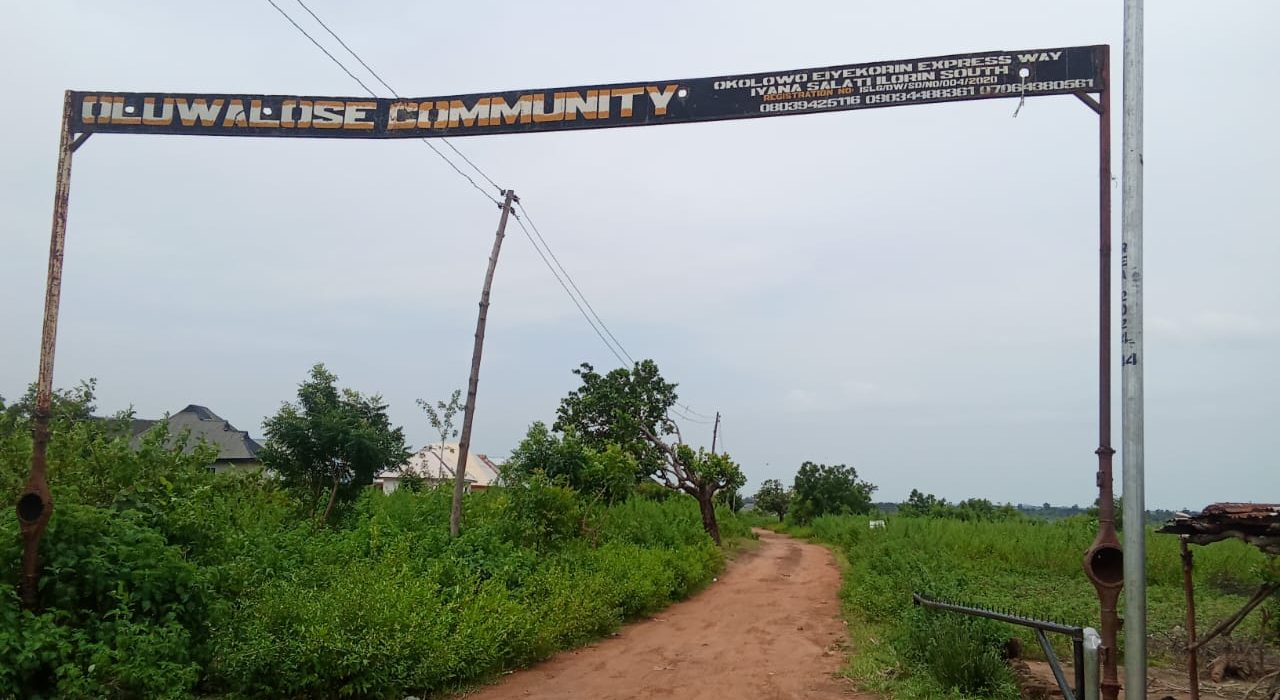
Since 2023, many rural communities in Kwara have suffered repeated kidnapping and banditry attacks, leaving the state in a deep scar. In Oluwalose, however, the residents organized themselves through household networking to form a joint-community vigilantes that protects them against insurgents.
🚀 Don't Miss Out!
Latest jobs • Scholarships • Grants • Internships • Career tips
(Naija + worldwide) — delivered daily on our WhatsApp Channel.
It was about 10 pm. Pupils were still at the Arabic session receiving lectures from their senior ones before Jamiu Bukhari, an Islamic cleric who was the leader of Oluwalose community, left the Madrasah (Islamic education) session. Not up to two hours he laid on his bed to rest for the day some voices yelled with questions, (lna Babanka! Ina mamanka, ‘a Hausa language meaning) ‘where is your mother’ firing into the air.
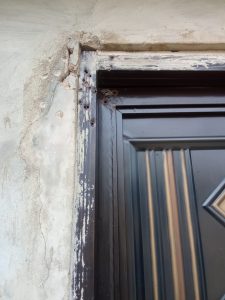
These must be kidnappers, the community leader mused as he came out to surrender himself before the unknown gunmen. This is to prevent them from harming his pupils.
“Although they are not aware, I am inside a room adjoining. I just decided to surrender myself so they could not penetrate the pupils. They beat me until we reach their hideout,” he told The Lagos Voice.
🔔 OFFICIAL CHANGE OF NAME MADE EASY!
Avoid delays and rejection — let professionals handle your publication quickly and stress-free.
We help you publish your change of name in:
📰 Punch Newspaper
📰 Vanguard Newspaper
📰 Other Top National Newspapers
✨ Why Choose Us?
- ✔️ Quick turnaround (3 days)
- ✔️ Budget-friendly packages
- ✔️ Reliable & trusted service
Bukhari experienced worse under captivity, despite being tied heavily, the captors beat him mercilessly. He was neither given water nor food to eat. The only thing he resorted to was his urine to quench thirst.
Two days after, he learned that a ransom of #2 million had been placed on his head, an amount he believed his family may not be able to raise. Facing such reality pushed him to desperately sort for an escape, which he finally accomplished. This was something around January 2023.
He would later recount on the reoccurring series of attacks that followed his escapee.
Some months later, the unknown gunmen launched another attack targeting a room specific to Bukhari. Upon storming inside to penetrate him, fate eventually intervened. But unbeknown to them, he was not there, instead his visitors were caught in the crossfire.
“They think it is me lying in a crossfire, a reason they keep shooting to mark their plan accomplished. This gives me the opportunity to place calls to other community members for help,” he explained.
Had he known it was another nightmare, he would not have risked the safety of his guests, who were enjoying a peaceful rest before the attackers, allegedly Fulani herders interrupted their sleep, leaving them with a chaotic experience.
As the intensity of their gunshots got him in torch, he immediately contacted the community vigilante for support. Before the attackers however realized more people had rallied to his side. But, facing the possibility of being overpowered, they eventually fled the scene.
Bukharia is not alone. His experience portrays the challenges facing numbers of residents in the Oluwalose community. Baba-Ita Abubakar, a 40-years old man, fair, short, bold with a beard, also shared his experience.
He was sleeping while the armed men broke in, and interrupted his peaceful rest. Instantly they forced him to entertain them with food and beverages as if hunger had pursued them from their way. “I think it’s hunger that chases them out of their hideout, until they drag me out after finishing eating,” he told The Lagos Voice.
Beyond his imagination, the attackers masked his face with a cloth and dragged him out of his house. Until he met himself and landed at their hideout.
PAY ATTENTION: Follow The Lagos Voice on WhatsApp channel for latest updates
It took his family four days before receiving a call from the terrorists. Following a negotiated N1.5 million, the kidnappers demanded a carton of malt, energy drink, table water, milk, breads, and recharge cards in addition to the ransom.
Recounting his experience under captivity. He was neither given food nor water to drink, despite the huge amounts placed on his head. All he could get was a handful of beating to satisfy his hunger and thirst.
Similarly, Jimoh Mariam, 45-years old food vendor who was a resident of Budo-Alfa, recounted to The Lagos Voice, stating; “It was in the later afternoon hours after l returned from the search for water. I am about setting up the fire to prepare the night meal before heavy gunshots interrupted.”
She opted to hide her children by the roof, believing nothing would get rid of them there. As she locked herself inside to sit behind the door she began offering prayers for protection. Until she learned that the community vigilante had chased the attackers.
Whenever Mariam stepped at the entrance of her community, the fear of being kidnapped overwhelmed her. She felt about packing her belongings to leave sometime ago. But the house rent added insult to injury, compelling her to remain in the community.
For Bukhari, survivors released from the kidnapper’s hideout brought warning messages.
PAY ATTENTION: Follow The Lagos Voice on WhatsApp channel for latest updates
“Some of them told me to leave, although the kidnappers have pledged not to attack my household. But that’s if I resist from intervening in any attack they launch against our community,” he concluded.
The struggle of the Kwara community represents the silent battle of several societies in Nigeria. Recurrent attacks have induced displacement on millions of residents in the country, turning them into refugees in what many describe as “shanty–abode”. This lingering menace has forced victims to leave their lives behind, and crippled to adapt to new realities.
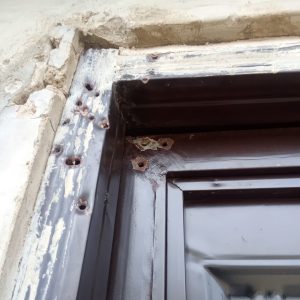
A visit by The Lagos Voice to the community in June 2026 still shows that the residents have undergone a security crisis. A trace of bullets left a scar on the wall of Bukharia’s house. Silent witness the violence that unfolds in the community. While some relocated, others stayed but with height tension. Across Nigeria, Oluwalose’s story is far from unique. Mass displacements, recurring attacks, and widespread fear define the life of many rural and semi-urban communities.
Scouting before attack
Two months after, a pastoral herded cows to sight the community, an act Bukhari alleged became a pattern for the herdsmen whenever they wanted to launch an attack.
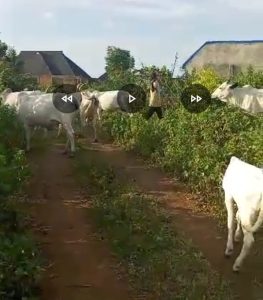
“Most of the victims who returned from captivity confirmed this suspicion,” he explained.
“They said some of the kidnappers would even protect people who had shown them kindness before. They would say, ‘Don’t kill that one, he gave me water when I was herding.’
This dual identity, herders by day, attackers by night has blurred lines and deepened mistrust. The bandits have regrouped to terrorise again these times it was against the neighborhood’s communities.
Faithfully, the communities have managed to alarm Bukhari, leading their vigilante force timely to have proven the enemy’s attacks abortive, a reason he assumed to be their prime target.
When help does not come
As the terrorists heightened their attacks following Bukharia’s escape and Abubakar’s release, the residents realized the need for self-defense. According to Bukhari, the community resorted to the government to reinforce them with security forces in an attempt to raid the terrorists’ hideout.
In response, the government promised to provide them with two vehicles, asking the residents to source funds for petrol needed for the operation. Without hesitation they paid for the logistics in advance, hoping their requests had been approved.
Still it reached to carry out duty and fulfilled promises, the security agency dodged responsibility to cite jurisdiction limits. Bukhari alleged that despite paying for the logistics the operation was never carried out. Yet the security agency refused to refund them.
PAY ATTENTION: Follow The Lagos Voice on WhatsApp channel for latest updates
“We (community) went into the bush to dissolve their hideout and handed the captures to the law enforcement agent,” he concluded.
Abubakar recalled that the community once requested for data-tracking after which the terrorists seized his phones. Even after paying the government agency for their service yet, no result was rendered concerning his phones still now.
Scary data
According to the BudgiT, abduction for ransom has become the new money-making venture for kidnappers in Nigeria. With over 200,000 individuals that were displaced, leaving their farmlands has also resulted in the exacerbating of the food crisis.
Banditry has forced many people to flee their homes, abandoning businesses and livelihoods. The economic displacement of individuals and communities has created a ripple effect, affecting local markets, small businesses, and overall economic productivity.
As the north continues to be a hotspot for insecurity, there is a troubling trend emerging in the south, where security crises are gradually encroaching to pose a new set of challenges for the region.
In a report by the FIJ, about 2.8 million Nigerians were victims of robbery in 2024, but only 988, 652 cases were reported to the police. Of those who didn’t report, at least 374, 679 said they didn’t trust the police to act. According to the National Bureau of Statistics (NBS), Nigerians paid a staggering N2.3 trillion in ransom within 12 months.
In December, Amnesty reported that over 10,000 civilians had died in military custody since Nigeria began its counter-terrorism war against Boko Haram. The SBM intelligence also documented that at least 25 pastoralist attacks resulted in the loss of lives and property between 2024 and 2025.
Also, The ICIR revealed that despite the change of government in 2023, insecurity in Nigeria persists with over 5,000 people killed in the first seven months of Tinubu’s administration which is higher compared to when Buhari came into power in 2015.
PAY ATTENTION: Follow The Lagos Voice on WhatsApp channel for latest updates
In 2024, Tinubu increased the allocation to 11 security agencies and ministries by seven per cent. According to ACLED data, 44,779 people were killed in 20,398 incidents, collated from media reports, between 2015 and 2023. This is 16 per cent higher than the 38,515 deaths recorded between 2014 and 2018.
By December 25, 2023, more than 100 people were killed as a result of a bandit attack on 15 communities in Bakkos and Barkin-Ladi local government area (LGA) of Plateau state. More than 200 houses were razed to the ground at dawn on that Christmas day.
Two months after the massacre, no justifiable explanation has been issued by the government or the military authorities. Just like Plateau state, several other states in Nigeria, specifically in the northern region, have reported horrifying attacks that led to the deaths of people in local communities with little or no intervention by security operatives.
Community-led solutions is emerging
In response, men in Oluwalose are taking the steps to collaborate with neighboring communities through household networking that form community vigilantes.
Speaking with this reporter, the community’s leader who is at the frontline of the initiative, Bukhari, each household has access to the vigilantes’ mobile number so they can report whenever they sense any attack.
“Each household in the community has its representative at the joint meeting to deliberate on self-defense.”
According to him, the community has also installed a CCTV camera connected with the residents mobile phone to know whatever is happening in their surroundings. “Through the camera we see whoever enters our community on our mobile phones. And this helped us a lot in defending ourselves,” he explained.
The setback
The undertaking of Oluwalose is not without challenges. Despite the efforts to overcome the insecurity crisis, the community remains under deprivation for power such as electricity and water supply.
“Including transport fare l spent #2500 daily, taking my phones to the charging center to restore power”, Basheer Muhammad, a resident of Budo-Alfa recounted.
While the price of petrol soared higher, the motorcyclist increased the cost of transition just as the charging operator increased the cost of their service.
A phone he formerly charged for #200 has increased to #400. Adding that a journey of ten kilometers previously cost him #1000 has also mounted to #2000. Knowing that he could not afford the expenses. He resorted to trekking on a ten kilometer trip to the charging center.
For Mariam, the search for water has become her daily routine. She trekked a two hour journey alongside her children to fetch water, often not sustainable. Each day she spent nearly N3, 000 to purchase water.
“This consumes a lot of my time, delaying me from cooking and my children going to school subsequently late,” she added.
“We operate in darkness because we don’t have a transformer to supply us with power. This makes it hard for us to face the terrorists especially during tonight’s watch over,” Bukharia said.
PAY ATTENTION: Follow The Lagos Voice on WhatsApp channel for latest updates
Apart from the issue of transformers, water scarcity also contributed to the daily struggles of the residents. Speaking further with The Lagos Voice, Bukhari emphasized the need for more boreholes. Stating that numbers of residents were unable to access clean water due to inadequate borehole in the community.
“The water is not always available because we don’t have electricity. This makes it difficult and sometimes it takes some two days before accessing water,” he concluded.
Expert weighs in
Speaking with The Lagos Voice, a security expert, Mr. Olatunji Igbalajobi warned that leaving a community isolated directly violates the fundamental social contract between the government and its citizens since the primary responsibility of the state is to protect life and property of the citizen.
He said, “This signals institutional abandonment, degrades national cohesion, and forces vulnerable populations into stateless conditions where they must fend for themselves across every basic need.”
According to Igbalajobi, Citizens paying out-of-pocket for basic state security services only to be turned away when help is required, points to a deep security administrative failure and corruption. Especially citing ‘jurisdictional limits’ in the face of active threat is often an attempt to deflect accountability.
He added that it shatters public trust in state institutions, driving communities further away from formal reporting and pushing them entirely toward self-reliance. He noted that when formal security structures fail to protect citizens, self-defense becomes a matter of immediate survival.
While addressing the Community vigilantes to possess superior knowledge of local terrain and strong community trust. On the other hand, he warned that without official coordination, proper oversight, and equipment, community-led security will face major risks including direct confrontation with heavily armed actors, potential human rights issues, and lack of legal backing if dynamic situations escalate.
“To eliminate jurisdiction excuses, the government established a clear coordination between state police, local government chairpersons, and neighboring security commands.”
“The government has to audit and address allegations regarding collection of logistics funds to rebuild public confidence,” he added. Igbalajobi further advised the government to formally recognize, train, and equip the local vigilant structure through legal frameworks like local state security outfits to ensure operations remain safe and accountable.
He also stressed that the situation of the community lacking access to electricity and water supply. Pointing this as a barrier to the economic and public health could endanger the people’s life.
PAY ATTENTION: Follow The Lagos Voice on WhatsApp channel for latest updates
In his words to the community’s leader, he urged him to maintain precise records for all correspondence, incidents and financial contributions, escalating issues through civil rights organizations, local representatives, and media outlets.
Adding that the community Should establish a strict internal vetting process for their vigilant members to prevent infiltration or unlawful actions. He advised them to partner strategically with non-governmental organizations (NGOs) and private stakeholders for immediate water and solar energy relief projects.
Government efforts
Several efforts to speak with the Kwara State authorities proved abortive.
Between June and July 2026, This reporter made several visits to the “G” division police station. But claimed that another DPO has been installed. And was referred to the police headquarters in Ilorin, kwara state who also claimed the the “G” division is responsible to provide such record.