

By Esther Olatimehin

There is a recurring pattern across Nigerian universities that is becoming difficult to ignore: the gradual weakening of systems that are essential to the everyday functioning of academic life. In many cases, students are the first to feel the impact, the first to adjust to it, and often the first to speak out when those systems begin to fail.
🚀 Don't Miss Out!
Latest jobs • Scholarships • Grants • Internships • Career tips
(Naija + worldwide) — delivered daily on our WhatsApp Channel.
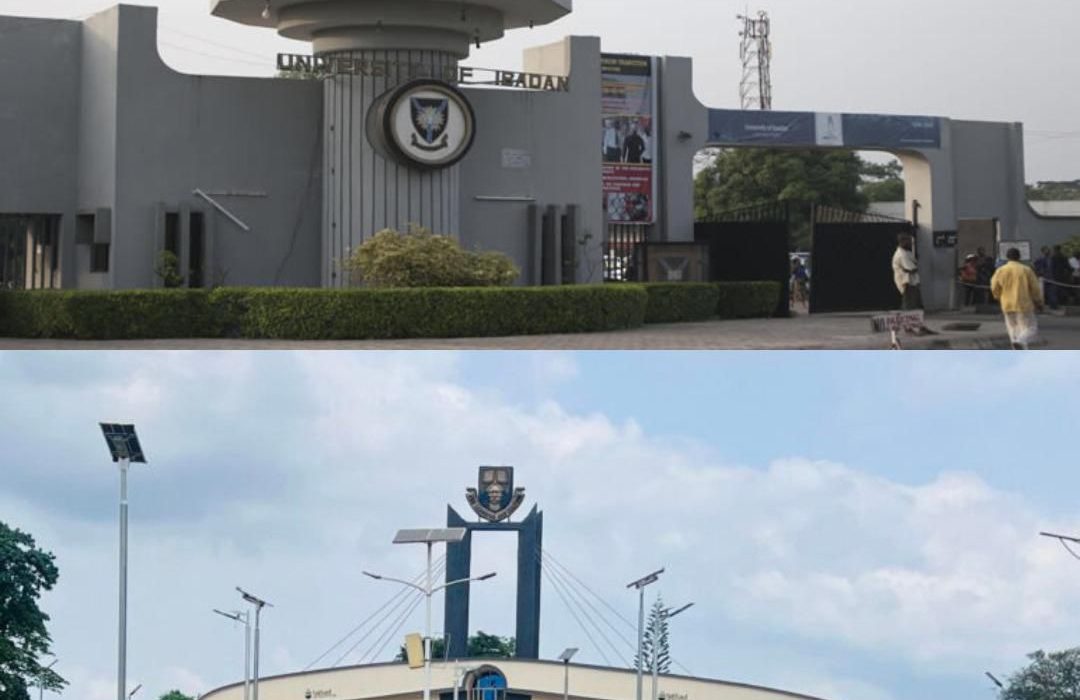
The recent developments at Obafemi Awolowo University (OAU), where students protested over transportation challenges, and at the University of Ibadan (UI), where academic activities were disrupted following the NASU and SSANU strike, shows different circumstances but point to a common concern which is the fragile institutional systems struggling to sustain the basic conditions required for learning.
At OAU, last week’s protest over internal transportation displays the accumulated frustration from daily experience. On a campus where faculties, halls of residence, and lecture theatres are distanced, transportation is a core part of academic access. When buses are few, irregular, or unable to meet demand, the effect is not only that of delay, but becomes exclusion as students miss lectures because movement across campus becomes unpredictable and, at times, impossible.
Over time, what should be a structured transport system begins to feel like a daily negotiation. Students who leave their hostels earlier than necessary, wait longer than reasonable, and sometimes walk long distances. OAU as a compact campus makes mobility infrastructure even more difficult. In this context, pedestrian walkways, where available, are not substitutes for a functioning transport system but supporting infrastructure. They cannot replace institutional responsibility for movement within the campus.
🔔 OFFICIAL CHANGE OF NAME MADE EASY!
Avoid delays and rejection — let professionals handle your publication quickly and stress-free.
We help you publish your change of name in:
📰 Punch Newspaper
📰 Vanguard Newspaper
📰 Other Top National Newspapers
✨ Why Choose Us?
- ✔️ Quick turnaround (3 days)
- ✔️ Budget-friendly packages
- ✔️ Reliable & trusted service
At the centre of it all are students who are not outsiders to the system but its primary reason for existence. They meet their obligations by paying fees, attending lectures, and following academic schedules. In return, there is a reasonable expectation that the learning environment should support access, movement, and participation in academic activities without unnecessary strain.
If students are repeatedly forced to walk long distances because buses are unavailable or inadequate,then was the infrastructure designed to support mobility, or to shift responsibility back to students when the system fails?
This is where the issue extends beyond logistics into academic welfare. A student who arrives in class exhausted from long walks is already disadvantaged before learning begins. A student constantly racing against time to meet lectures is under sustained cognitive pressure. In systems where assessments can also be unannounced or impromptu, these pressures raise legitimate concerns about fairness and academic readiness.
The question, then, is unavoidable: can a learning environment be considered functional if access to it is inconsistent?
In contrast, the situation at the University of Ibadan presents a different but equally serious challenge. The ongoing strike by NASU and SSANU, rooted in unresolved welfare concerns and long-standing disagreements with the Federal Government, has significantly affected essential campus services. Electricity supply has become unreliable, and water access has been inconsistent in several parts of the university.
While the reason for the strike is based on legitimate labour demands, its impact on students is immediate. Lack of electricity affects reading patterns, safety on campus, and overall productivity. Water is neither a secondary need but fundamental to hygiene, health, and daily survival. When both become unstable, the university environment shifts from an academic space into coping space.
What makes both situations significant is not only the disruption they cause but their recurring nature that shows a pattern in which essential systems within public universities remain vulnerable, whether due to infrastructural gaps or unresolved industrial disputes. In both cases, students who are not part of these decisions end up bearing the consequences.
From a student perspective, this is not a dismissal of labour struggles or infrastructural realities. NASU and SSANU are responding to long-standing welfare issues that require attention, just as OAU’s transport challenges show pressures linked to population growth and limited expansion. The concern, however, is that these realities often unfold without adequate protection for academic continuity.
In principle, universities are expected to remain stable environments for learning, even amid internal tensions. In practice, that stability is increasingly uncertain. When disruptions occur, recovery is often slow, and students are left to reorganise their academic lives around conditions they did not create.
PAY ATTENTION: Follow The Lagos Voice on WhatsApp channel for latest updates
However, there is also the risk of normalisation, when transport breakdowns, power outages, and water shortages occur repeatedly, they can begin to feel like standard features of university life. In such conditions, protest becomes not just a response but one of the few remaining ways to challenge what has become routine dysfunction.
The experiences at OAU and UI, though different in form, converge on a common ground which is the fragility of systems that sustain academic life. One shows how quickly access can be disrupted when mobility systems fail; the other shows how swiftly learning environments can deteriorate when essential services are withdrawn.
At the centre of both we should remember that a university is not defined by lectures, examinations, or the curricula, but by the conditions that make them possible in the first place.
If education is the key, then access to it, both physically, and mentally cannot be treated as secondary.